
Behavioural and experimental economics may offer a more realistic and evidence‑based understanding of human decision‑making than standard economic theory. What can we learn from games and experiments in these fields? Can their results be transferred into practice? These are some of the topics we talked about with prof. Michalis Drouvelis, who visited the Faculty of Economics of the University of Gdańsk as part of the UG Visiting Professors Programme 2025/2026.

Karolina Żuk-Wieczorkiewicz: - When did you get interested in behavioural and experimental economics? What do you find most fascinating in this field?
Prof. Michalis Drouvelis: - My interest in behavioural and experimental economics emerged quite early in my academic journey, when I began my PhD studies. I realised that many of the most interesting economic questions could not be answered by theory alone. I was drawn to the idea that carefully designed experiments allow us to observe real human behaviour rather than rely solely on assumptions about it. That combination of conceptual clarity and empirical precision immediately resonated with me.
What truly captivated me was the ability of experiments to uncover the mechanisms behind decision‑making: why people cooperate, why they sometimes behave generously or reciprocally, and how institutions shape these behaviours. The experimental method gives us a unique window into these processes. You can change one element of the environment, observe how behaviour shifts, and suddenly a theoretical puzzle becomes a behavioural insight.
- What is behavioural and experimental economics? Can you explain it in a few words?
- Behavioural and experimental economics is the study of how people actually make decisions, rather than how we assume they make them in standard economic models. Behavioural economics helps us understand the psychological factors (such as biases, emotions, and social preferences) that shape choices. Experimental economics provides the tools to test these ideas in controlled environments, where we can observe behaviour directly and identify causal mechanisms. Together, they offer a more realistic and evidence‑based understanding of human decision‑making.
- What can games show us about human economic behaviour or social preferences?
- Games allow us to observe the fundamental building blocks of human economic behaviour in a controlled and transparent way. By placing individuals in structured decision environments (e.g., public goods games, dictator games, trust games, or coordination games) we can isolate specific motives and see how people respond when incentives, information or institutions change.
What makes these games so powerful is that they reveal patterns that standard economic theory often overlooks. For example, we can observe how much people are willing to sacrifice to help others, how strongly they react to fairness or unfairness or how they balance self‑interest with social norms. Games also allow us to identify heterogeneity: some individuals are highly cooperative, others are strongly inequality‑averse, and some are motivated by reciprocity or reputation concerns.
In short, games give us a clean way to uncover the social preferences and behavioural mechanisms that shape real‑world decisions. They help us understand not just what people choose, but why, and that insight is essential for designing better policies, institutions, and interventions.
- Do you remember experiments or games which brought especially fascinating, disturbing or unexpected results?
- One of the experiments that has always stayed with me is the classic ultimatum game, because of how consistently it reveals behaviour that contradicts the predictions of standard economic theory. From a purely self‑interested perspective, responders should accept any positive offer, yet across cultures and contexts, people routinely reject offers they perceive as unfair, even when doing so comes at a personal cost. That willingness to sacrifice money to enforce fairness norms is both fascinating and, in a way, quite humbling. It shows how deeply social preferences are embedded in human behaviour.
Another example that I find particularly striking is the evidence from public goods games showing that cooperation often collapses not because people are inherently selfish, but because they are unwilling to be the ‘sucker’ who contributes while others free‑ride. When participants are given the ability to punish free‑riders, cooperation increases dramatically. It’s a powerful reminder that institutions and enforcement mechanisms can transform collective outcomes.
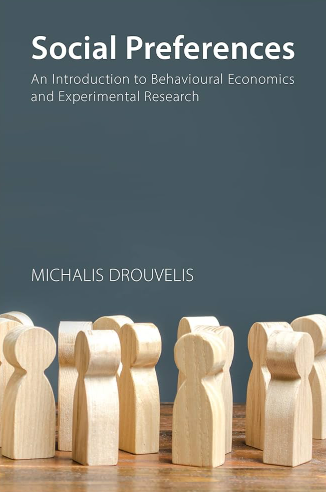
What I find most unexpected in these experiments is how robust these patterns are. Across different countries, stakes, and designs, people consistently show concerns for fairness, reciprocity, and social norms. These findings are summarised in my book on social preferences (Social Preferences: An Introduction to Behavioural Economics and Experimental Research), which I strongly encourage anyone interested in this fascinating topic to explore.
- What are the practical aspects of behavioural and experimental economics? How can the results of a game (or experiment) be transferred to life practice (e.g. leadership, management, or public policy)?
- One of the strengths of behavioural and experimental economics is that it provides clean, causal evidence about how people behave in strategic or social situations. Although experiments take place in simplified environments, the mechanisms they reveal often translate remarkably well to real‑world settings.
In leadership and management, for example, experiments show how cooperation can break down when people feel that others are not contributing fairly, and how even small opportunities for communication or reciprocity can restore trust. These insights help organisations design better team structures, incentive schemes, and feedback systems. Games also highlight the importance of fairness and transparency: leaders who ignore these elements often face resistance, even when incentives are aligned.
In public policy, experimental evidence has been invaluable. Public goods games help us understand why people under‑invest in shared resources, and why enforcement or monitoring can dramatically improve outcomes. Experiments on social norms, nudges, and behavioural biases have shaped policies in areas such as tax compliance, energy conservation, health behaviour, and charitable giving. The key is that experiments allow policymakers to test interventions on a small scale before implementing them widely.
In markets and institutions, experiments reveal how rules, information, and incentives shape behaviour. This has informed auction design, matching markets, and regulatory frameworks. The ability to test institutional changes in a controlled environment before they affect millions of people is a major practical advantage.
What ties all of this together is the idea that experiments uncover mechanisms and how people respond to incentives, norms, emotions, and institutions. Once we understand these mechanisms, we can design environments in leadership, management, or policy that harness cooperative tendencies, reduce conflict and promote better decision‑making.
- Please tell us something about your collaboration with the Faculty of Economics of the University of Gdańsk? What did you manage to achieve during your visit? What are your plans or hopes for future collaboration?

- My collaboration with the Faculty of Economics at the University of Gdańsk has been a very rewarding experience. During my visit, I had the opportunity to engage closely with colleagues and students, exchange ideas on current developments in behavioural and experimental economics, and explore areas where our research interests naturally align.
A particularly exciting outcome of the visit was the chance to work with Professors Anna Blajer‑Gołębiewska and Elżbieta Babula. Together, we designed a new experiment that builds on our shared interest in decision‑making and social preferences. We plan to run this experiment in the coming weeks and the collaboration has already generated a great deal of intellectual energy and momentum.
Looking ahead, we intend to apply for external funding to support this line of research and to strengthen our collaboration further. I see significant potential for long‑term joint projects, student exchanges and the development of a broader research network connecting our institutions. My hope is that this partnership will continue to grow and lead to high‑quality research outputs as well as meaningful academic connections between our teams.
- What do you like most about the University of Gdańsk?
- What I appreciate most about the University of Gdańsk is the genuinely welcoming and collaborative academic culture. From the moment I arrived, colleagues were open to discussion, eager to exchange ideas, and enthusiastic about exploring new research directions. That sense of intellectual curiosity and mutual support creates an environment where meaningful collaboration can flourish.
I was also impressed by the strong engagement of students and the vibrant research community within the Faculty of Economics. There is a clear commitment to high‑quality teaching and research, and a real openness to interdisciplinary perspectives which aligns very well with the spirit of behavioural and experimental economics.
Beyond the academic strengths, the university has a warm atmosphere and a strong sense of identity. It is a place where you feel both professionally stimulated and personally welcomed, which makes collaboration not only productive but also genuinely enjoyable.
- If you were to encourage students to study behavioural and experimental economy, what would you tell them?
- I would tell students that behavioural and experimental economics is one of the most exciting areas in the discipline because it allows you to study people as they truly are. Instead of viewing individuals as abstract, perfectly rational agents, the field recognises that real decisions are shaped by emotions, norms, fairness concerns and social context. If you are curious about why people cooperate, why they sometimes behave generously, or how institutions shape behaviour, this field gives you the tools to explore those questions rigorously.
What makes it especially appealing for students is its hands‑on nature. You don’t just read about theories but you actually test them. You design games, run experiments, analyse real decisions, and see how small changes in incentives or information can transform outcomes.
I would also emphasise that the skills you gain are incredibly valuable beyond academia. Understanding human behaviour is essential in leadership, management, public policy, marketing, finance, and any environment where people interact strategically. Behavioural insights are now used by governments, international organisations, and companies around the world.
So, my message to students would be: if you enjoy asking deep questions about human behaviour, if you like evidence-based thinking, and if you want to work in a field that is both intellectually stimulating and practically relevant, behavioural and experimental economics is a wonderful path to explore.
- Thank you very much!