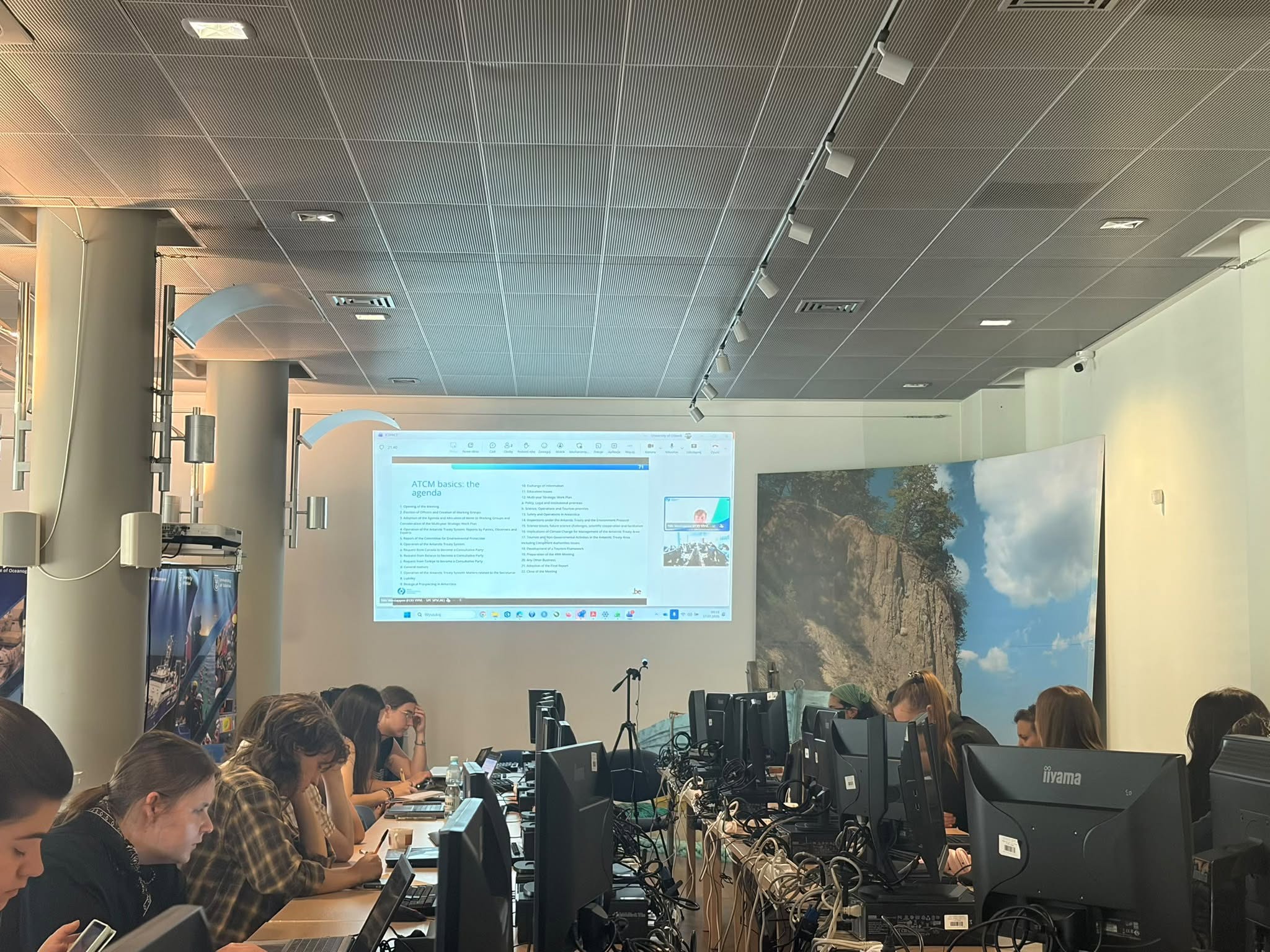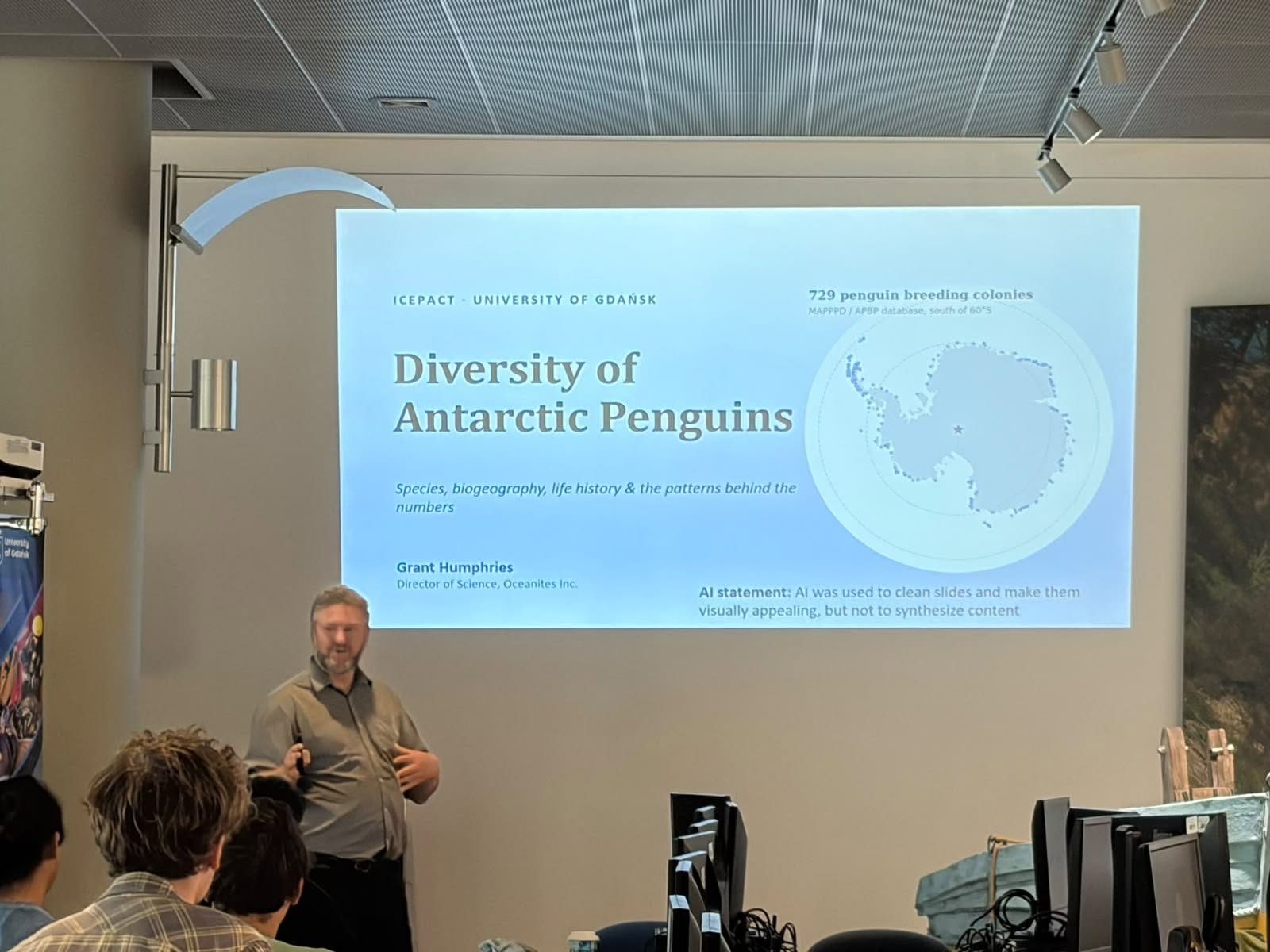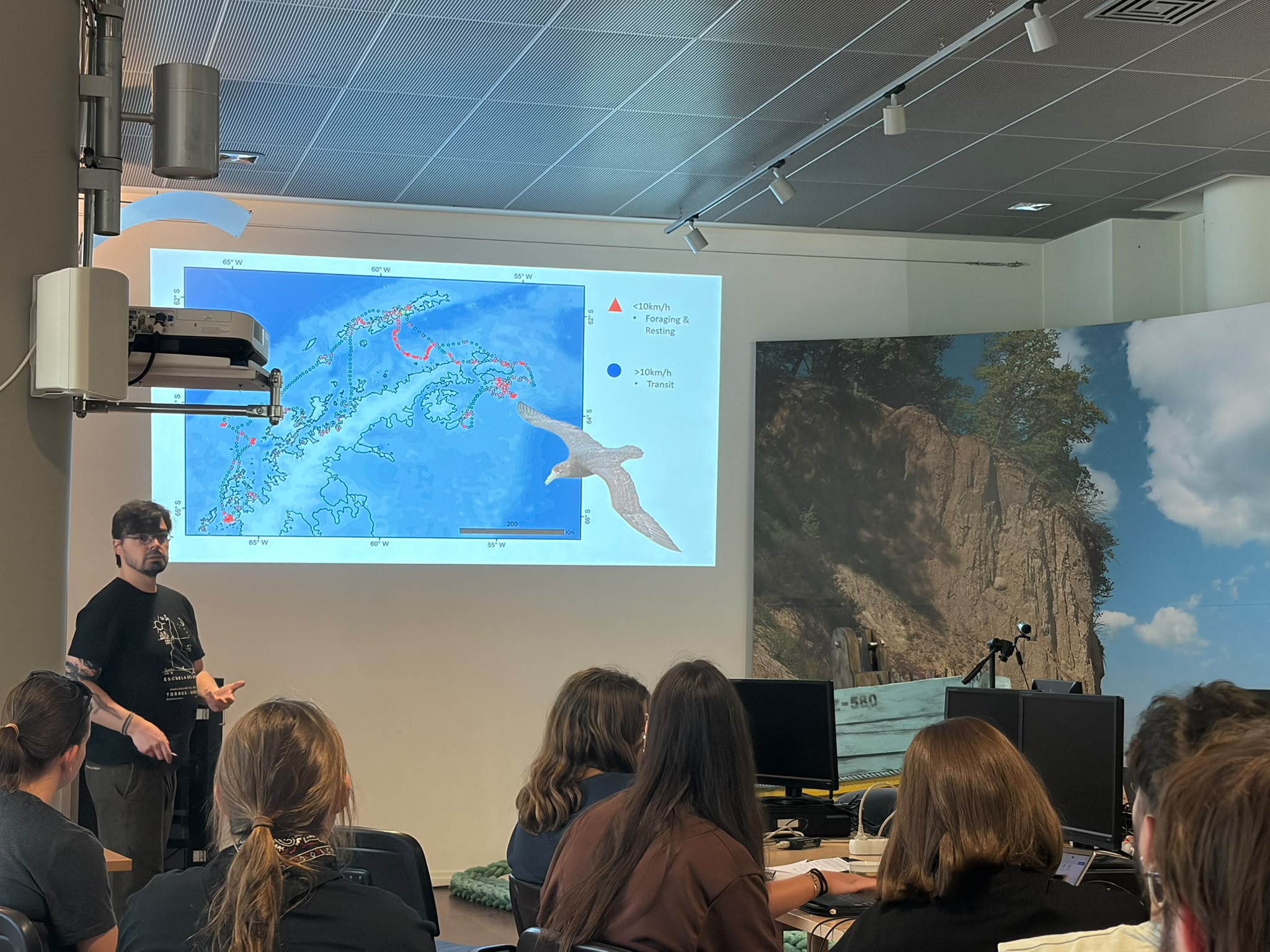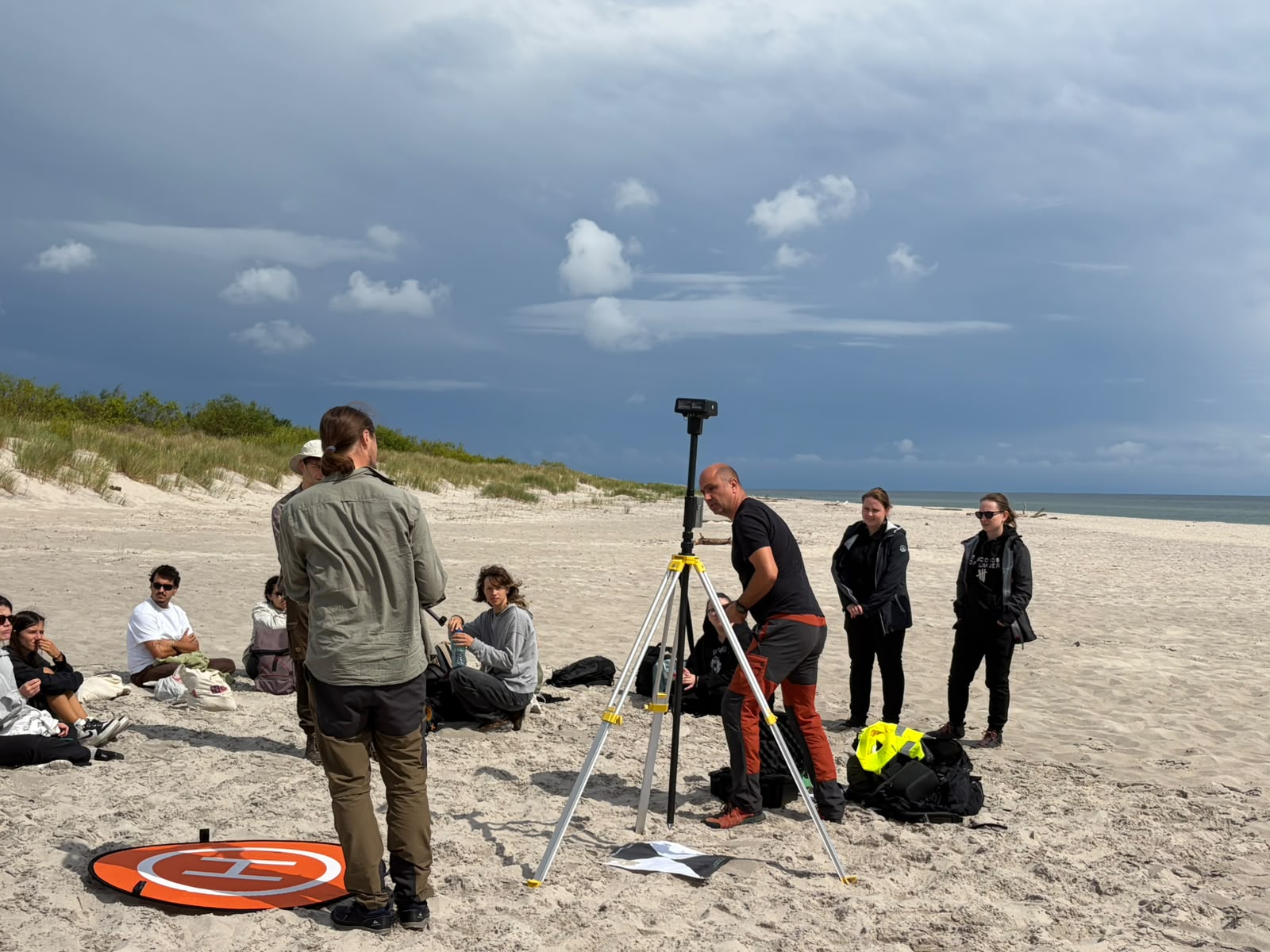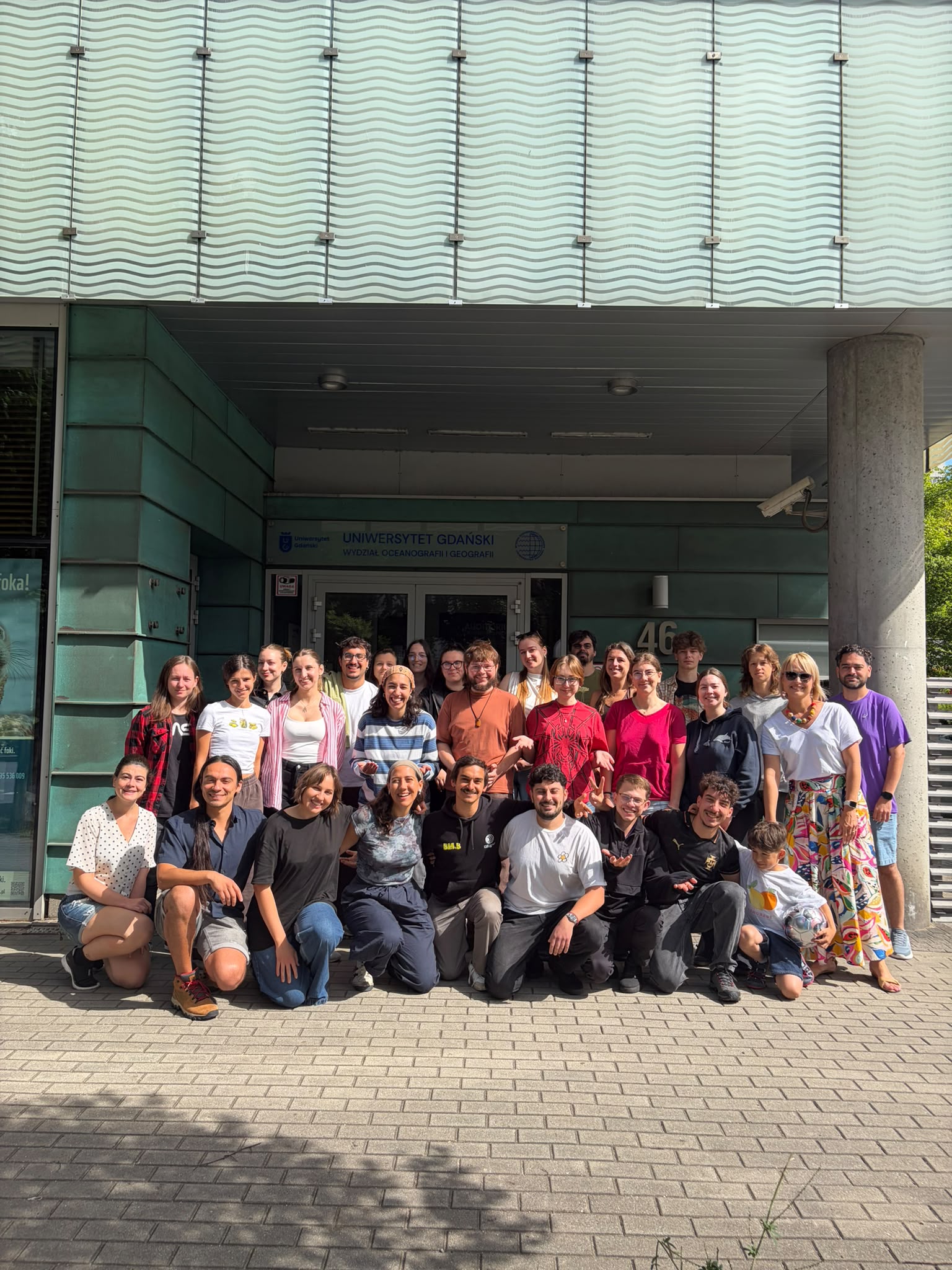
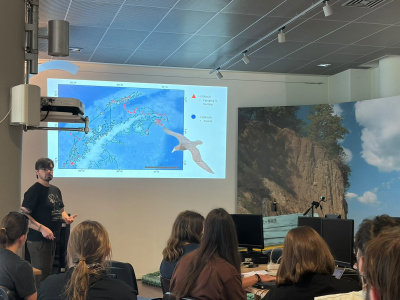
Antarctic ecology, methods of monitoring the marine environment, tagging seabirds with geolocators and the sustainable management of marine living resources - these are just some of the topics that participants had the opportunity to explore during the course held at the University of Gdańsk in the second half of July as part of the ICEPACT project. Twenty-seven students from Poland, SEA-EU partner universities and Chile deepened their understanding of the functioning and conservation of polar regions under the guidance of leading specialists, whilst forging international connections and honing the skills necessary to work in a multicultural, multilingual and interdisciplinary research environment.
‘Education about Antarctica is particularly important today, as the region is at the centre of international debate on reconciling nature conservation with the use of living marine resources,’ says the ICEPACT project leader, dr Anna Panasiuk from the Faculty of Oceanography and Geography at the University of Gdańsk, Vice-Chair of the Scientific Committee of the Commission for the Conservation of Antarctic Marine Living Resources (CCAMLR). ‘The Southern Ocean provides valuable resources, primarily Antarctic krill, which forms the basis of the entire ecosystem. Krill are eaten by whales, seals, penguins and many species of seabirds; therefore, fishing practices are important not only for the fishing industry, but also - or perhaps above all - for the conservation of biodiversity. At the same time, discussions have been ongoing for many years within the Commission for the Conservation of Antarctic Marine Living Resources (CCAMLR) regarding the establishment of new marine protected areas (MPAs), including in East Antarctica, the Weddell Sea and the Antarctic Peninsula region (Domain 1). Despite broad scientific support, these proposals have not yet been adopted due to a lack of unanimity amongst member states. Education plays a key role in the effective conservation of marine environments, including these unique polar ecosystems. The greater the public awareness and the better the understanding of how the ecosystem functions, the greater the support for measures ensuring the long-term conservation of resources.'
The course, organised as part of the ICEPACT project, was attended by 12 students from the University of Gdańsk, 12 from SEA-EU partner universities (from Portugal, France, Croatia, Norway and Germany) and three from Chile (the students from Chile were at the University of Gdańsk as part of a NAWA internship; the Instituto Antártico Chileno is a co-implementer of the ICEPACT project).
The course covered topics including:
- Antarctic ecology, the functioning of marine ecosystems and the sustainable management of living marine resources;
- methods of marine environmental monitoring, tagging seabirds with geolocators, working with biological material and biosafety principles;
- methods of analysing biological and environmental data;
- the use of statistical methods, GIS tools and remote sensing in Antarctic environmental research, and the application of the data obtained in preparing documentation to support conservation measures.
- preparing documentation for marine protected areas (MPAs) and gaining an understanding of international mechanisms and regulations relating to the conservation of Antarctica.
The course lecturers included recognised international experts: dr Lucas Krüger (Chilean Antarctic Institute), Francisco Santa Cruz (Chilean Antarctic Institute), dr Grant Humphries (Oceanites), Nils Vanstappen (KU Leuven), prof. Dariusz Jakubas (University of Gdańsk), dr Maciej Markowski (University of Gdańsk), and Zbigniew Trusewicz (University of Gdańsk).
‘Courses such as the one run as part of the ICEPACT project are of particular importance, as they educate a new generation and train future scientists and specialists to conduct research, monitor changes taking place in the Southern Ocean, and provide reliable data used in environmental decision-making processes, such as CCAMLR,’ adds dr Anna Panasiuk. ‘In the face of climate change and growing interest in the resources of the Southern Ocean, investing in the education and skills development of young researchers is becoming one of the most important elements of effective Antarctic conservation.’
Course participants on their experiences
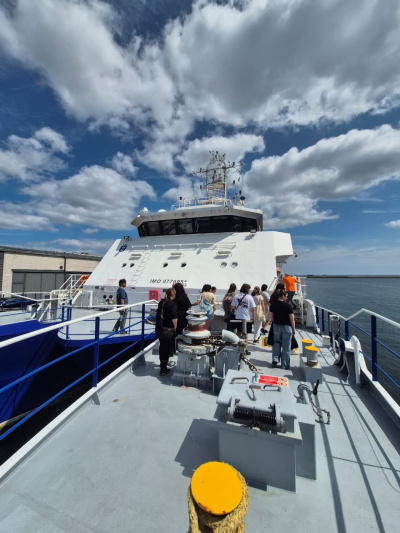
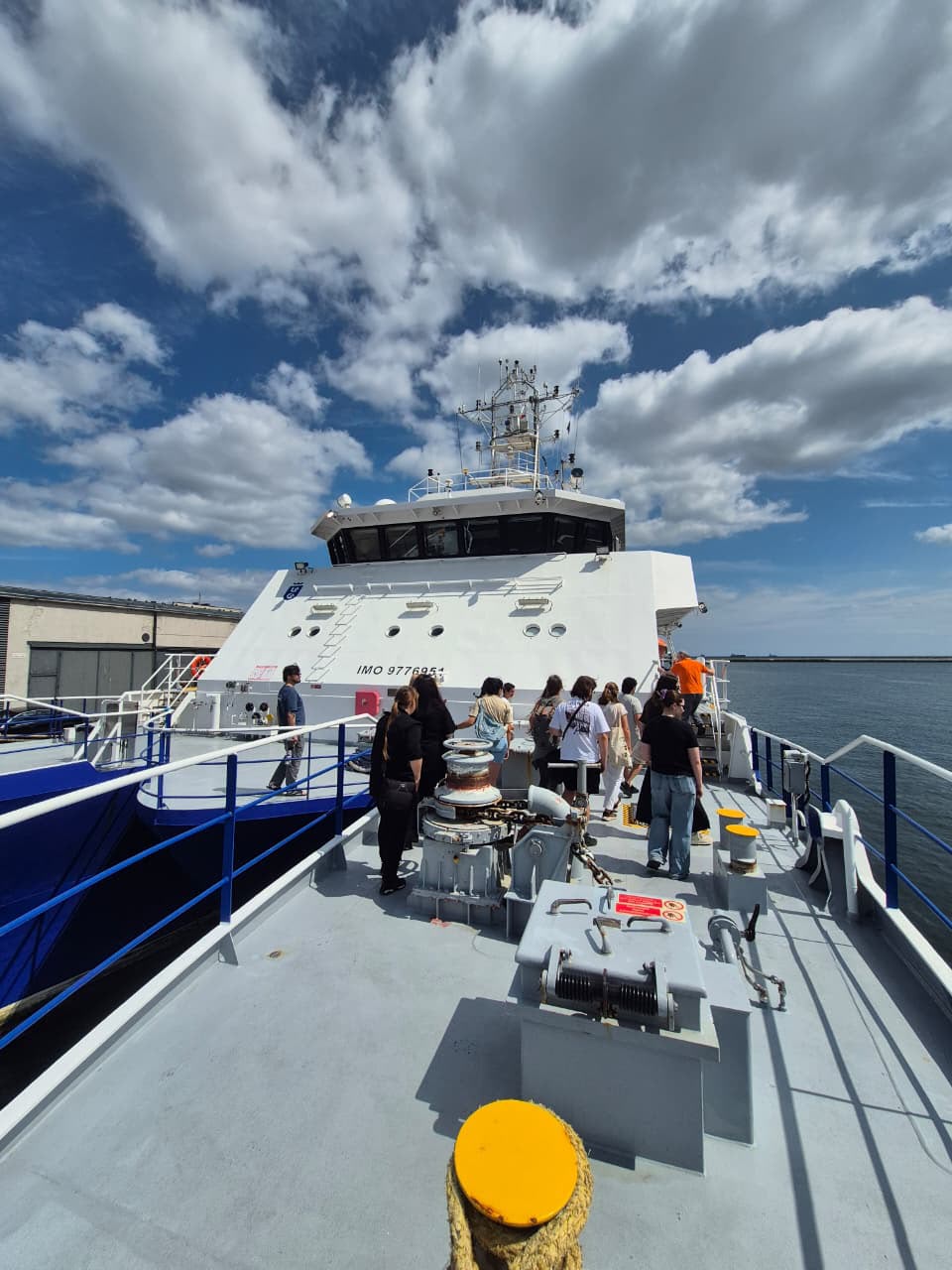
As well as taking part in intensive academic sessions, course participants also had the opportunity to forge relationships that may well form the basis for future research collaboration, as well as to tour the University of Gdańsk’s research vessel, the r/v Oceanograf. We asked them about their impressions of their stay in the Tricity:
'During the ICEPACT Course I learned a lot about the Antarctic ecosystem, the krill, seabirds and Antarctic governance. The knowledge I gained will be very valuable for my Master's thesis on Antarctic phytoplankton and my future research. It was a great interactive format of lectures, praxis and the possibility to discuss and connect with researchers and students from different backgrounds, which made it a really enjoyable and unique experience.'
Jacqueline Joosten
'ICEPACT was an inspiring and unforgettable experience that expanded my knowledge of polar and marine ecosystems through both lectures and practical fieldwork. It also gave me the opportunity to meet amazing researchers and students, making me even more motivated to continue my career in marine science.'
Eli Tomić
'ICEPACT was a great opportunity to learn from researchers with different backgrounds and broaden my perspective on polar research. Learning about Antarctic ecology, monitoring methods, and governance while interacting with an international group of students and scientists was incredibly valuable. The experience strengthened my motivation to pursue a career in polar research and allowed me to build meaningful international connections that I hope will lead to future collaborations.'
Camila Gómez M.
'Taking part in the ICEPACT course was a great opportunity for me and my future research. I value all the knowledge gained especially about research methods, that helped me to have better and broader view on ways of answering scientific questions related to environmental monitoring and protection.'
Dawid Górecki
'The ICEPACT course provided a unique combination of scientific knowledge, practical experience, and international collaboration. I especially appreciated the opportunity to work and learn alongside participants from diverse backgrounds. It has definitely broadened my perspective as a researcher.'
Julia Kaczmarek
'The course was a great way to consolidate core knowledge about Antarctic ecosystem monitoring and to understand the main current threats being discussed. Really grateful to have spent time with such a great group of researchers!'
Eduardo Pizzaro G.
'I really enjoyed the ICEPACT course, the scope of knowledge was well‑balanced, and the selected topics were genuinely engaging. I especially valued the modules on penguins, Antarctic ecosystem functioning, and seabird tracking technologies, along with the practical remote‑sensing tasks using a drone, all of which will be highly useful in my future work.'
Karolina Cieślińska
'Participating in the ICEPACT course gave me lots of insight and knowledge about the Antarctic ecosystems, especially about the importance and monitoring of krill and seabirds. I learned about different Antarctic species and the ways of tracking them, as well as about GIS and drone-based methods for environmental monitoring.'
Petra Klaić
Follow the ICEPACT project in social media:
https://www.facebook.com/profile.php?id=61580243517620
https://www.instagram.com/icepact2025/
ICEPACT is co-funded under the NAWA Strategic Partnerships programme.