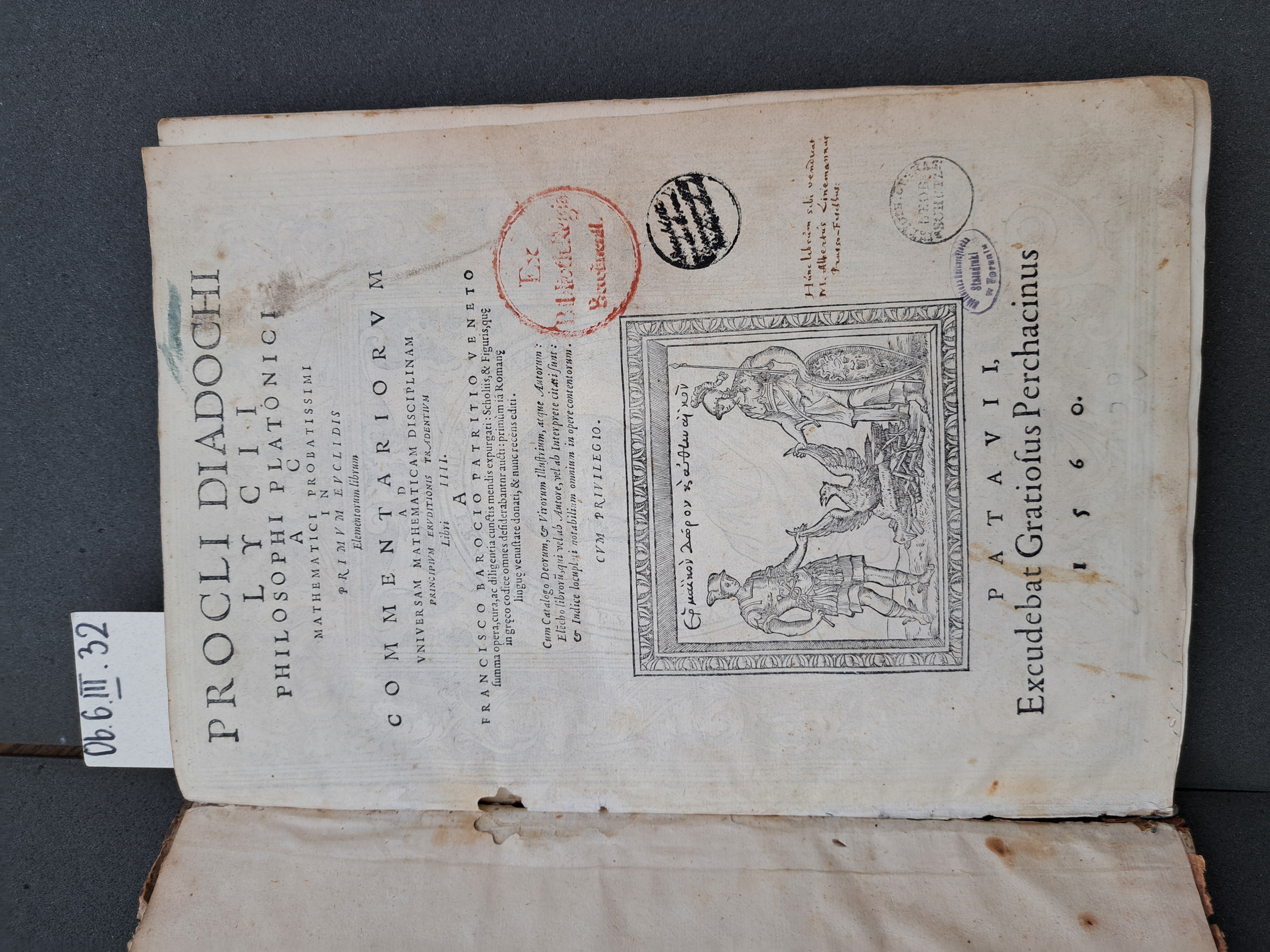
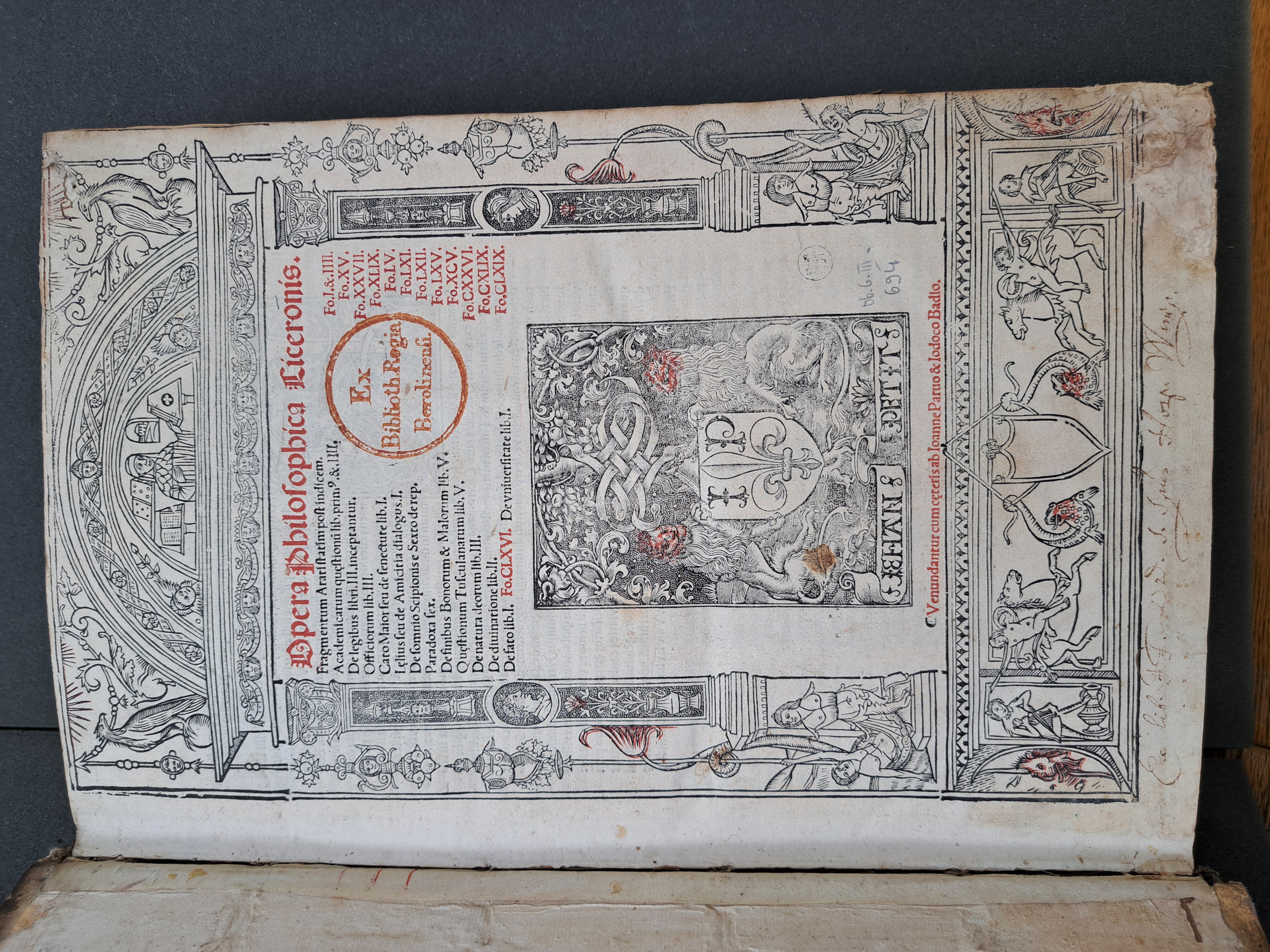
We present the profile of another winner of the National Science Centre's OPUS 29 competition: dr Julia Możdżeń from the Faculty of History, whose project ‘The history and fate of the Berlin collection. The development of old prints from preserved collections from the University Library in Toruń’ received funding in the amount of PLN 1,056,473.00 (including PLN 430,029.00 for the University of Gdańsk).
dr Julia Możdżeń

She is a graduate of the Faculty of Historical Sciences at Nicolaus Copernicus University in Toruń, where she also obtained a PhD in humanities. She is a scholarship holder of DAAD, Stiftung Preußischer Kulturbesitz zu Berlin, Herder-Institut Marburg, the Lanckoroński Foundation and the Polish Historical Mission in Würzburg. She has led two research grants under the NSC and the National Programme for the Development of Humanities (NPRH), and is collaborating on several others.
Since 2019, she has been working as an assistant professor at the Institute of History of the University of Gdańsk. She chairs the Programme Council for German Studies at the Faculty of History of the University of Gdańsk. She is also a collaborator at the Centre for Medieval Studies at the Catholic University of Lublin (KUL).
About the project
The project is being carried out in consortium with Nicolaus Copernicus University in Toruń. Historians from the Institute of History at the University of Gdańsk and librarians from the Nicolaus Copernicus University Library will be collaborating on the project.
The project ‘History and fate of the Berlin collection. Study of old prints from the secured collections of the Library in Toruń touches upon issues that have been popular in recent years, related to the protection of Europe's common cultural heritage and the wartime and post-war fate of books. The protection of valuable book collections often involved dispersing them in order to ensure the survival of as much of the collection as possible. During World War II, many German institutions did so, securing their book collections in areas such as Pomerania, Warmia and Mazury, and Powiśle.
After the war and the change of borders, these books became an important pillar of Polish educational and scientific institutions, replacing irretrievably destroyed library collections. One of these institutions is the Nicolaus Copernicus University Library in Toruń, which was established in 1945.
The aim of the project is to thoroughly examine the significance and scientific value of the collection of old prints and old music prints from the former Prussian State Library in Berlin, as well as from other Berlin institutions, which has been rediscovered by the team. These books were printed in the best European printing houses from 1510 to the end of the 18th century. There are 621 volumes in total.
‘We are facing a truly detective-like task, as the archives of the Nicolaus Copernicus University in Toruń contain no mention of how the Berlin collection was secured in the field, unlike many other well-documented collections,’ says dr Julia Możdżeń. ‘By examining each copy individually (authorship, subject matter and circle of former users), we want not only to research the history of these valuable books, but also to identify the methodology and criteria for the relocation of book collections after World War II. The subject matter of the post-war activities of the so-called book collection centres secured in Poland and the exchanges they conducted still contains many unknowns. We will also be interested in the agency of individuals - librarians and historians working on shaping post-war book collections, which had an important task, i.e. to create conditions for learning for future generations.’