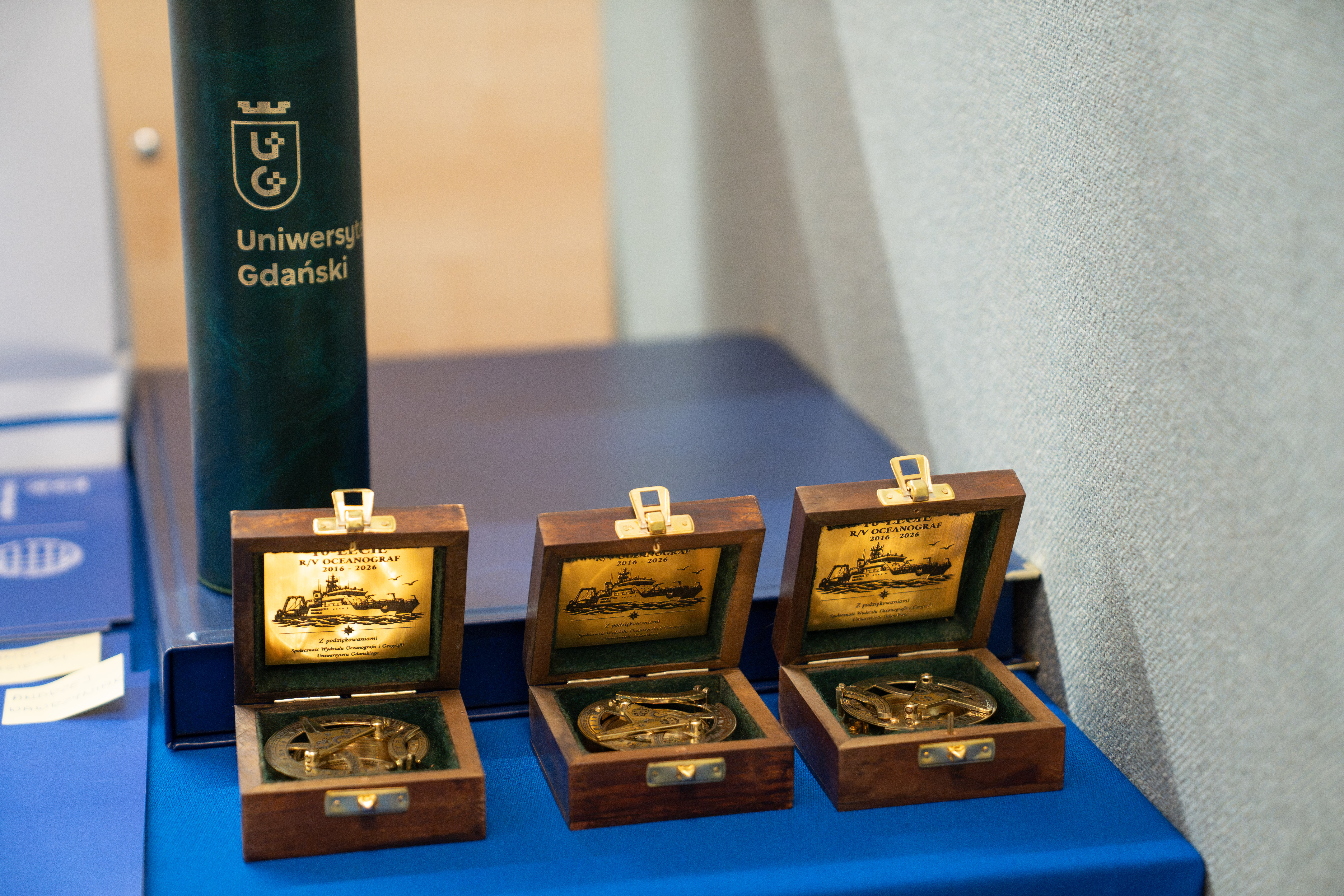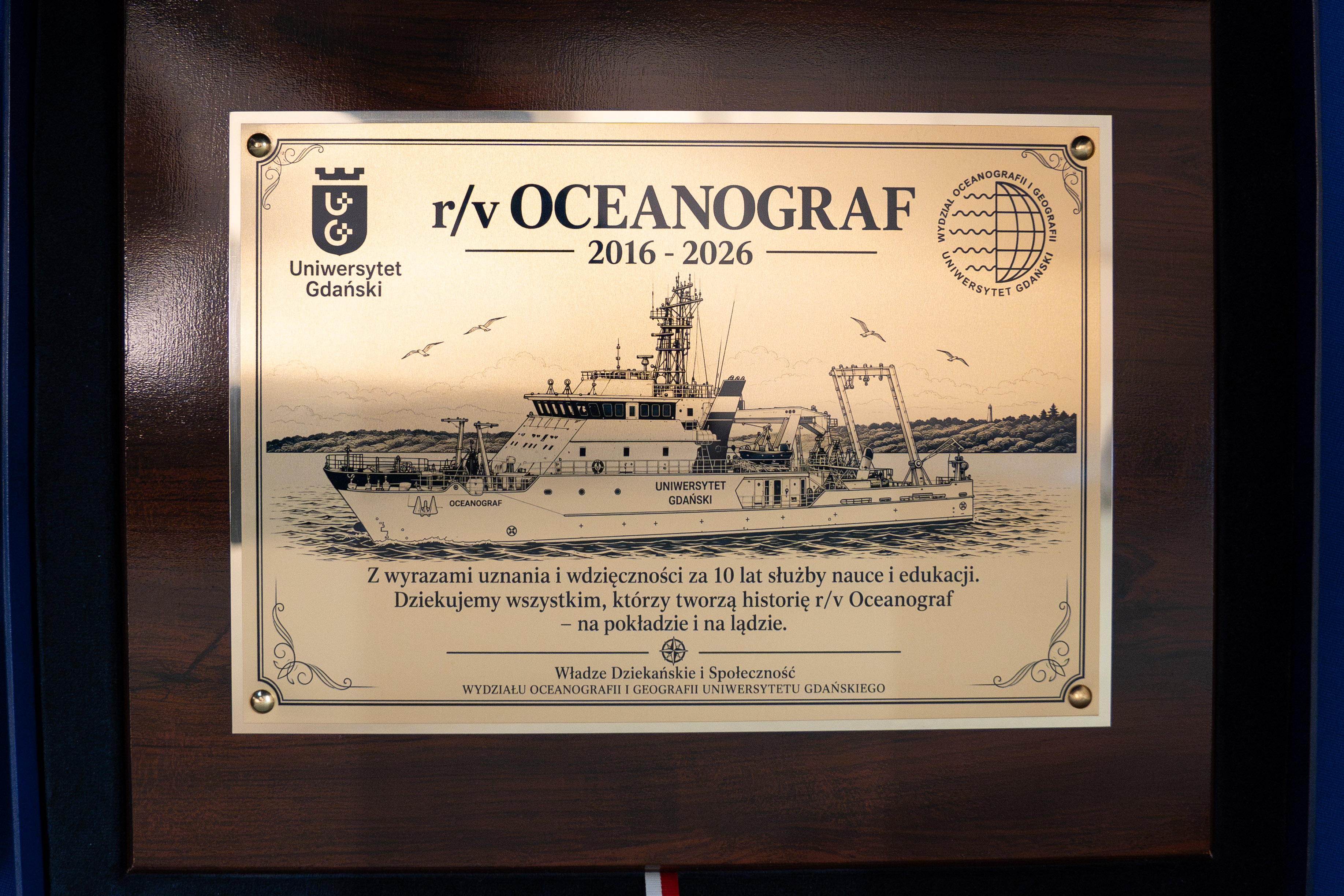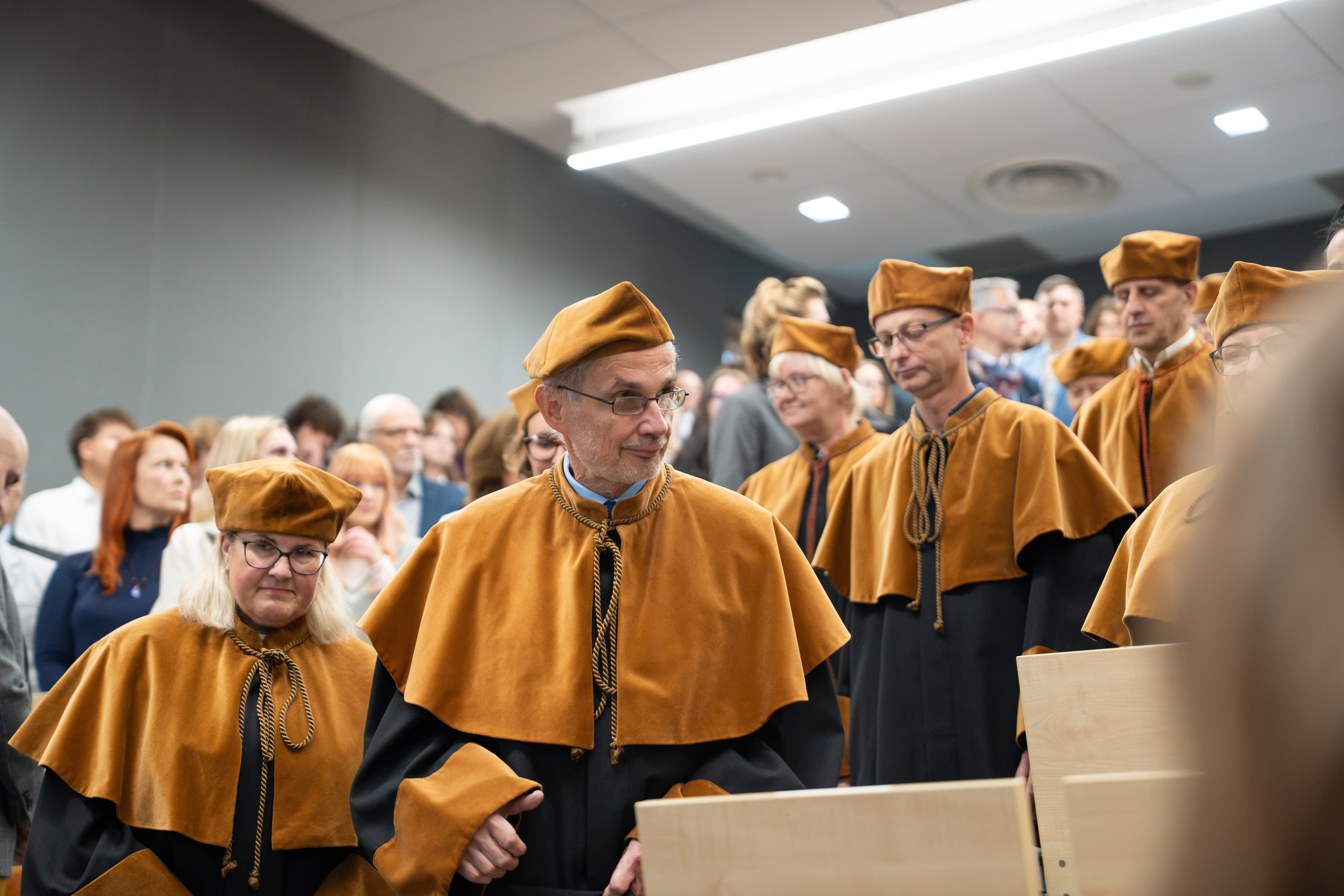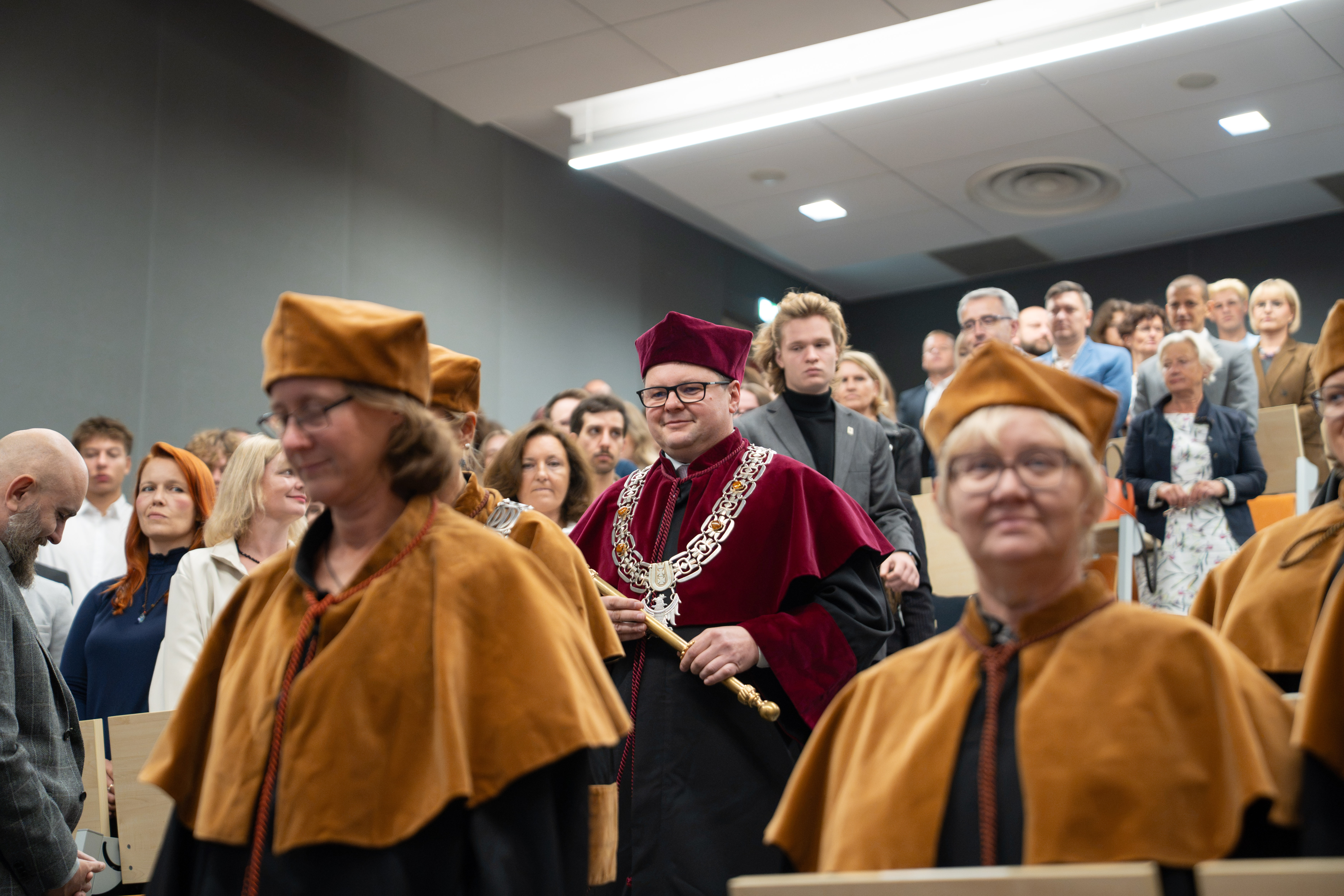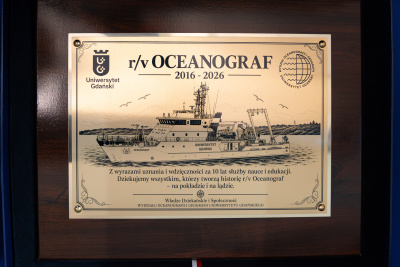
49.5 metres long, with four laboratories, an aerosol observatory, a conference room, and specialised research equipment - the University of Gdańsk’s r/v Oceanograf catamaran is one of the most modern research vessels in Europe. Interdisciplinary oceanographic research covering a very wide range of fields is carried out from its deck, including bathymetric, chemical, geological and biological studies, as well as seabed surveys. Its primary purpose is to explore the Baltic Sea basin, but during two international voyages as part of a joint initiative by the SEA-EU alliance, it sailed both into the warm waters of the Mediterranean Sea and the subpolar waters of the Norwegian Sea. This year, as part of the Polish Research Fleet, it was included on the Polish Research Infrastructure Map. During the ceremonial inauguration of the 2026/2027 academic year at the Faculty of Oceanography and Geography, University of Gdańsk, we celebrated the 10th anniversary of the vessel’s launch!
The Year of Science, or what would happen if you could pull a drain plug out of the ocean
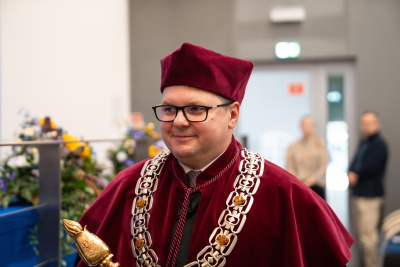
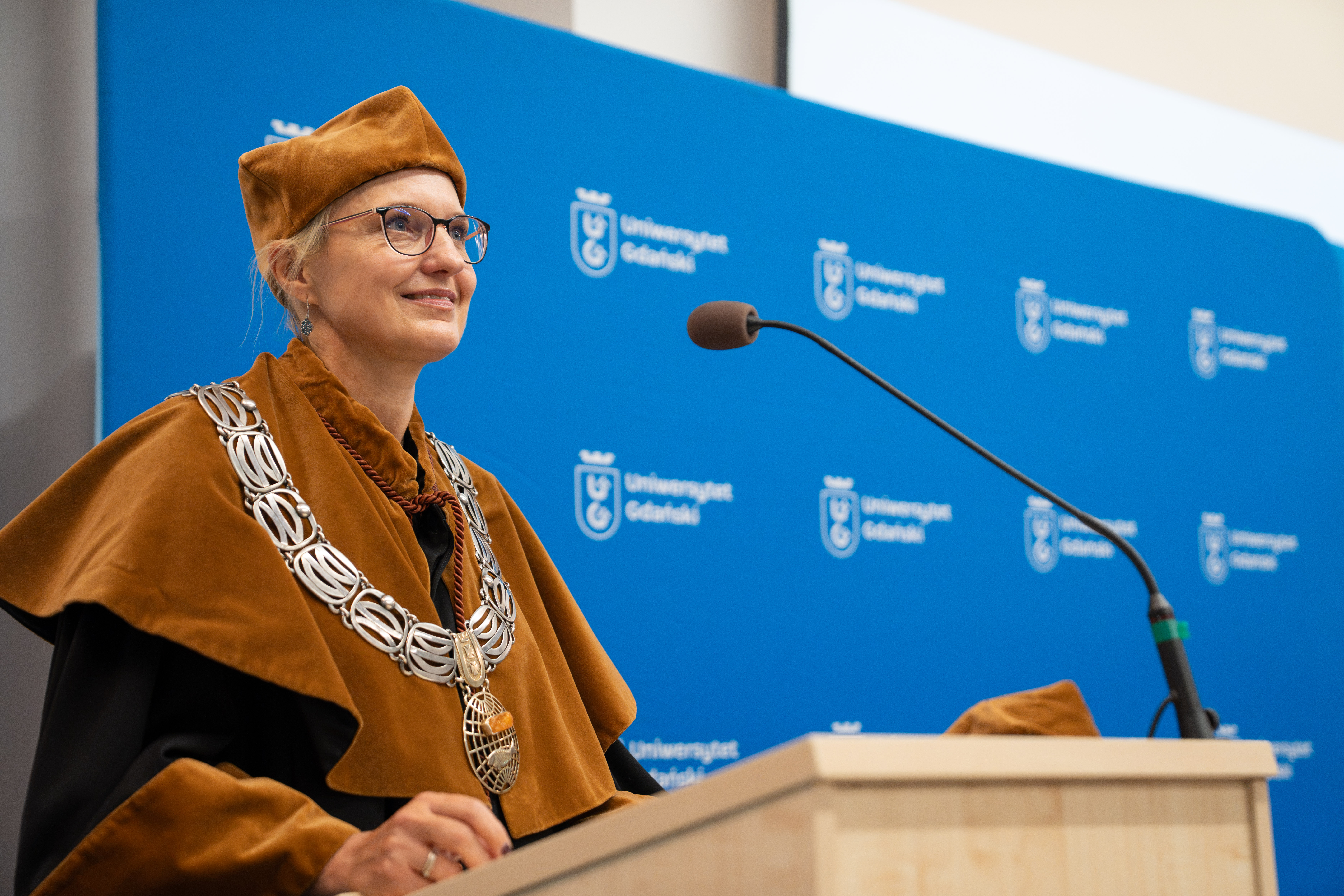
‘The year 2027 has been declared the Year of Science by the Parliament of the Republic of Poland,’ said the Vice-Rector for Research at the University of Gdańsk, prof. dr hab. Wiesław Laskowski. ‘As we begin the academic year that marks the start of these events, I would like to start with an unusual question: what would happen if you could pull a drain plug out of the oceans just like you would from a bath? This is the problem addressed in the book ‘What if?’ by Randall Monroe, who tackles the most absurd questions quite seriously, using physics and mathematics. One reader asked him what would happen if a portal the size of a basketball court were opened at the bottom of the Mariana Trench, through which water would somehow flow out of the Earth. Our imagination conjures up a picture of a gigantic whirlpool and the seabed rapidly being exposed - yet according to Monroe’s calculations, sea levels would drop by roughly one centimetre a day! Monroe therefore speeds up this thought experiment, introduces additional outflows and examines how the world map would change. As the water recedes, further stretches of land are exposed and the connections between islands and continents dry up - but complications soon arise. Not all seas empty completely - as undersea thresholds are exposed, some bodies of water lose their connection to the outflow and become isolated. To know where the water will remain, you need to know the topography of the seabed, and to understand what will happen next, you also need to consider the climate, the water cycle and the ecosystem. Even with a completely fantastical premise, every subsequent step requires knowledge, calculations and the verification of interdependencies. Intuition suggests one thing, calculations show another, and knowledge of geography reveals something we hadn’t even considered at first. This is precisely the value of science: it allows us to look beyond first impressions, teaches us to recognise connections between phenomena and to anticipate consequences. For generations, this faculty has been educating people who are capable of asking such questions and seeking reliable answers to them.’
In his inaugural address, the Vice-Rector recalled the achievements and immense legacy of Gdańsk’s geography department, which recently celebrated its 80th anniversary and whose history stretches further back than that of the University of Gdańsk. He also mentioned the recent successes of the Faculty of Oceanography and Geography (WOiG), including another spectacular rise in the Shanghai Ranking for oceanography (this year, the discipline was ranked in the 51-75 bracket, compared to the 76-100 bracket last year and the 151-200 bracket in 2024). Prof. Wiesław Laskowski also emphasised that, after years of effort, the Polish Research Fleet, to which the r/v Oceanograf belongs, has been included on the Polish Research Infrastructure Map. He congratulated the Faculty’s management and community on all these achievements.
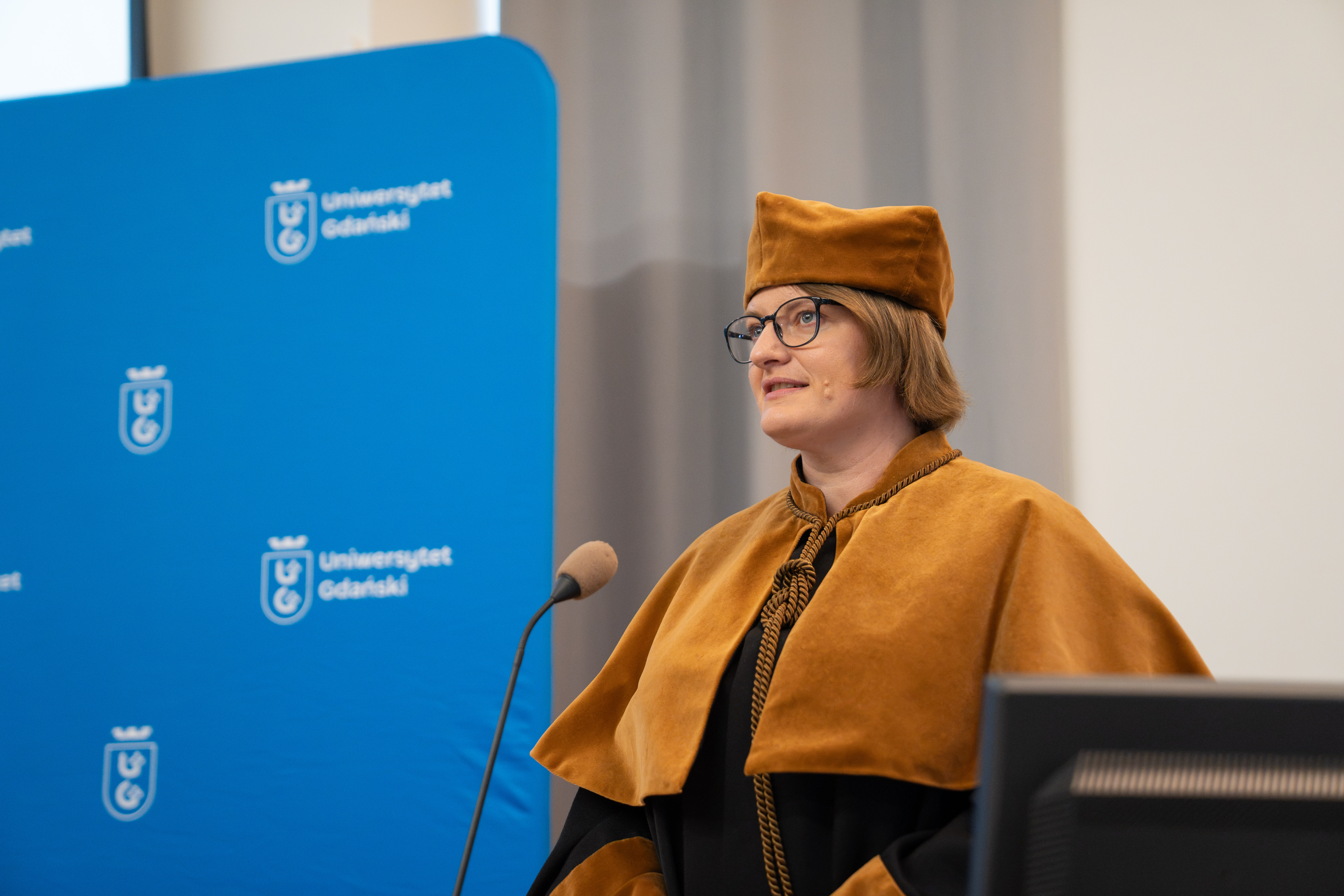
The Dean of the Faculty of Oceanography and Geography at the University of Gdańsk, dr hab. Katarzyna Smolarz, prof. UG also referred to the latest achievements, emphasising the continuity of academic tradition, openness to the future and the fact that people are behind all these successes, whilst the Faculty’s strength lies primarily in education and collaboration, including international cooperation.
‘The opening of the academic year is a moment when emotions, hopes and expectations regarding what lies ahead come together,’ said the Dean. ‘It is also a moment when we realise anew that we are part of a greater history - a history linked to our Faculty, but also to our entire University and the academic community of the University of Gdańsk.” This history has been unfolding at our Faculty for many years; it has been shaped by people full of passion, knowledge and courage. It is thanks to their work and commitment that we can today benefit from the legacy we have inherited, which is also our commitment to the future. The University is not merely a guardian of tradition - it is a place where questions are born, bold ideas take shape, and answers and solutions are forged that we cannot even name today. The academic community is not only a community of knowledge, but also a community of responsibility for one another and for the place we live in.’
Thousands of hours at sea and hundreds of nautical miles sailed - but above all, a crew that trusts one another
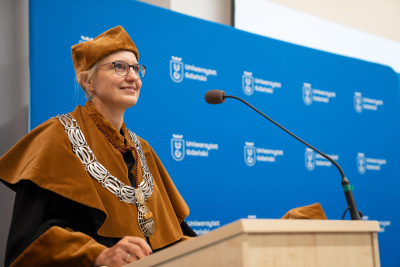
‘This year we are also celebrating the 10th anniversary of the launch of our vessel, the r/v Oceanograf,’ continued prof. Katarzyna Smolarz. ‘This decade has seen thousands of hours spent at sea, hundreds of expeditions, many nautical miles, as well as many days - and nights - spent discovering what lies hidden in the sea. The Oceanograf is our second home, a place for conducting research, collecting samples and observing changes in the marine environment; it is a place for acquiring knowledge that would be impossible to gain without it whilst remaining on land. Every expedition is another step towards a better understanding of the marine environment. We are delighted that, as of this year, our vessel is one of three ships forming part of the Polish Research Fleet, which has been included on the Polish Research Infrastructure Map. We must, however, realise that no vessel could carry out its mission without people. That is why today’s anniversary is, above all, an opportunity to thank the crew members, researchers, students and everyone who, over the years, has contributed to ensuring that our Oceanograf can fulfil its task safely and effectively. It is thanks to their work, knowledge, experience, sense of responsibility and the time they have devoted to ensuring the vessel functions so well that it has become such a vital part of Polish oceanography. I wish us all that the coming years will bring even more extraordinary expeditions, valuable discoveries and reasons to be proud. May the deck of our vessel always be a place of learning, collaboration and discovery, and may every subsequent expedition end with a safe return to port. A new academic year is always a fresh start - let us remember that this next year of our shared journey requires not only a good vessel and a properly charted course, but above all - a crew that trusts one another.’
Mgr inż. Piotr Mrozowski from the Shipowner's Office also addressed the gathering during the ceremony, reminding guests of the ship’s history and outlining its basic technical specifications. These specifications are primarily tailored to the exploration of the relatively shallow waters of the Baltic Sea, but are also linked to port regulations: the vessel’s size corresponds to the maximum dimensions permitted for entry into the port of Gdynia without a pilot’s assistance.
The origins of the r/v Oceanograf date back to 2013, when the keel-laying ceremony took place.
Just three years later, in 2016, the ship was officially launched, and in 2017 it was handed over to the shipowner. In 2019, the vessel obtained certification for international navigation (previously it could only operate within Polish territorial waters). The year 2022 saw the first international voyage as part of the SEA-EU alliance - the Oceanograf sailed south to the warm waters of the Mediterranean Sea, reaching as far as the vicinity of Cádiz. Another ambitious undertaking took us - in 2024 - to the far north, beyond the Arctic Circle, to the vicinity of Bodø in Norway, during the BaltArctic Research Cruise. The year 2026, meanwhile, saw the vessel’s second class renewal.
The scientific research carried out on board the Oceanograf - including that which formed the focus of the most recent international voyage - was described by the Chair of the Development Team for the r/v Oceanograf Research Vessel, dr hab. Agata Weydmann-Zwolicka, prof. UG, who also served as the scientific leader of the BaltArctic Research Cruise.
We encourage you to watch the video report from the BaltArctic cruise on the SEA-EU UG website Let’s experience it again! https://oig.ug.edu.pl/news/112326/inauguracja-roku-akademickiego-202620…