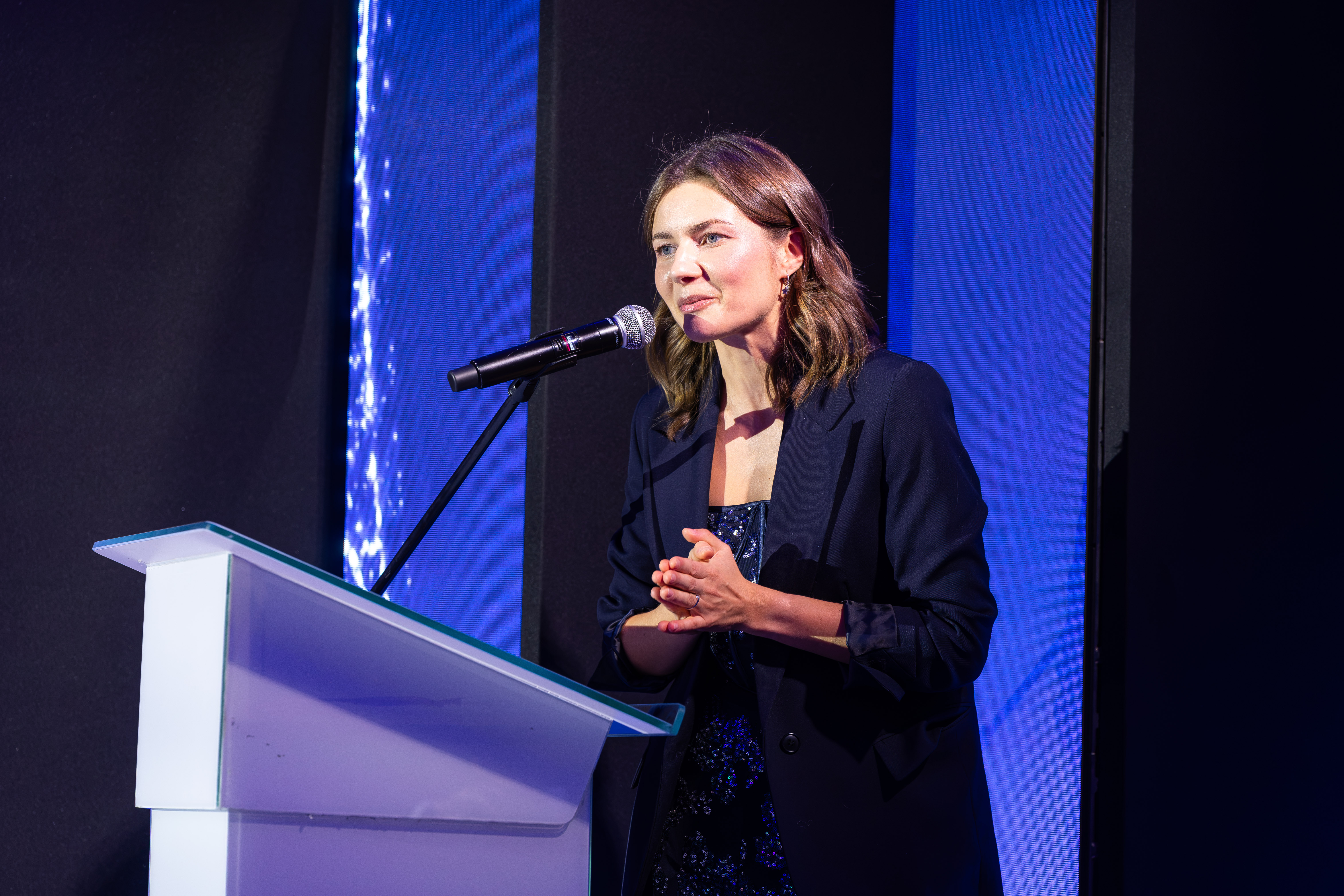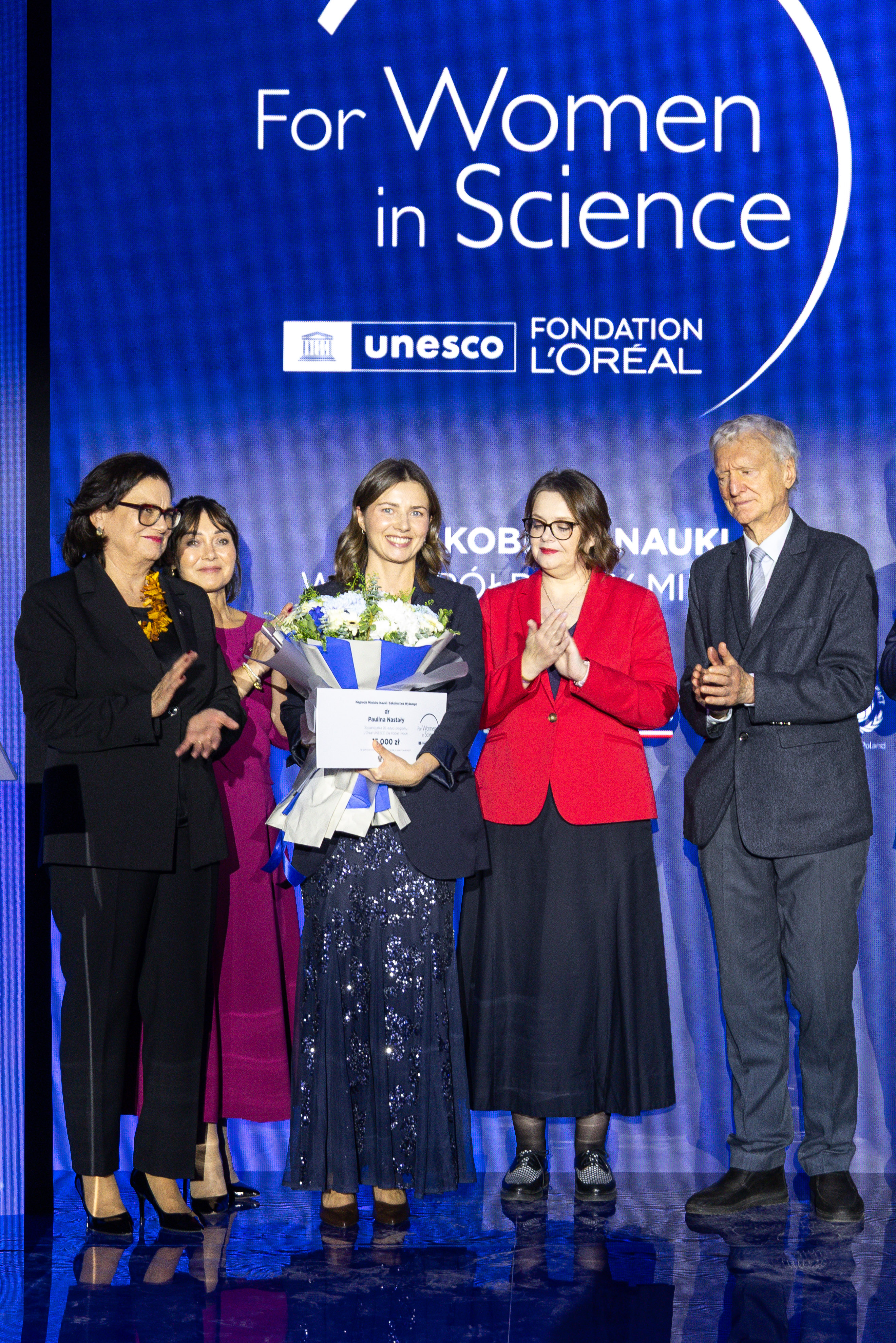
fot. Artur Kowalczyk
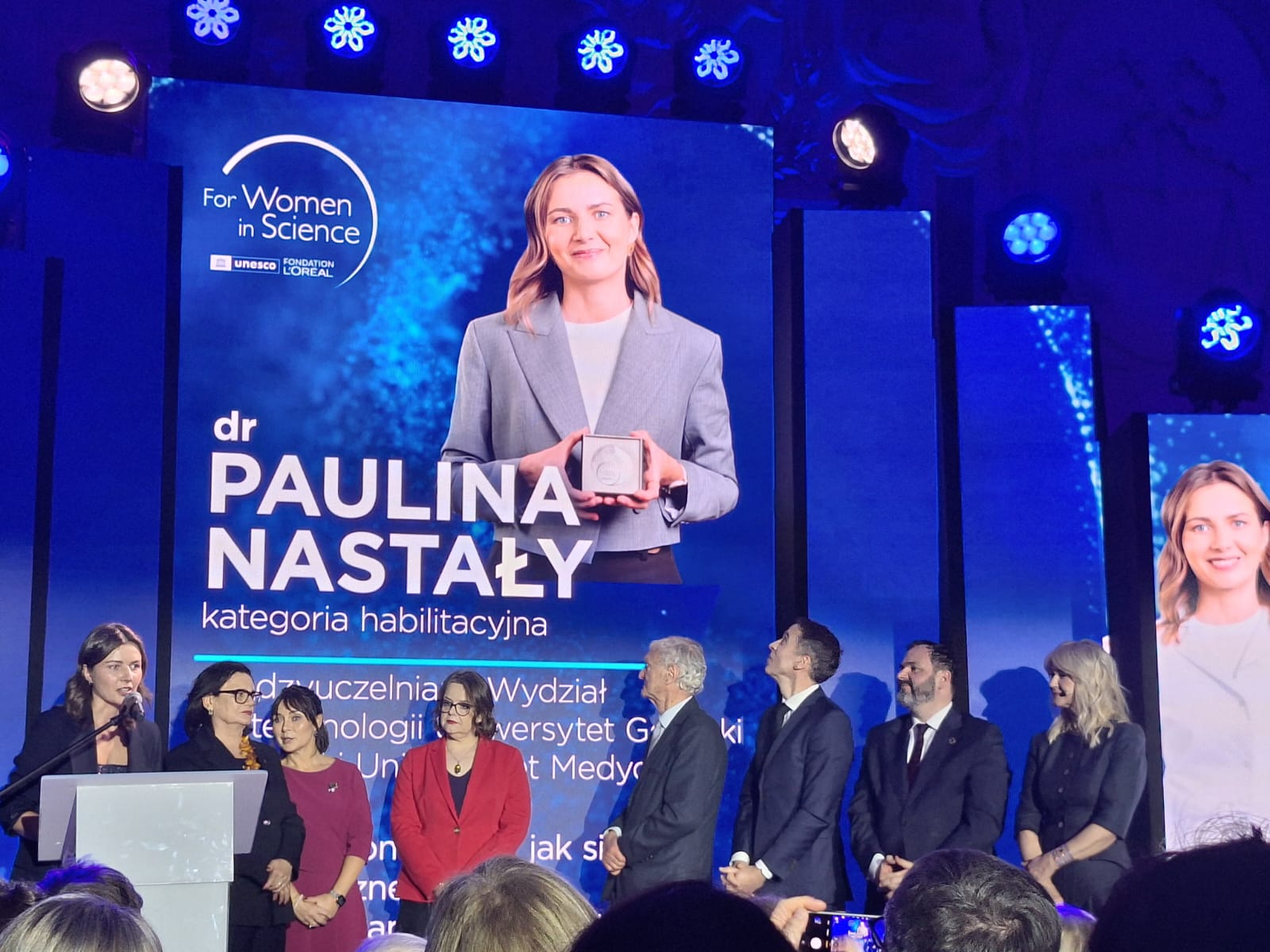
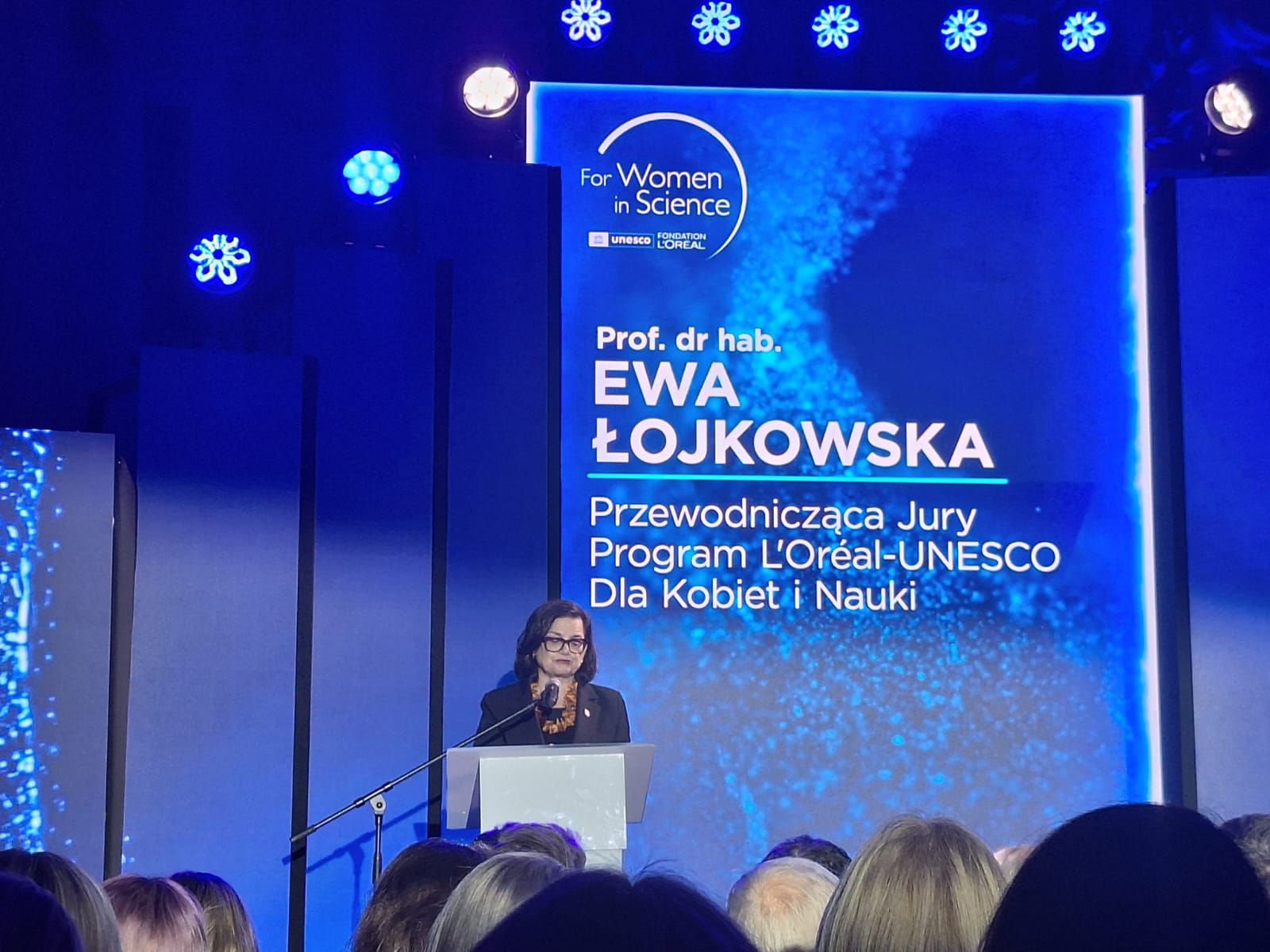
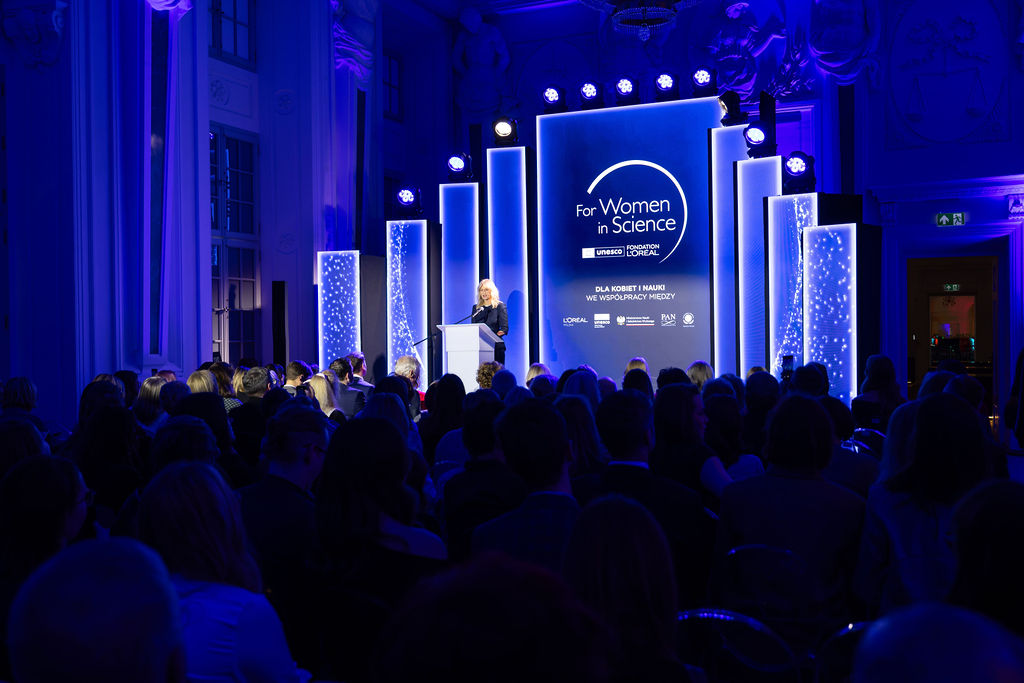
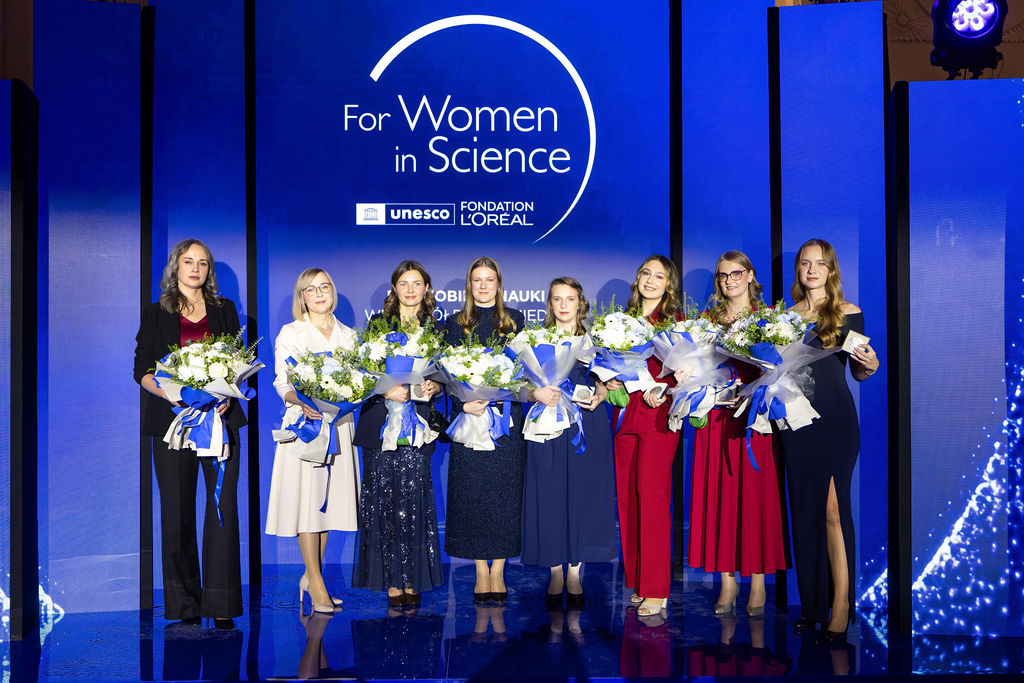
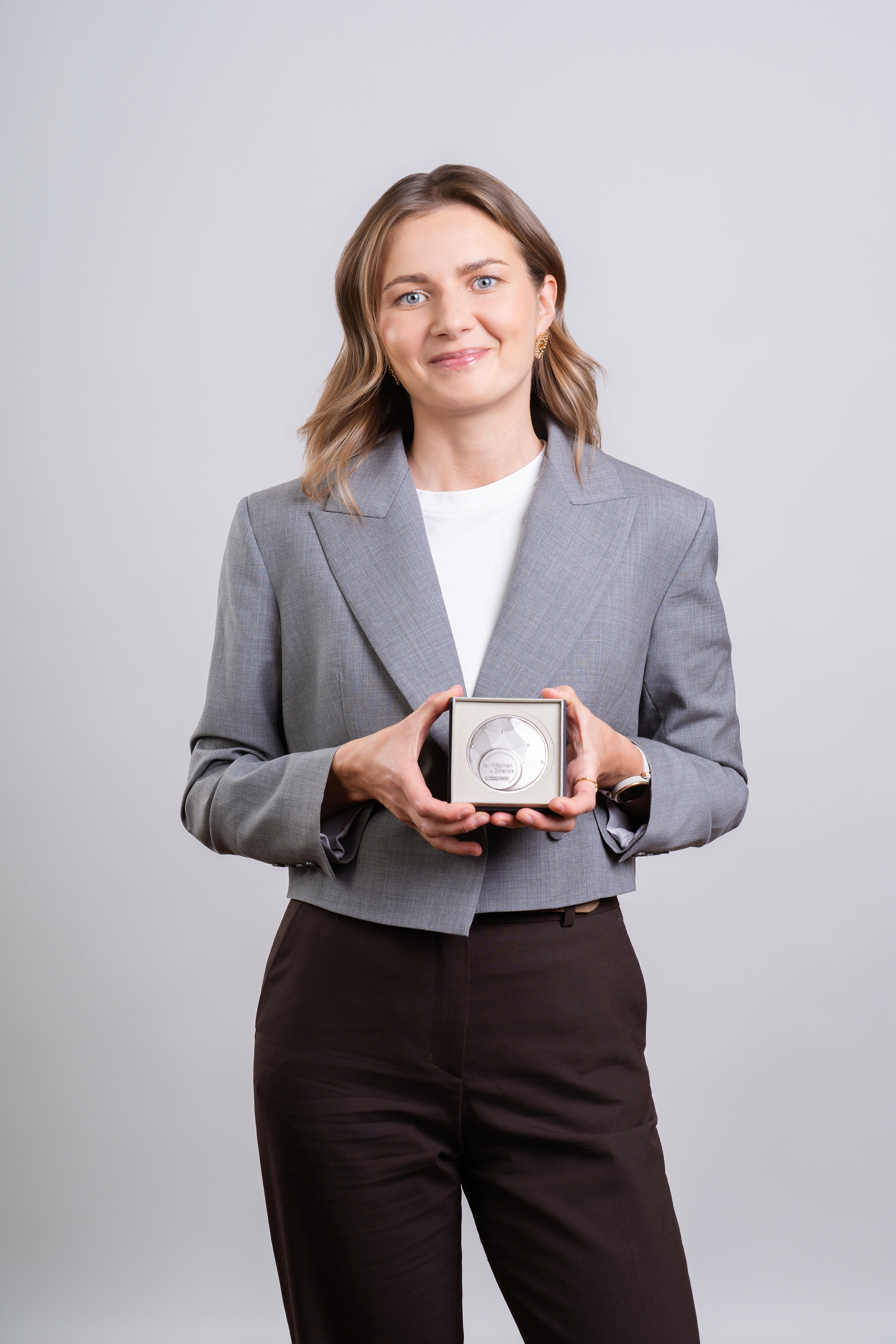
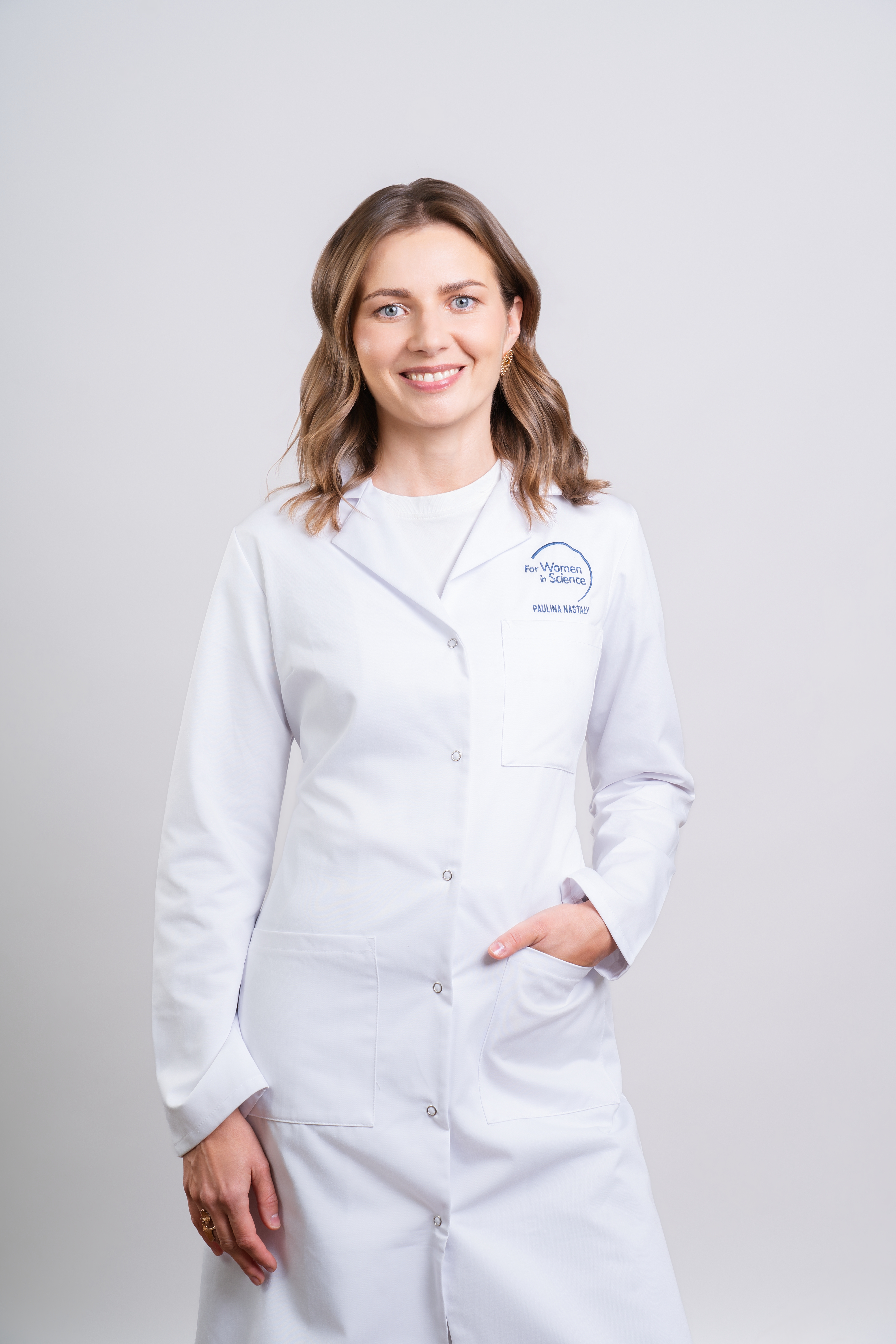
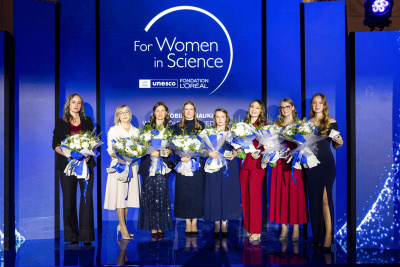
For 26 years, the L’Oréal-UNESCO Dla Kobiet i Nauki (For Women in Science Poland) programme has been supporting Polish female researchers at various stages of their scientific careers. By awarding fellowships to outstanding female scientists, it not only provides financial support for their research and further career development, but also helps to raise their profile on the national and international stage. This is of immense importance, as successive studies and reports demonstrate that women’s scientific achievements still do not go hand in hand with adequate recognition - yet visibility helps to inspire future generations of female researchers, break down stereotypes, and strengthen the position of women in the scientific community. On 25 November 2026, the 26th L’Oréal-UNESCO For Women in Science Poland Scholarship Award Ceremony took place. Eight scholarship recipients were honoured, including dr Paulina Nastały from the Intercollegiate Faculty of Biotechnology UG and MUG (employed at the Medical University of Gdańsk). Professor Ewa Łojkowska from the University of Gdańsk has chaired the scholarship programme’s jury for the past 20 years.
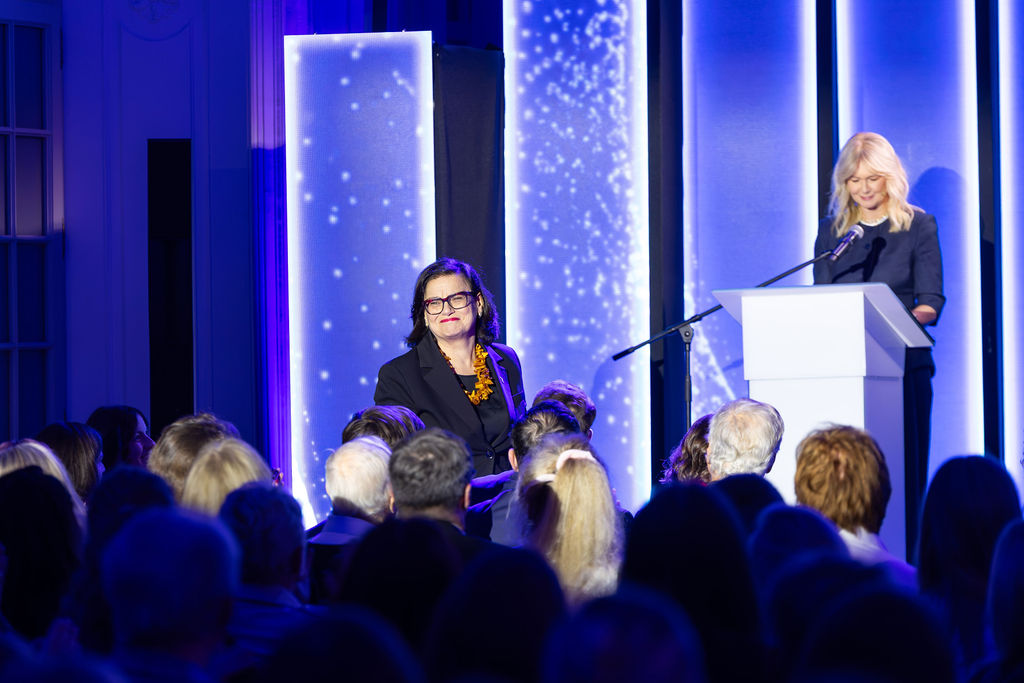
‘Since the inception of the L’Oréal-UNESCO For Women in Science Poland programme, we have had the immense privilege of discovering the scientific passions and research findings that push the boundaries of our knowledge,’ said Prof. Ewa Łojkowska, as she opened the event. ‘The gala, at which we present the female researchers honoured in the 26th edition, is much more than a summary of their scientific achievements. It is a celebration of women’s visibility in science. Scientific research conducted by women is changing the face of modern science and contributing to solving humanity’s most pressing problems.” Nevertheless, the scientific achievements of women researchers do not always receive the recognition they deserve. For 26 years, the L’Oréal-UNESCO For Women in Science Programme has been consistently working to promote women’s scientific achievements. In this year’s edition, we received 385 applications from talented female researchers who are carrying out ambitious scientific projects and seeking answers to the questions that fascinate them. Each of our scholarship recipients possesses a wealth of knowledge, a thirst for discovery and a commitment that deserve to be recognised.’
Science has a female voice. It is time for it to be heard beyond the laboratory
fot. Artur Kowalczyk
In the 26th edition of the scholarship programme, 385 applications were received, of which as many as 180 related to habilitation achievements. As prof. Ewa Łojkowska notes, the increase in applications for habilitation scholarships is one of the most significant changes over the programme’s more than a quarter of a century of operation: in 2001 there were just 10, and in 2020, there were 20. This sharp rise is extremely encouraging, as it proves that more and more women are attaining the highest academic degrees, climbing to the top of the academic hierarchy.
‘In academia, we often talk about role models,’ noted prof. Łojkowska. ‘A student standing outside a laboratory door does not need slogans about equality. She should see a woman leading a team, sitting on a research council, or being honoured on stage for her scientific achievements. Each of the female researchers recognised by the programme sends a clear announcement to her younger colleagues: “This is your place too’’.’
2026 Scholarship Recipients
Master’s scholarship:
- Mgr Adrianna Kruk (Faculty of Chemistry, University of Warsaw); thesis topic: Quantum-chemical modelling of interactions between fast, charged, massive particles and molecules
PhD scholarships:
- Mgr inż. Dominika Benkowska-Biernacka (Faculty of Chemistry, Wrocław University of Technology); research topic: The use of nanoparticles as multifunctional additives for biologically significant lipid mesophases
- Dr inż. Amelia Klimek (Faculty of Chemical Technology, Poznań University of Technology); research topic: The influence of the texture and structure of carbon electrode materials on energy storage in supercapacitors
- Dr Katarzyna Olkowska-Pucko (Faculty of Physics, University of Warsaw); research topic: Exciton complexes in two-dimensional van der Waals structures
Habilitation scholarships:
- Dr Paulina Gałka-Marciniak (Institute of Bioorganic Chemistry, PAS, Poznań); research topic: Genetic factors shaping the microRNA profile in cancer cells
- Dr Ewelina Małecka (International Institute of Molecular and Cellular Biology in Warsaw); research topic: Molecular mechanisms of gene regulation and host-phage interactions in bacteria
- Dr Paulina Nastały (Inter-University Faculty of Biotechnology, University of Gdańsk and Medical University of Gdańsk); thesis topic: Mechanobiology: how mechanical forces influence the behaviour and spread of cancer cells
- Dr inż. Marta Sawicka (Institute of High Pressures, Polish Academy of Sciences, Warsaw); thesis topic: Understanding and controlling the properties of nitride semiconductors for applications in photonics
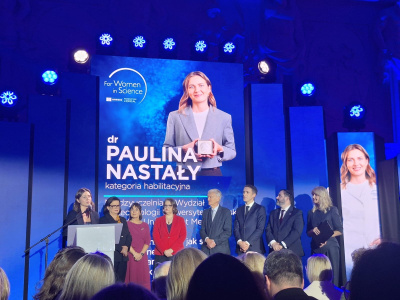
We are particularly delighted by the success of dr Paulina Nastały from the IFB UG & MUG, who works at the Medical University of Gdańsk and is investigating how cancer cells are affected by mechanical forces and the properties of the surrounding tissues. She pays particular attention to the cell nucleus, which contains genetic material, and the membrane that protects it. She analyses how cells and their internal structures respond to pressure and deformation as they force their way through tissues. She is seeking answers to the question of what enables cancer cells to survive such stresses and spread throughout the body. A better understanding of these mechanisms may, in future, help to assess the risk of cancer development and spread, and identify new treatment options.
‘Women in Science. Visibility Matters’ - report
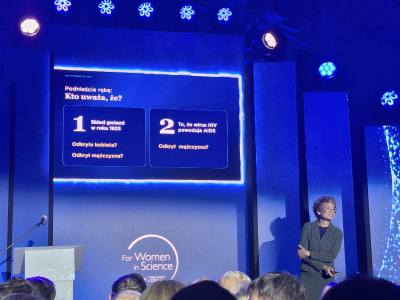
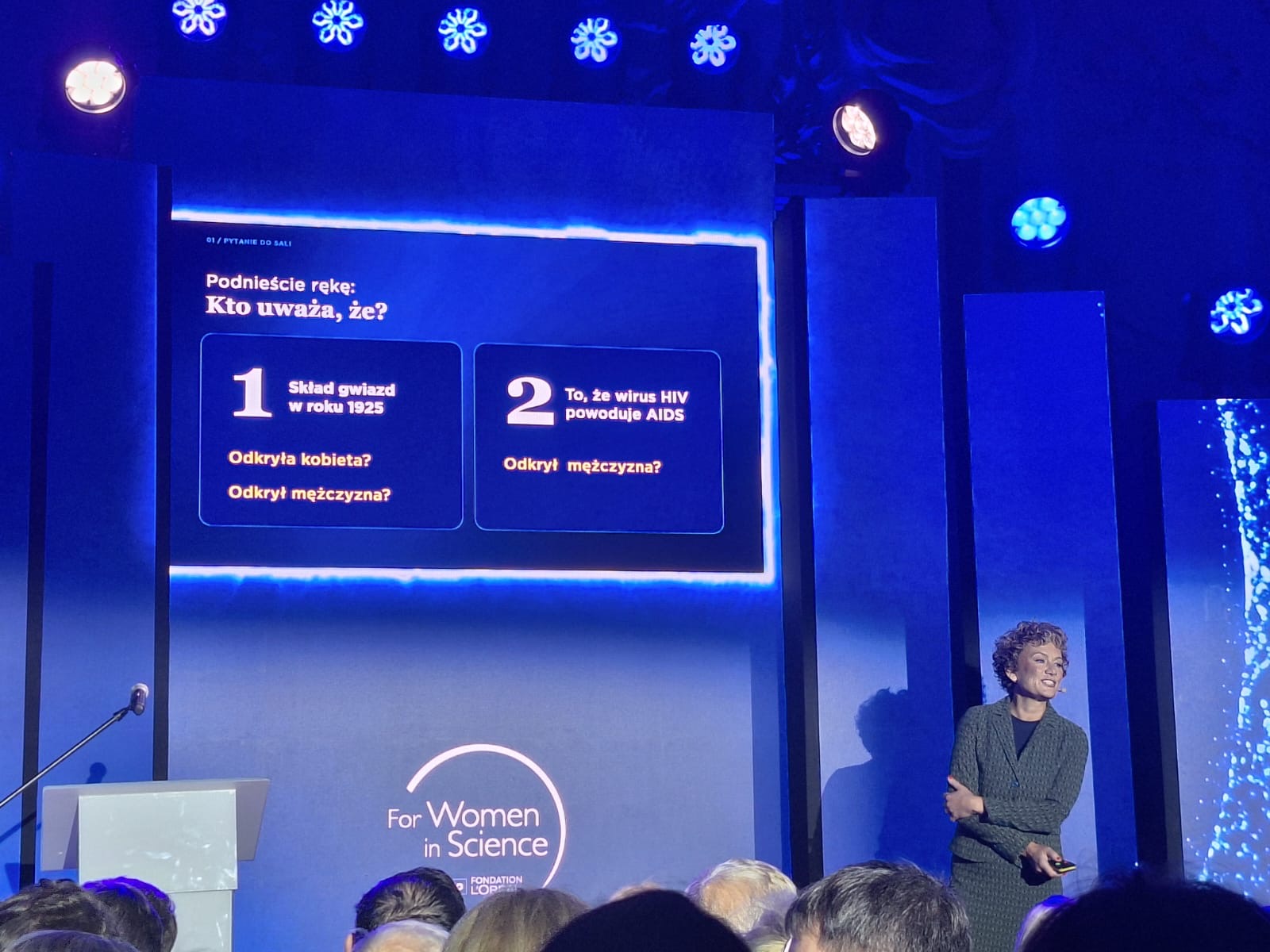
During the gala, dr hab. Magdalena Żadkowska, prof. UG presented the results of a survey conducted in August 2026 on the visibility and recognition of women in the world of science. The survey confirms that ‘the visibility of women in science is very important - and still very poor’. A mere 13.6 per cent of respondents correctly identified a woman as the discoverer of the basic chemical composition of stars - even though this discovery was made in 1925. No one was able to name a living female scientist who is a leading authority in her field, and as many as 75 per cent of Polish men and women were unable to name any living scientific authority at all.
The report shows that, in terms of the visibility of science - and particularly of female scientists - much remains to be done, despite the enormous progress made in recent decades.
‘According to respondents, what increases the recognition of female researchers is, above all, science communication activities carried out by the researchers themselves, the presence of female researchers in the media, awards and honours, and the presence of female experts in public debate,’ stated prof. Magdalena Żadkowska.
The University of Gdańsk has long been actively working to promote gender equality, inclusivity and the increased presence and visibility of female researchers. The “Plan for the Implementation of Gender Equality at the University of Gdańsk” is being implemented; the “I Include Gender in Research” competition is organised; and for the past two years, the Joanna Schpenhauer Rector’s Award has been presented to female researchers who have been appointed to the rank of professor.
Recent initiatives also include the ‘Dictionary of Feminative Forms of The Fahrenheit Union of Universities in Gdańsk’, edited by prof. Zenon Lica. As prof. Ewa Łojkowska pointed out during the gala: ‘For the presence of women in science to become entirely self-evident, we need a language that keeps pace with it. For years, the highest academic titles were almost exclusively in the masculine form. Yet what we do not name disappears from the public imagination. That is why I am so pleased that we are using feminine forms more and more naturally. When we say ‘professoress’, ‘deaness’, ‘directoress’ or ‘project manageress’, we are not distorting reality - we are simply describing it accurately. [Due to, among others, the predicate form changing according to the grammatical gender of the subjects and the fact that most nouns exist in both masculine and feminine form, the processes regarding inclusivity and equality are very different in Polish than they are in English - editor’s note.]
We warmly congratulate all the scholarship recipients and wish them every success in the future.
More about the programme: Homepage - L’Oréal for Women in Science.
Since 1998, the L’Oréal Foundation and UNESCO have been working together to promote women in science by creating programmes that put female scientists in the spotlight and support their achievements.
Over the 28 years of the global L’Oréal-UNESCO For Women in Science Programme, fellowships have been awarded to over 5,000 talented women worldwide - through 50 local programmes operating in more than 140 countries. Over 250 fellowships are awarded annually. More than 50 scientific institutions from around the world and 500 collaborating scientists are involved in the programme. In addition to the local fellowship programmes, each year five women receive the L’Oréal-UNESCO For Women in Science Award for outstanding scientific achievements. To date, as many as seven laureates of the global L’Oréal-UNESCO For Women in Science Awards programme have gone on to win Nobel Prizes.
L’Oréal’s long-standing efforts, carried out in collaboration with its partners, help to strengthen gender equality in science by highlighting the research work of outstanding female scientists, helping women to develop their capabilities in scientific leadership, and inspiring future generations of female researchers.
In Poland, the L’Oréal-UNESCO For Women in Science programme has been running since 2001. Its aim is to promote the scientific achievements of talented female researchers, encourage them to continue their work towards the advancement of science, and provide financial support. The programme’s partners are the Polish National Commission for UNESCO, the Ministry of Science and Higher Education, the Polish Academy of Sciences and the UN Global Compact Network Poland.
In Poland, including this year’s edition, a total of 145 female scientists have already been honoured. Former scholarship holders from previous years now successfully lead research teams, secure international grants and, as inspiring mentors, shape new generations of female scientists. Each year, the selection of scholarship recipients is carried out by an independent jury chaired by prof. dr hab. Ewa Łojkowska.