
We present another winner of the National Science Centre's OPUS 29 competition: prof. dr hab. Hanna Mazur-Marzec from the Faculty of Oceanography and Geography, whose project An interdisciplinary approach to understanding the diversity, physiology and toxicity of Prymnesium parvum received funding in the amount of PLN 5,418,751.00 (including PLN 2,272,300.00 for the University of Gdańsk).
Prof. Hanna Mazur-Marzec
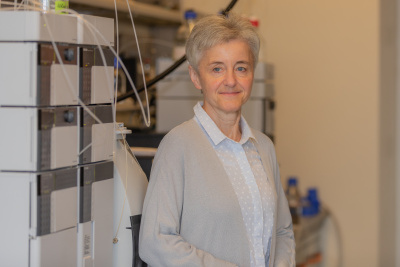
The professor has a degree in chemistry. She currently works at the Faculty of Oceanography and Geography of the University of Gdańsk, where she is the Head of the Department of Marine Biology and Biotechnology and the Marine Biotechnology Laboratory. Her scientific interests focus on biologically active compounds produced by microorganisms (microalgae and bacteria). Her most important research projects concern the structural diversity and biotechnological potential of these compounds. She also continues her earlier interests in biotoxins produced by microalgae.
She is the author of over 120 publications in indexed scientific journals. She has managed numerous KBN and NSC grants and is also active in the international scientific community. She has participated in projects such as FOCUS, CESBA, CYanoTech, CLISED, MAREX and has served as a member of the Management Committee of four COST actions (TOPWATER, Ocean4BioTech, EU ALGAE, CYANOCOST).
Prof. Hanna Mazur-Marzec is a member of the Polish Academy of Sciences (since 2022). Her most important awards include the Prof. Karol Taylor Scientific Award granted by the Rector of the University of Gdańsk (2021), the Jan Hevelius Science Award of the City of Gdańsk (2024) and the Minister of Science Award (2024).
About the project
The project, funded by the NSC as part of the OPUS competition, concerns the toxic algae species Prymnesium parvum, which in 2022 caused mass fish deaths in the Odra River. The idea for the project was based on research previously conducted by two teams from the University of Gdańsk: the Department of Molecular Biology and the Marine Biotechnology Laboratory.
Although the results of this work (published in the journal Water Research, 2025) made a significant contribution to existing knowledge about the toxicity of the so-called golden algae, they also showed how little we still know about this organism and the processes leading to the catastrophic effects of its occurrence. As answering these questions requires the participation of experts representing various fields of competence, teams from the Jagiellonian University, the University of Warsaw, the University of Life Sciences in Lublin, the University of Silesia in Katowice and the European Regional Centre for Ecohydrology of the Polish Academy of Sciences in Łódź were invited to participate in the project. The team entrusted the role of project manager to dr hab. Dariusz Dzidza, prof. UJ, from the Metabolomics Laboratory of the Jagiellonian University. Two teams from the University of Gdańsk will play a significant role in the implementation of the project: the Department of Molecular Biology, headed by Prof. Grzegorz Węgrzyn, and the Marine Biotechnology Laboratory, headed by prof. Hanna Mazur-Marzec.
‘The aim of the project is, among other things, to explain how diverse the P. parvum population in Polish waters is and why fish mortality does not always accompany blooms of this algae,’ explains prof. Hanna Mazur-Marzec. ‘The project will also allow us to learn about the impact of biotic and abiotic factors on the expression of genes related to the biosynthesis of primines (toxins produced by P. parvum). We will also better understand the mechanism of action of these toxins on fish and will be able to assess the risk to humans that may result from contact with golden algae.’
Interview with prof. Hanna Mazur-Marzec: Prof. Hanna Mazur-Marzec of the WOiG UG talks about the study of samples from the Oder River | NEWS - Uniwersytet Gdański