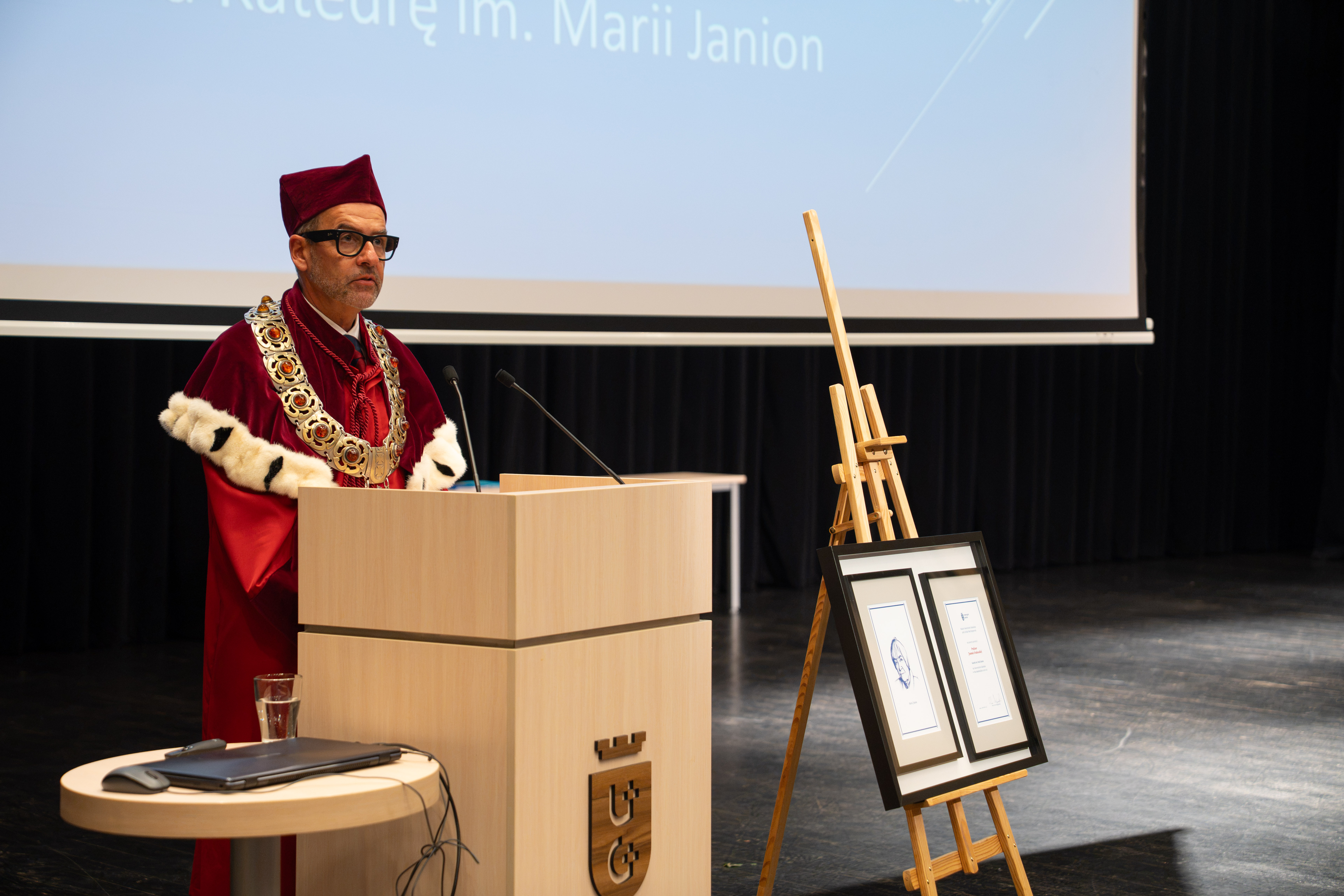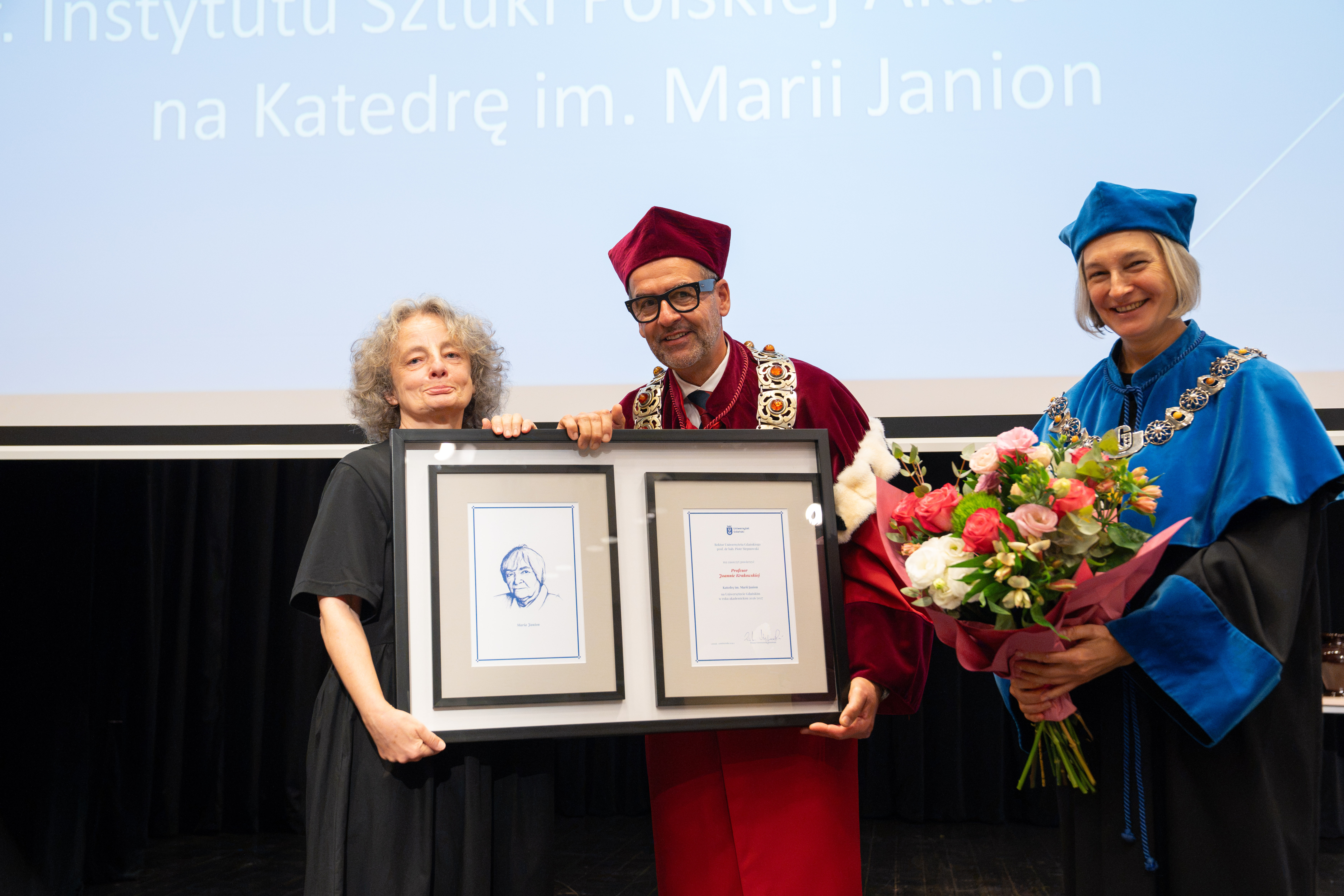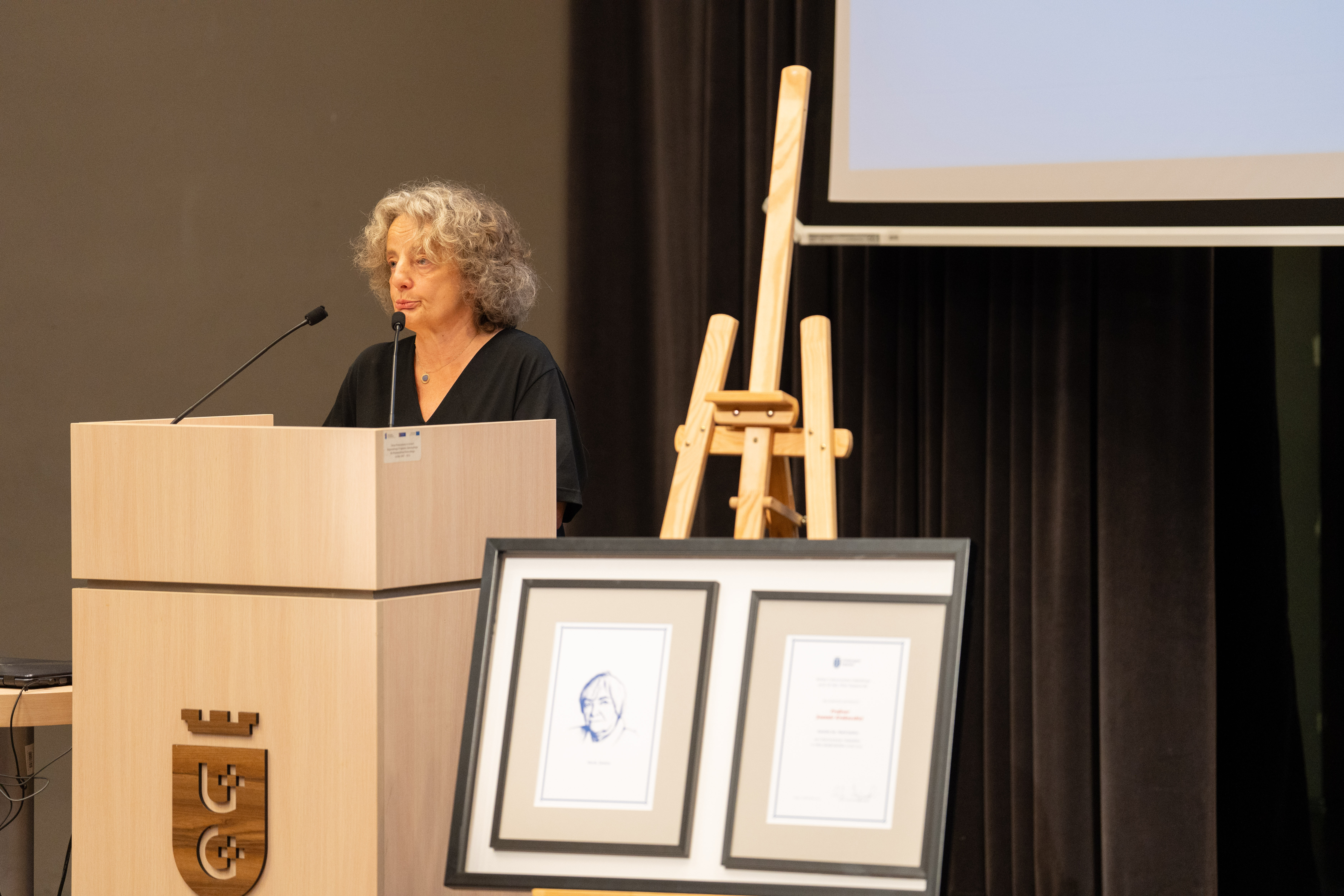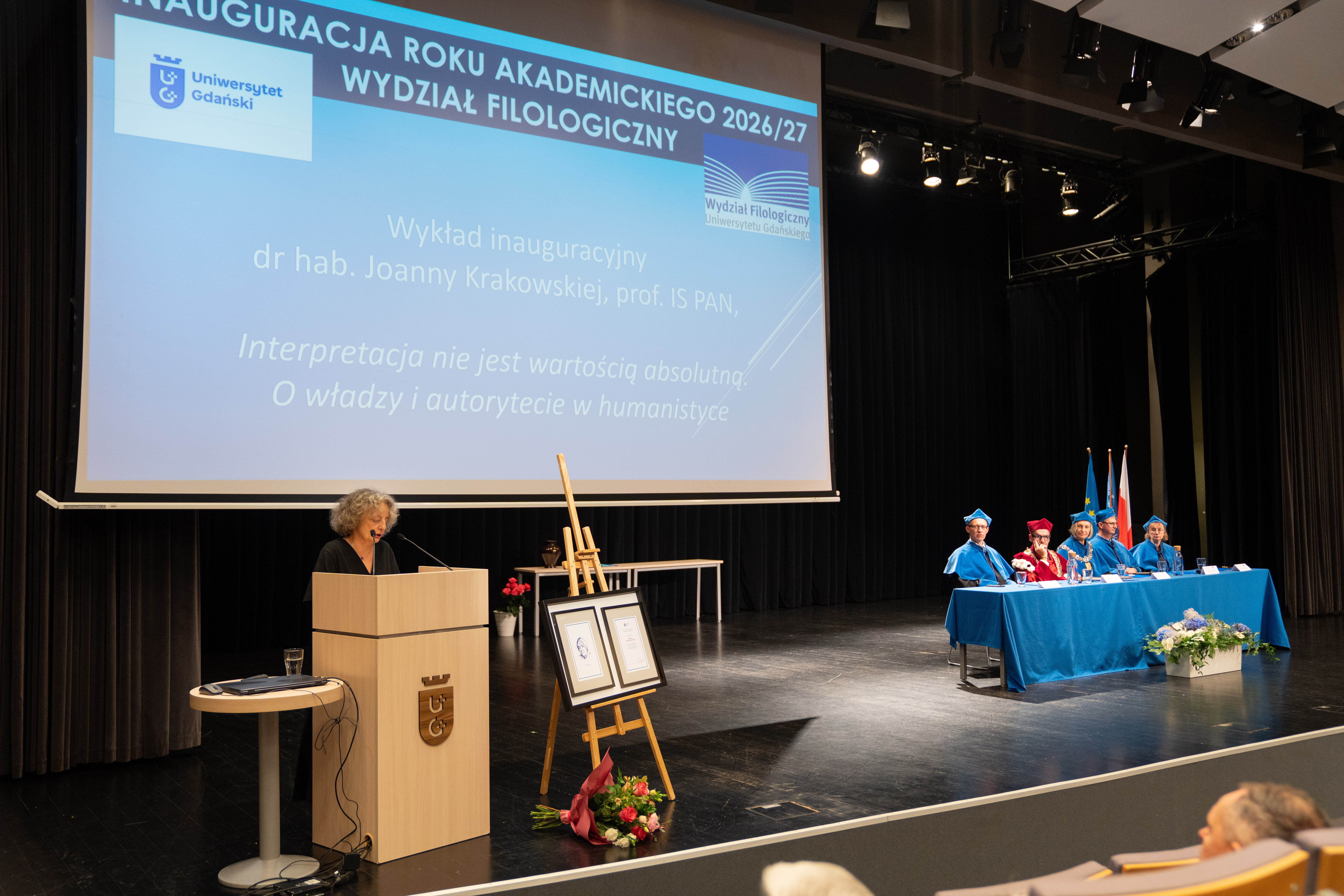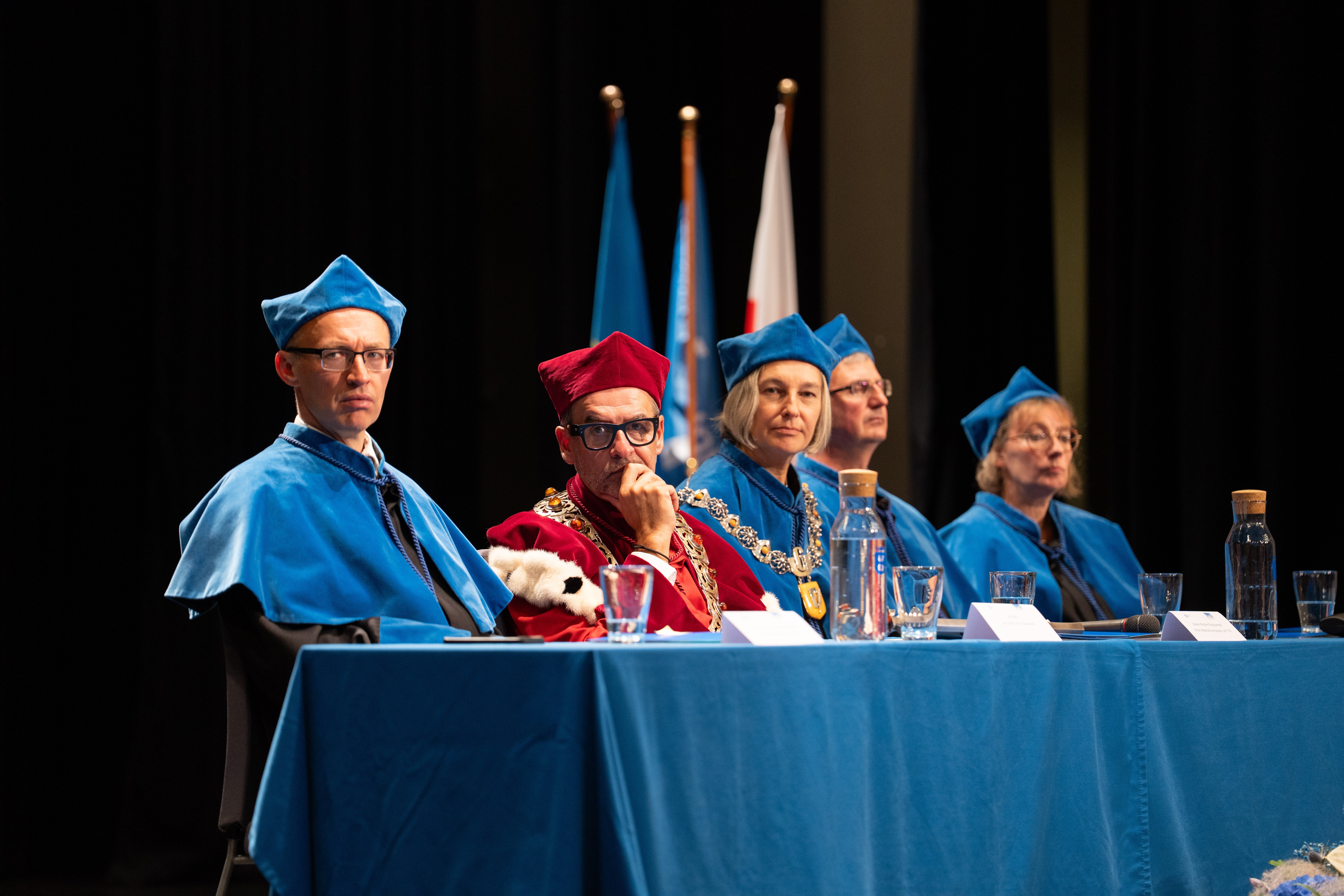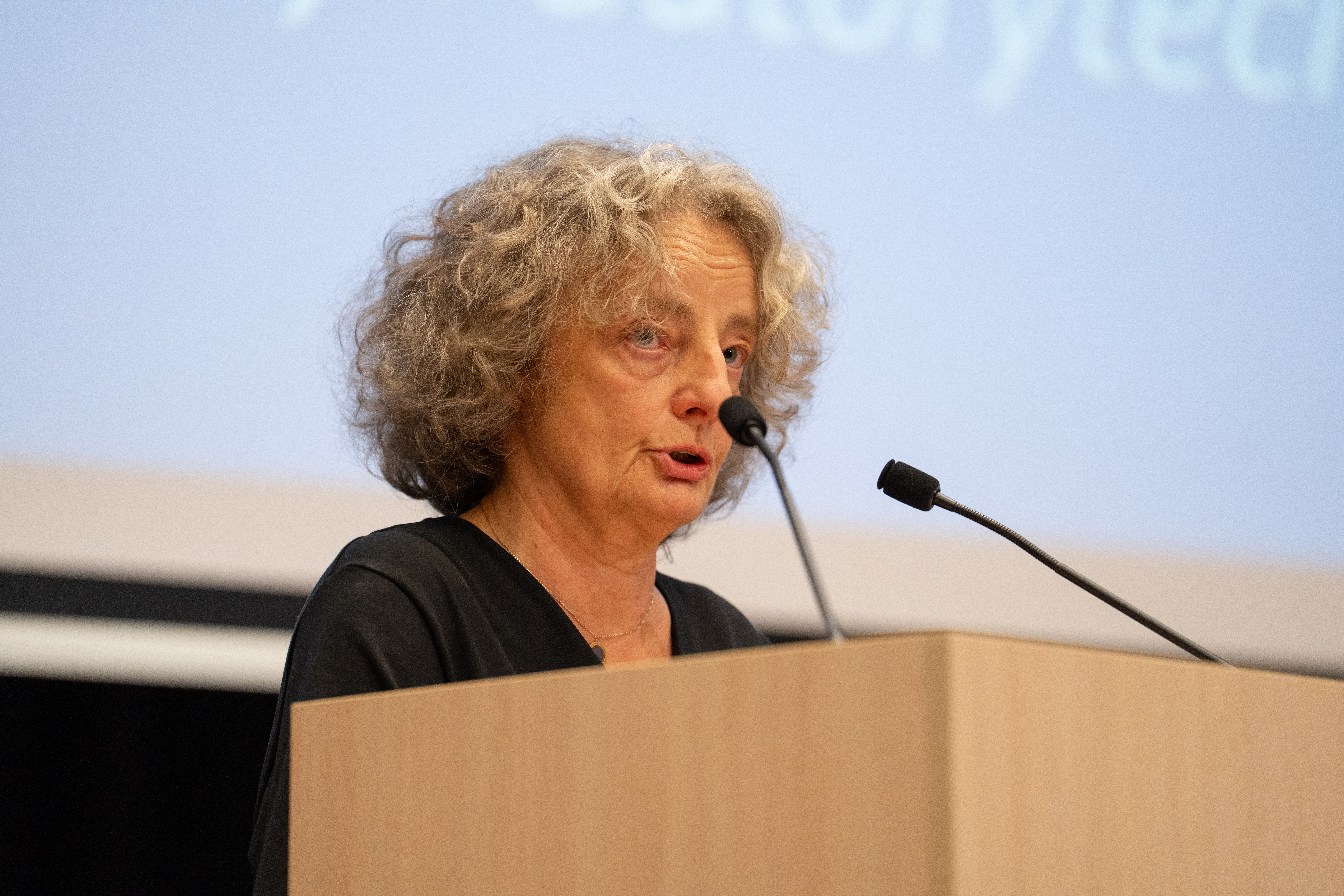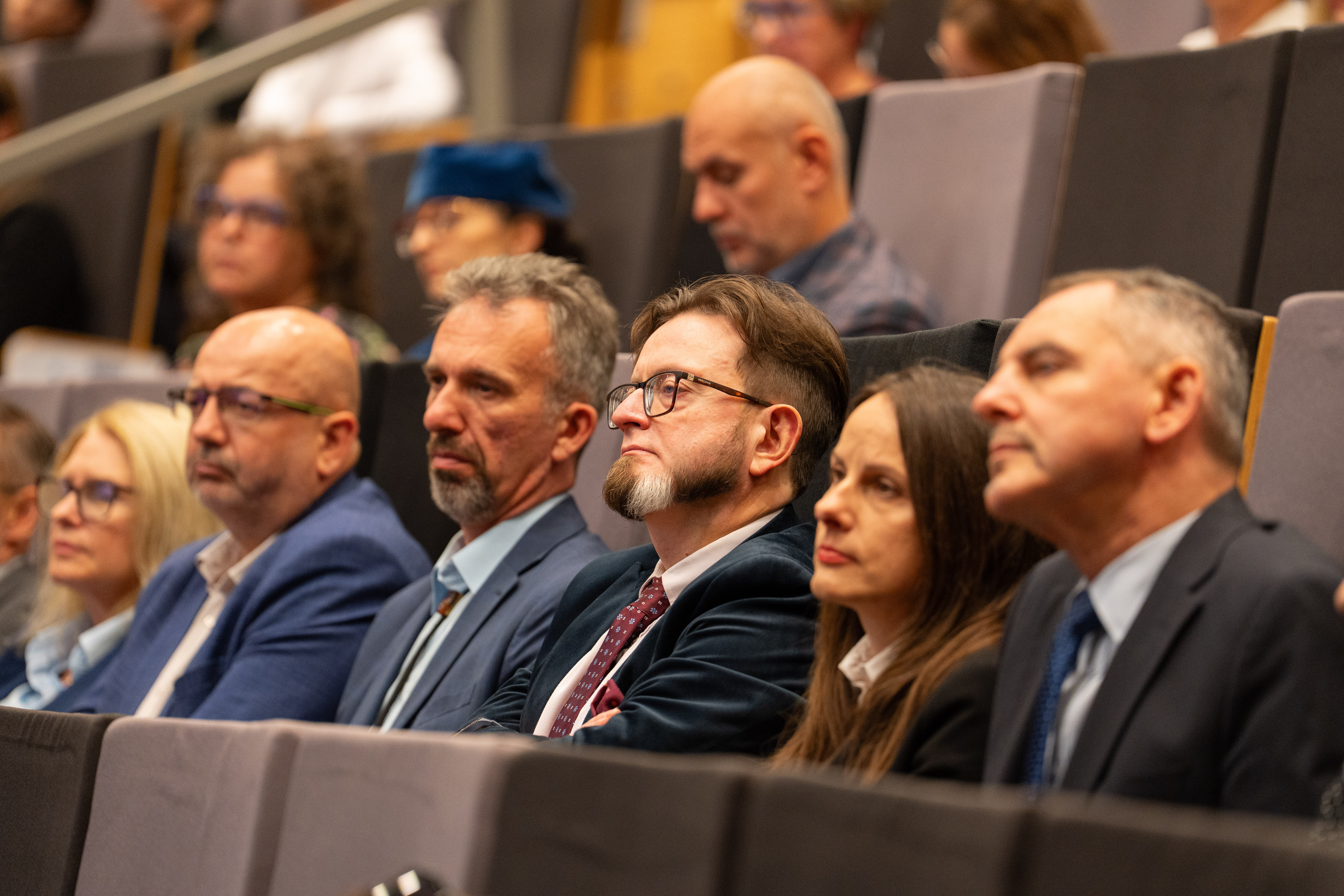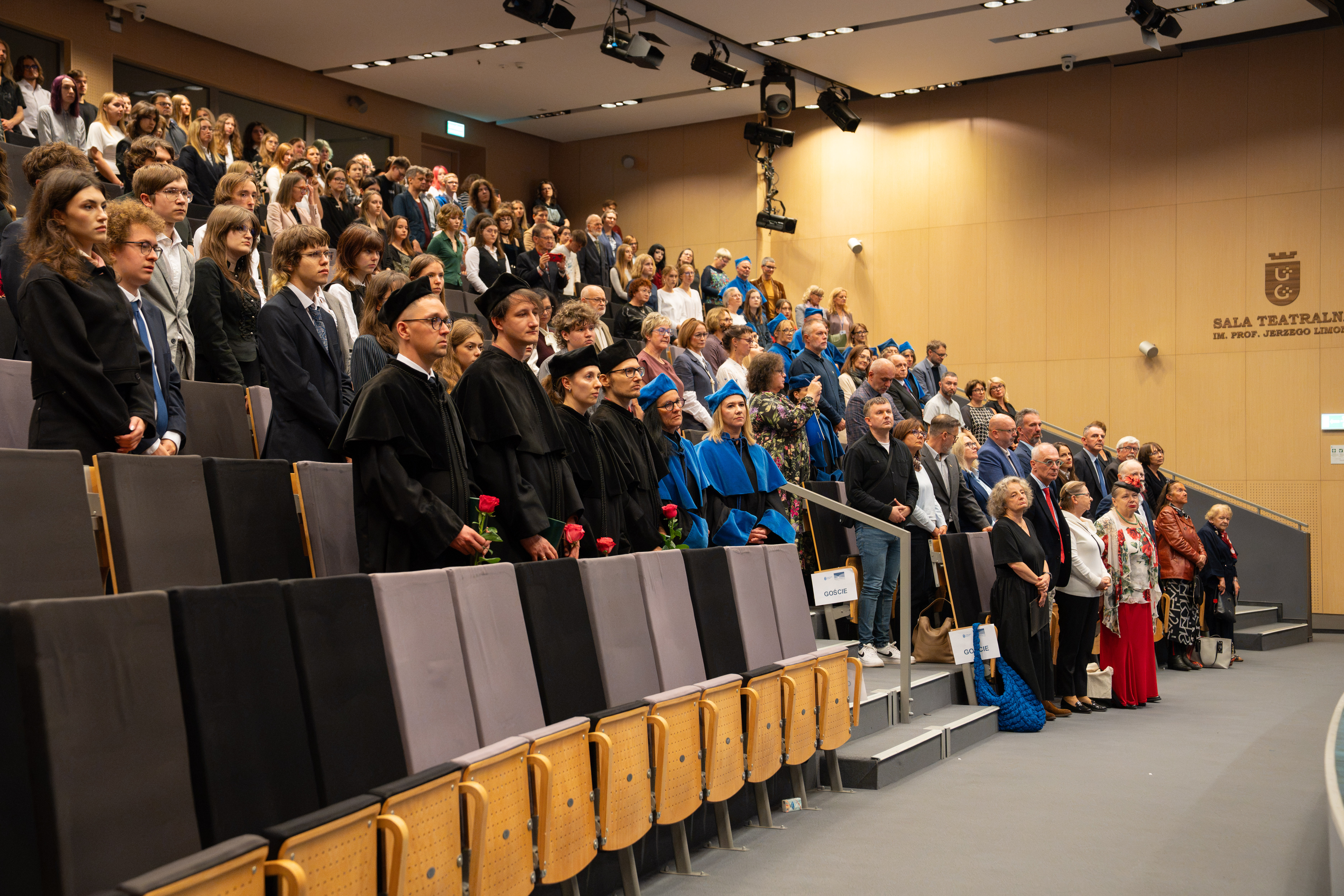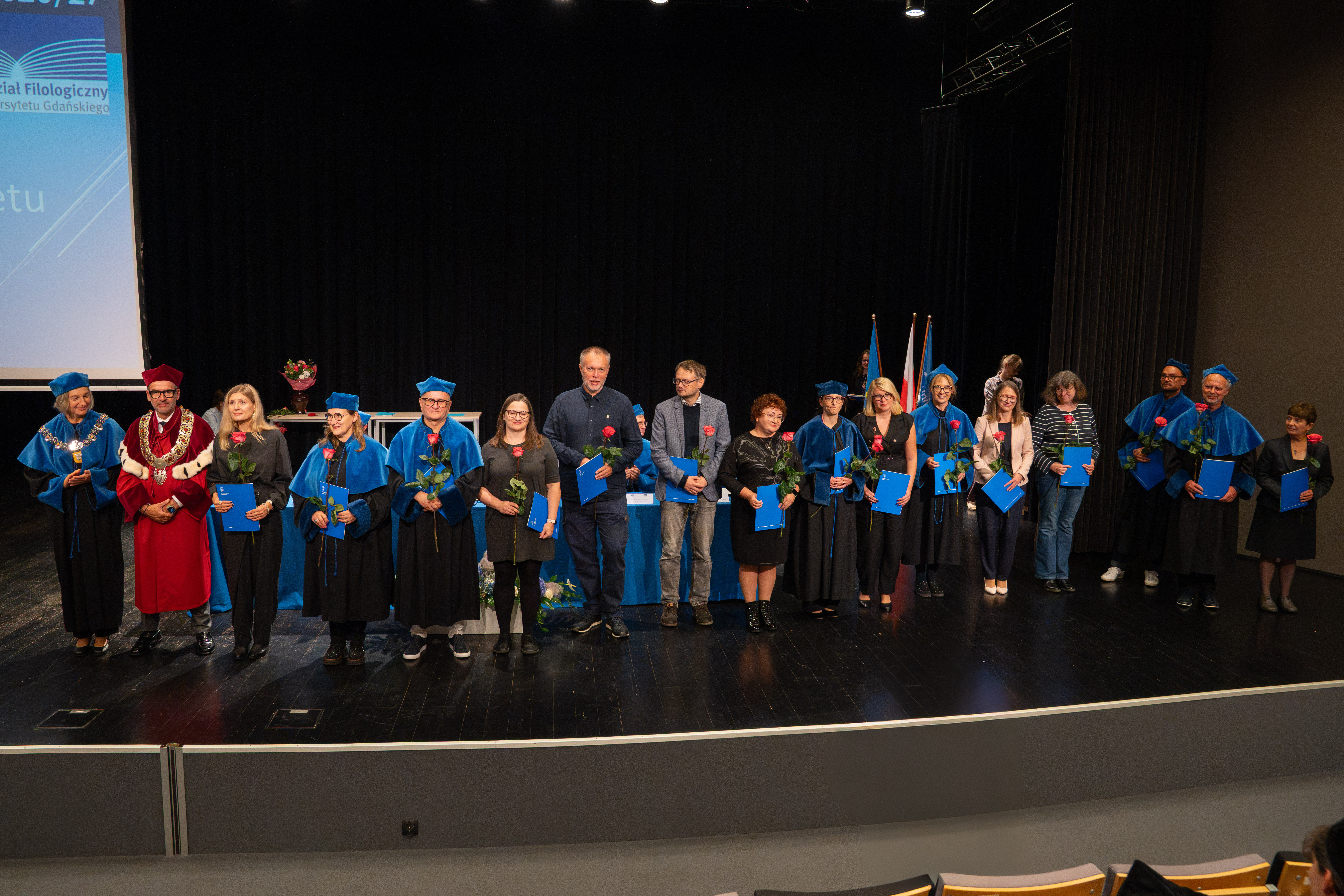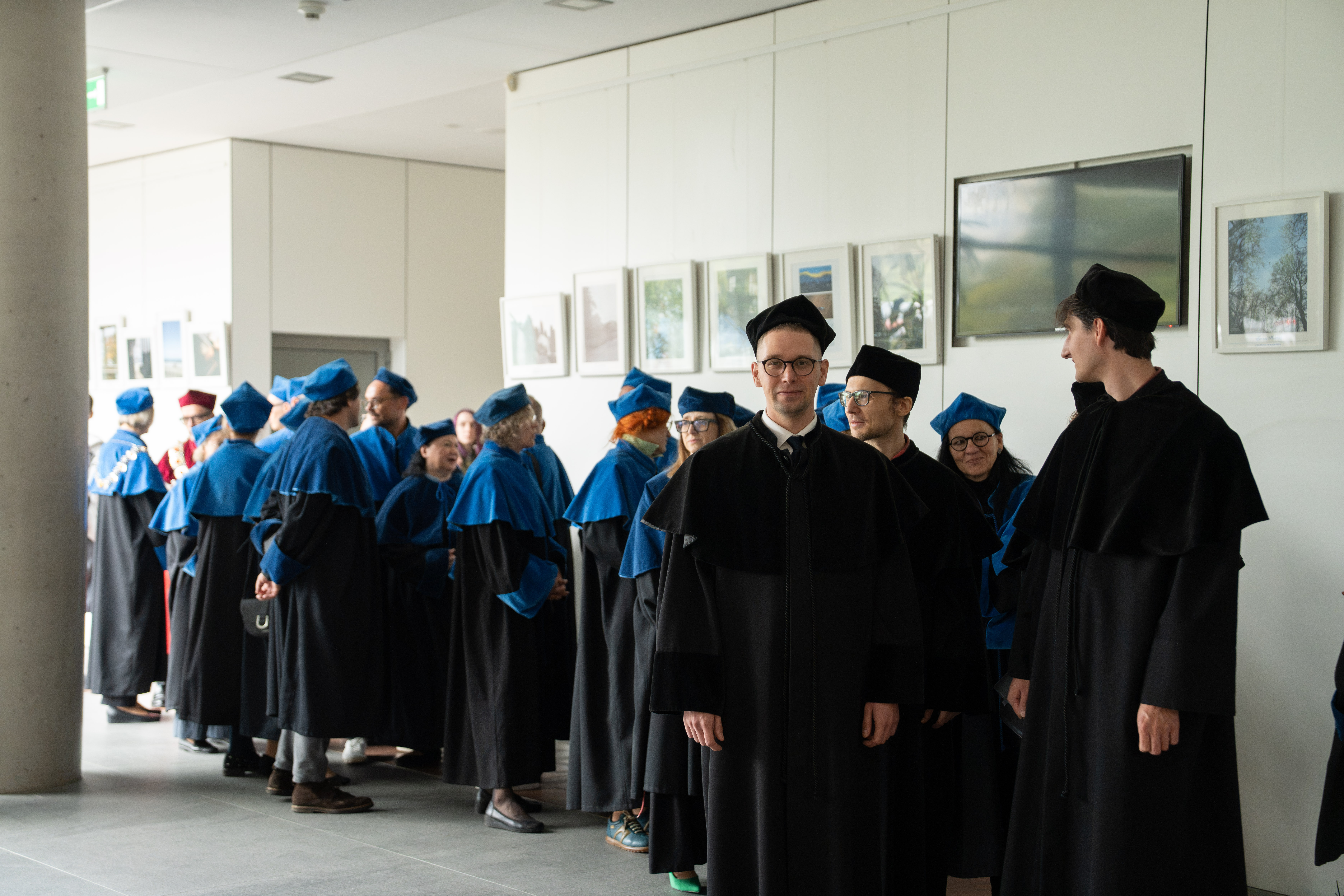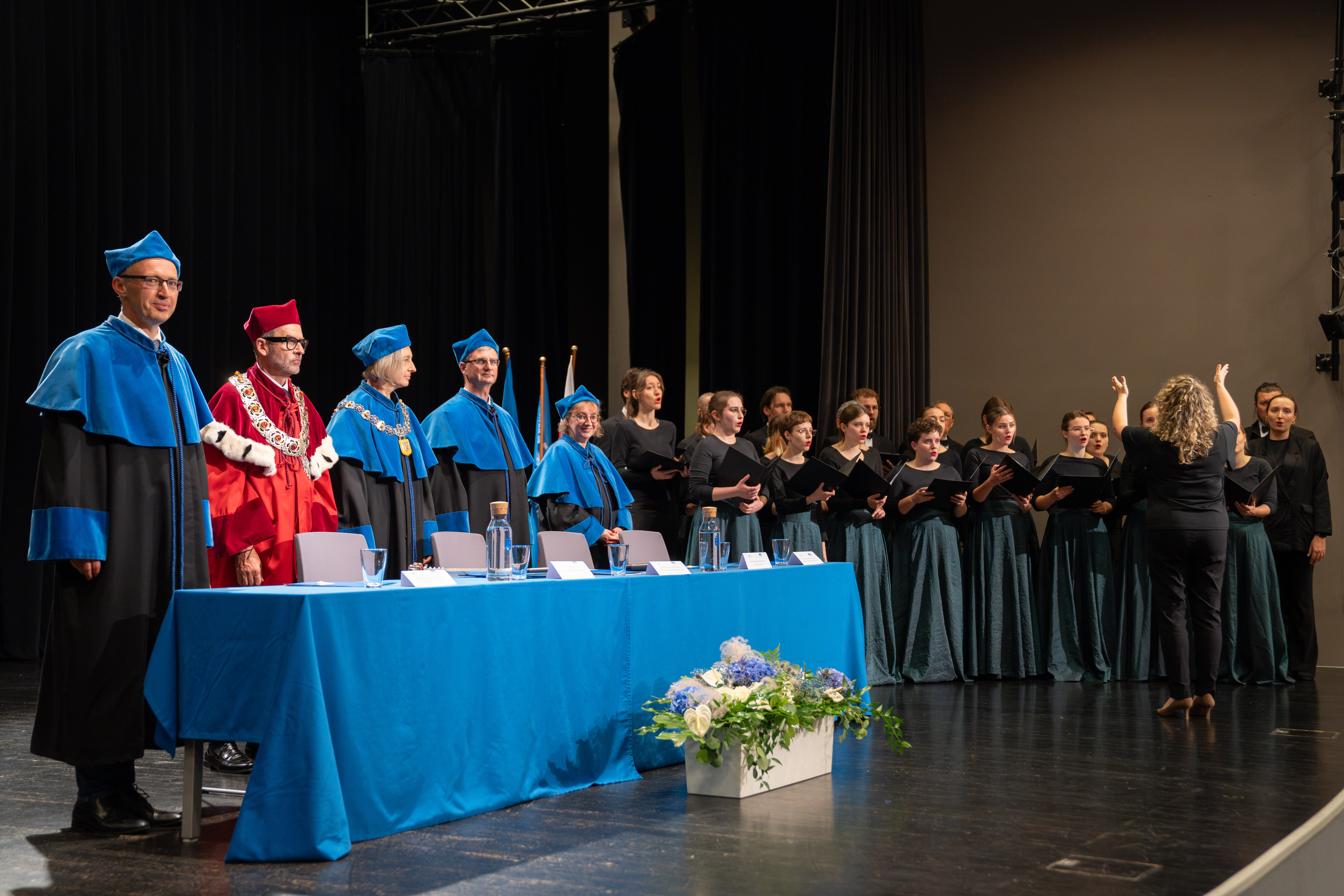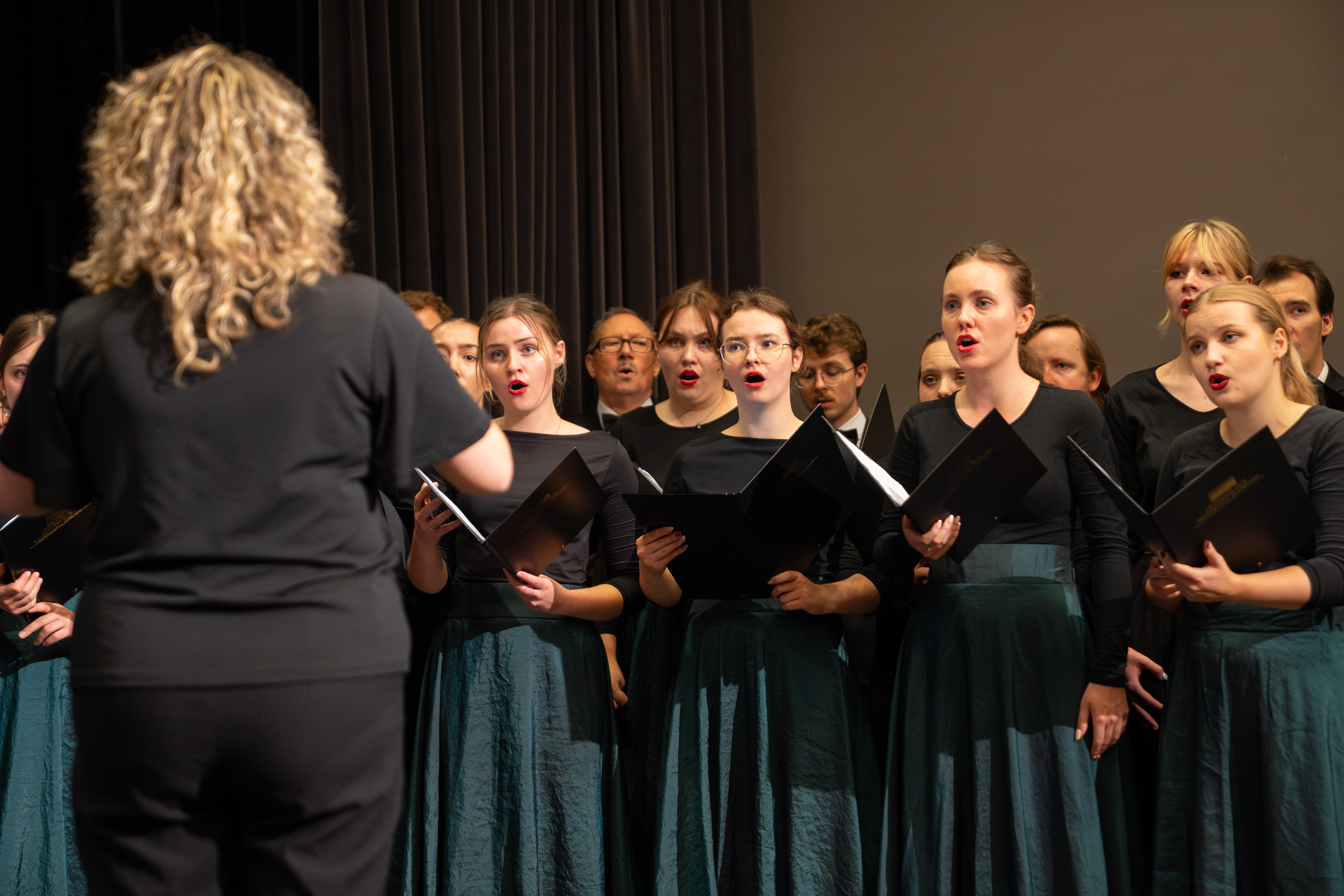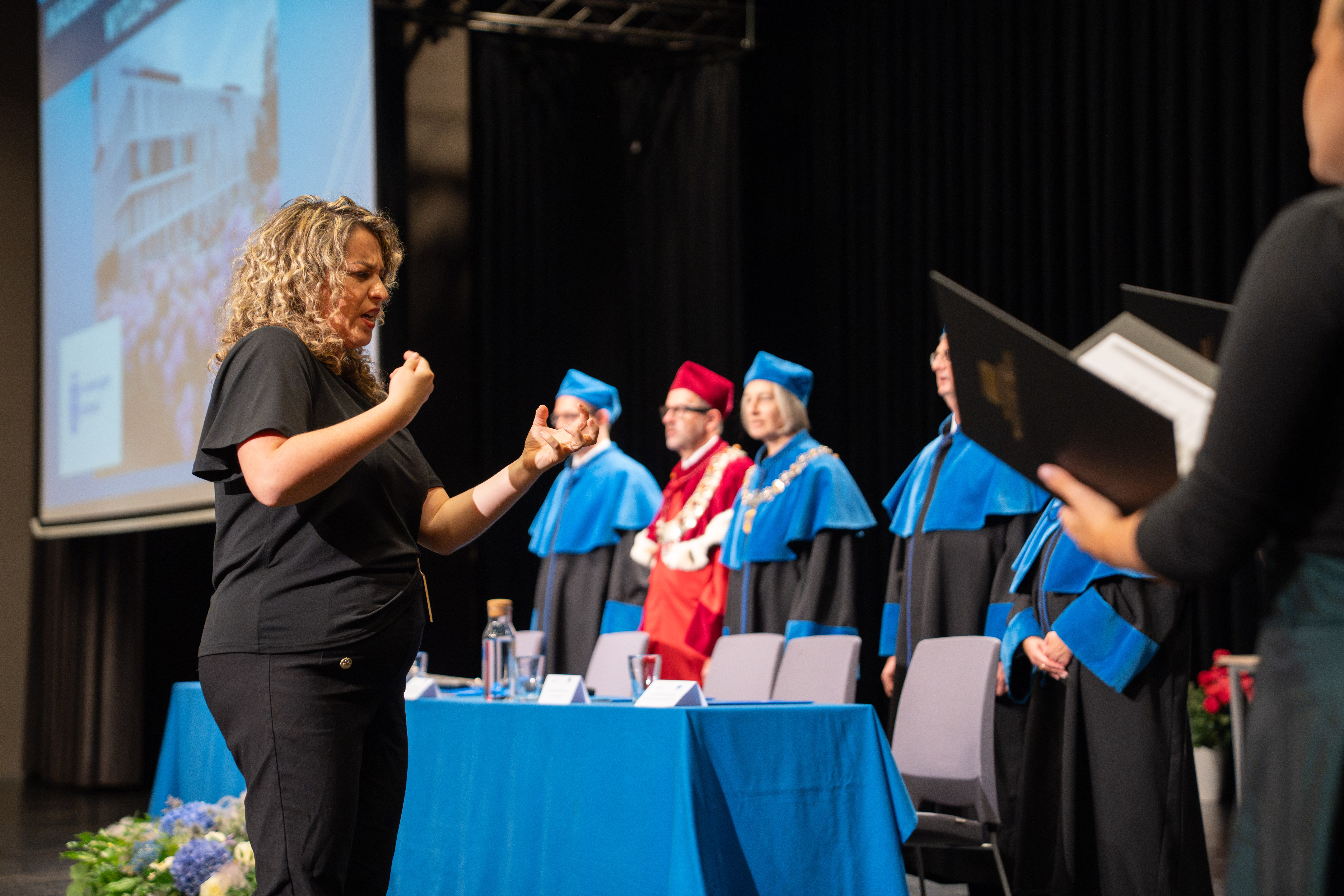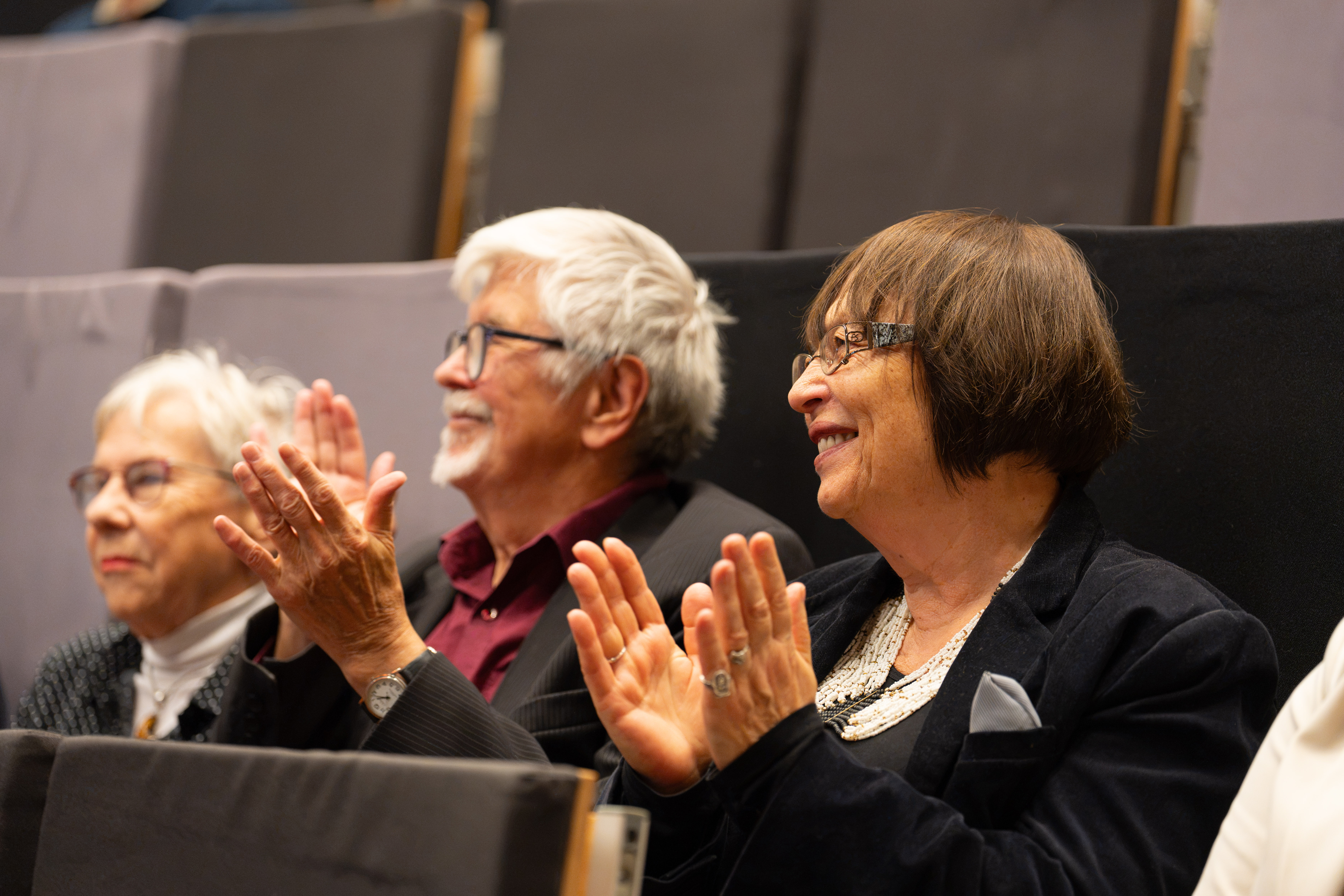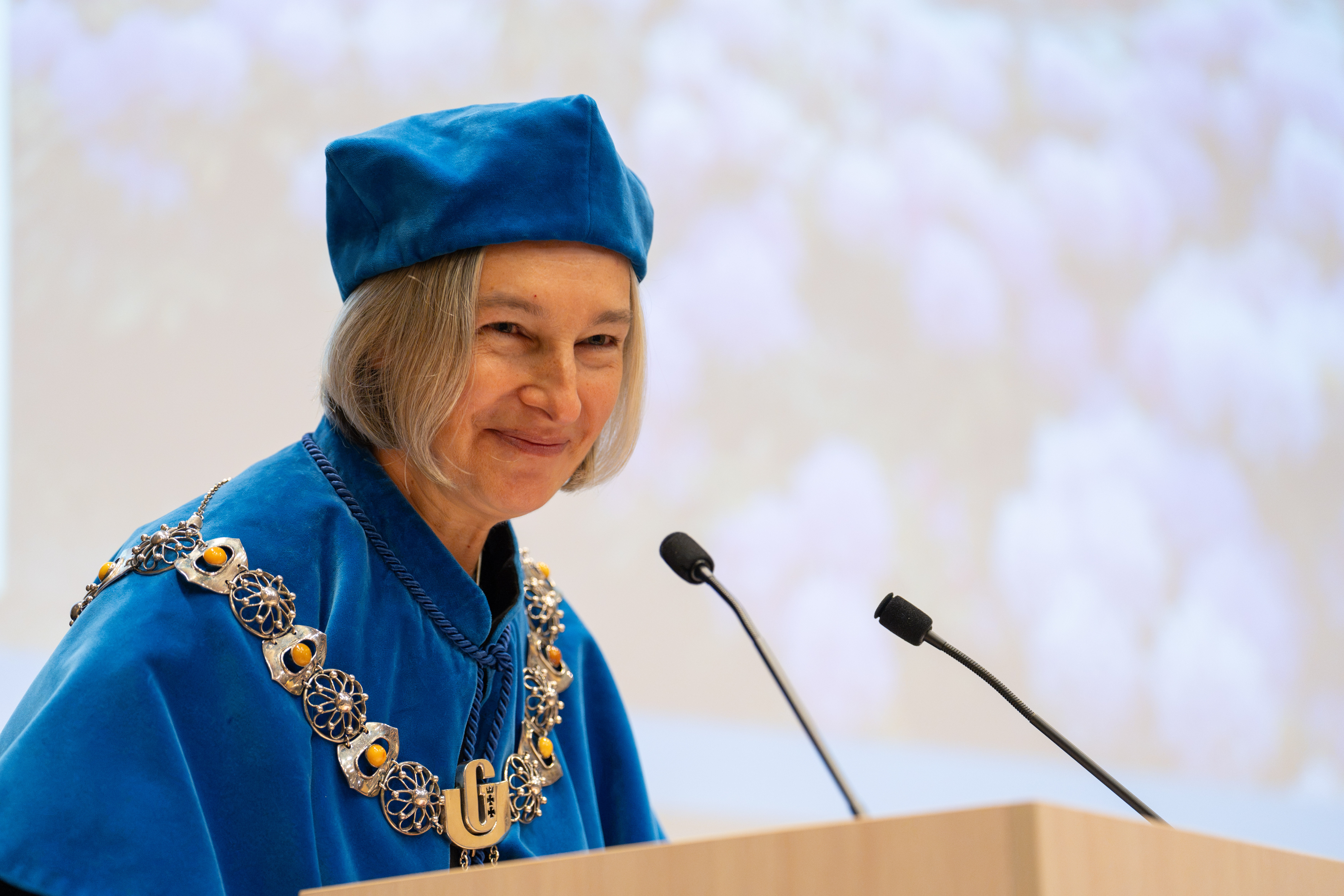
‘Is there an excess or rather a shortage of free-thinking at today’s universities?’ wondered dr hab. Joanna Krakowska, prof. at the Institute of Art of the PAS, during her inaugural lecture. An eminent theatre scholar, twice nominated for the Nike Literary Award, she has taken up the Maria Janion Named Chair of Honour. The ceremony took place on 6 October during the inauguration of the academic year at the Faculty of Languages.
For the past four years, the University of Gdańsk has held Named Chairs of Honour, named after three scholars in three distinct fields of study, each held by distinguished academics. Their patrons are the University of Gdańsk’s honorary doctors: Eugeniusz Kwiatkowski, Professor Wacław Szybalski and Professor Maria Janion. ‘We wish to honour the extraordinary intellectual legacy of Prof. Maria Janion, her body of work, and her achievements in establishing the Gdańsk school of literary studies. I thank you from the bottom of my heart for accepting this appointment. We are proud and delighted that Professor Joanna Krakowska will be with us this year,’ said the Rector of the University of Gdańsk, Professor Piotr Stepnowski, during the ceremonial handover of the Named Chair of Honour to dr hab. Joanna Krakowska, prof. IS PAN.
Prof. Piotr Stepnowski recalled that, on the centenary of the birth of this eminent scholar - author of works including ‘Gorączka Romantyczna’, ‘Życie pośmiertne Konrada Wallenroda’, and ‘Kobiety i duch inności’ - a street on which the university campus is situated has also been named in her honour.
Free-thinking as the path to saving the humanities
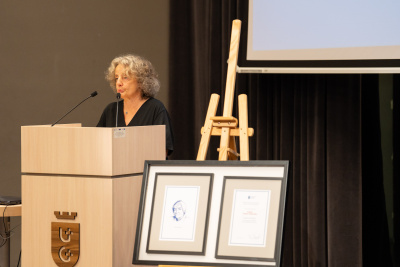
Prof. Joanna Krakowska, expressing her gratitude ‘for this honour, privilege and invitation’, emphasised that she would do everything she could to ‘not let anyone down’ and explained how she understood this ‘honourable task’. ‘I see it not so much as a celebration or the preservation of the memory of the department’s patron, but as an invitation to the constant renewal of meanings and, above all, to the search for the spirit of otherness,’ she said.
Prof. Krakowska’s reflections in her inaugural lecture, entitled ‘Interpretation is not an absolute value. On power and authority in the humanities’ centred on the concept of ‘free-thinking’, understood as the capacity for independent, critical thinking, free from dogma, prejudice, rigourism, and unthinking submission to authority. ‘Free-thinking seems to be an unwritten principle of practising the humanities, and at the same time the way to save them. For it constitutes the indisputable advantage that living intelligence may have over artificial intelligence,’ she told the assembled audience.
A long-standing editor of the essays section of the monthly magazine ‘Dialog’, a lecturer at the Theatre Academy and Head of the Department of Theatre History and Theory at the Institute of Art of the PAS, she posed important questions about the place of independence and freedom of thought in academic practice: ‘Is there an excess of free thought at today’s universities, or rather a shortage? And if the latter, then perhaps it is worth answering the question: what is holding us back? What is limiting our research? What is shackling our imagination?’
She also pointed out that ‘free-thinking can ignore the system, and a critical mind can dismantle the tools of control’, and stated that ‘one such burdensome constraint is often the false belief about what constitutes scientific rigour in the humanities’. ‘Bureaucratic rigours often present us with the dilemma of whether to write for people or for marks, whether to speak to many or to ourselves,' she mused.
She added: ‘Fear of risk is a burden which, when cast aside with an open mind, allows one to soar into hitherto unexplored realms. Internalised fear inevitably paralyses,’ she argued.
Respect rather than worship
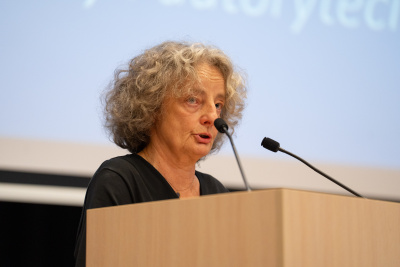
The author of ‘Odmieńcza rewolucja’ (for which she received the Gdynia Literary Award in 2021) also examined the concept of authority in her opening address. She does not advocate their complete rejection, but rather building relationships with masters on different terms. She suggests replacing worship with respect, and using their interpretations as a starting point for one’s own explorations, because ‘free-thinking does not, after all, preclude respect and gratitude for those to whom we are indebted’.
Quoting Susan Sontag, she recalled that ‘Interpretation is not, as most people assume, an absolute value’. ‘It must itself be subject to evaluation within the framework of a historical understanding of human consciousness. (…) Since, therefore, neither interpretation nor judgements nor contexts are definitive, and even the most outstanding body of work is subject to constant revision, the highest form of recognition for that body of work will be respect, not worship. Not fidelity to the letter, but to the energy of the work. To its ferment, its courage, its insight, its intellectual sweep and its encouragement to challenge interpretations, rather than to place one’s trust in them. Konrad Swinarski called this approach ‘fidelity to the mutability of one’s own thinking’. In this context, I understand this as a call for ceaseless critical work. Without it, we risk what Maria Janion, following Gombrowicz, called ‘kitsch humanism’, which, in an aura of sacred sublimity, arises when the uncompromising defence of values is not accompanied by their justified critique.’
According to Prof. Krakowska, independence of thought in academic work requires courage. ‘A free-thinking researcher always stands at a crossroads. Should she follow the path laid out by academic algorithms, prestigious institutions and recognised authorities, or blaze her own trail? The answer is not easy. For free-thinking need not preclude belonging to communities of thought and research. Free-thinking presupposes a multitude of possibilities.’
A pen and a notebook in an emergency backpack
The researcher argued that, in the past, the threats came from grand ideologies and dominant narratives. ‘Today, these include, amongst other things, an overzealous politics of representation, outbreaks of moral panic, information overload, disinformation, deepfakes, pseudoscience, conspiracy theories, bots and the culture of outrage. All of this creates the most dangerous monster of all - doubt.’
In the face of political, technological and military threats, we need critical thinking more than ever; that is why prof. Krakowska urges us not to forget a pen and a notebook when packing our emergency rucksack.
The Dean of the Faculty of Languages, dr hab. Małgorzata Jarmułowicz, prof. UG, thanked the academic for her ‘extremely important and beautiful words’ and addressed the audience: ‘I think this is the moment to consider whether the compass with which we are entering the new year is actually pointing in the right direction. Is it not deceiving us? Is it not misleading us? Let us think about this. I am delighted that, together with Professor Jarmułowicz, we will be able to tackle these difficult questions. I have no doubt that this will be a lesson in exceptional humanistic thinking - sophisticated, rebellious and defiant. Paradoxically, in the spirit of Janion. That source still remains somewhere in the background.’
****
Dr hab. Joanna Krakowska, prof. at the Institute of Art of the PAS - Head of the Department of Theatre History and Theory at the Institute of Art of the PAS, and long-standing editor of the essays section of the monthly magazine *Dialog*. Editor of books on the history and theory of theatre and the theory of acting. Translator of works by authors such as Ariel Dorfman, Richard Schechner and Susan Sontag. Twice nominated for the Nike Literary Award: in 2012 for her monograph *Mikołajska. Theatre and the Polish People’s Republic* and in 2021 for the book *’A Transforming Revolution: Performance on Foreign Soil’. Her essay on the history of performance won the 2021 Gdynia Literary Award in the essay category. Winner of the Jerzy Giedroyc Award (2017) for the book *’The People’s