The University of Gdańsk Library is kicking off the academic year with renewed vigour. Ahead of us lie the Student Opening of the Academic Year and Library Night - and these are just some of the attractions awaiting UG students. We spoke to Monika Budzińska, Patrycja Laskowska, and Marietta Tiszbein about what the UG Library has in store for this academic year.
Karolina Żuk-Wieczorkiewicz: - A new academic year, a fresh start. What interesting events is the UG Library organising, and for whom?
Monika Budzińska: - First and foremost, we want to reach out to new students who will be using the library for the next three to five years.
Patrycja Laskowska: - We’re aware that the student community changes every year. New generations arrive, and we want to adapt to their needs, to show that the UG Library space is, first and foremost, for them. It’s with them in mind that we’re proposing new activities - ones they might enjoy.
K.Ż.W.: - Based on your observations, how have students changed over recent years? What challenges are you facing, and how is the UG Library changing as a result?
Marietta Tiszbein: - Communication is certainly a challenge; finding a way to reach the young people we’re inviting here. We must ensure that our announcements are simple, clear and visually appealing. We’re currently working on a new website with a special ‘Student Zone’ section, where students and UG Library users will find all the key information.
P.L.: - The UG Library is changing - as well as being a place to borrow and read books, it’s becoming a place to study, to meet up and to enjoy spending time (for example, between classes).
K.Ż.W.: - Could you tell us a bit more about these changes?
P.L.: - For example, we’ve prepared two projects as part of the Academic Citizens' Budget. The first involves redesigning the space on the first floor, as that’s where most students spend their time. The project includes purchasing armchairs and sofas to make this space even more welcoming and colourful.
M.B.: - The second project involves refurbishing the rooms previously known as individual study rooms. There are nine rooms in total. A separate visualisation will be prepared for each one, and a colour will be assigned, from which the room will take its name (e.g. orange, lavender…). We plan to furnish them with ergonomic chairs, motivational artwork and matching décor elements.
One innovation could be a booking system that would allow for better management of these rooms, for example, by monitoring their availability (which room will become free in 5 minutes, and which will be occupied all day, etc.). We want students to be able to use them comfortably - which is why we are very keen for the project to secure funding.
The UG Library is not just a collection of books or databases (which are, of course, important), but also a pleasant space in which to spend time or study.
K.Ż.W.: - I’ve noticed that over the last few years, the UG Library space has become much cosier.
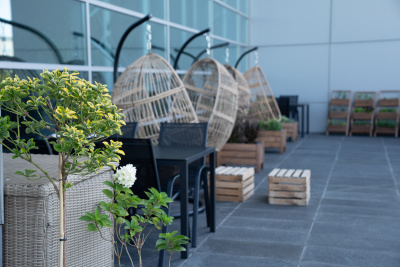
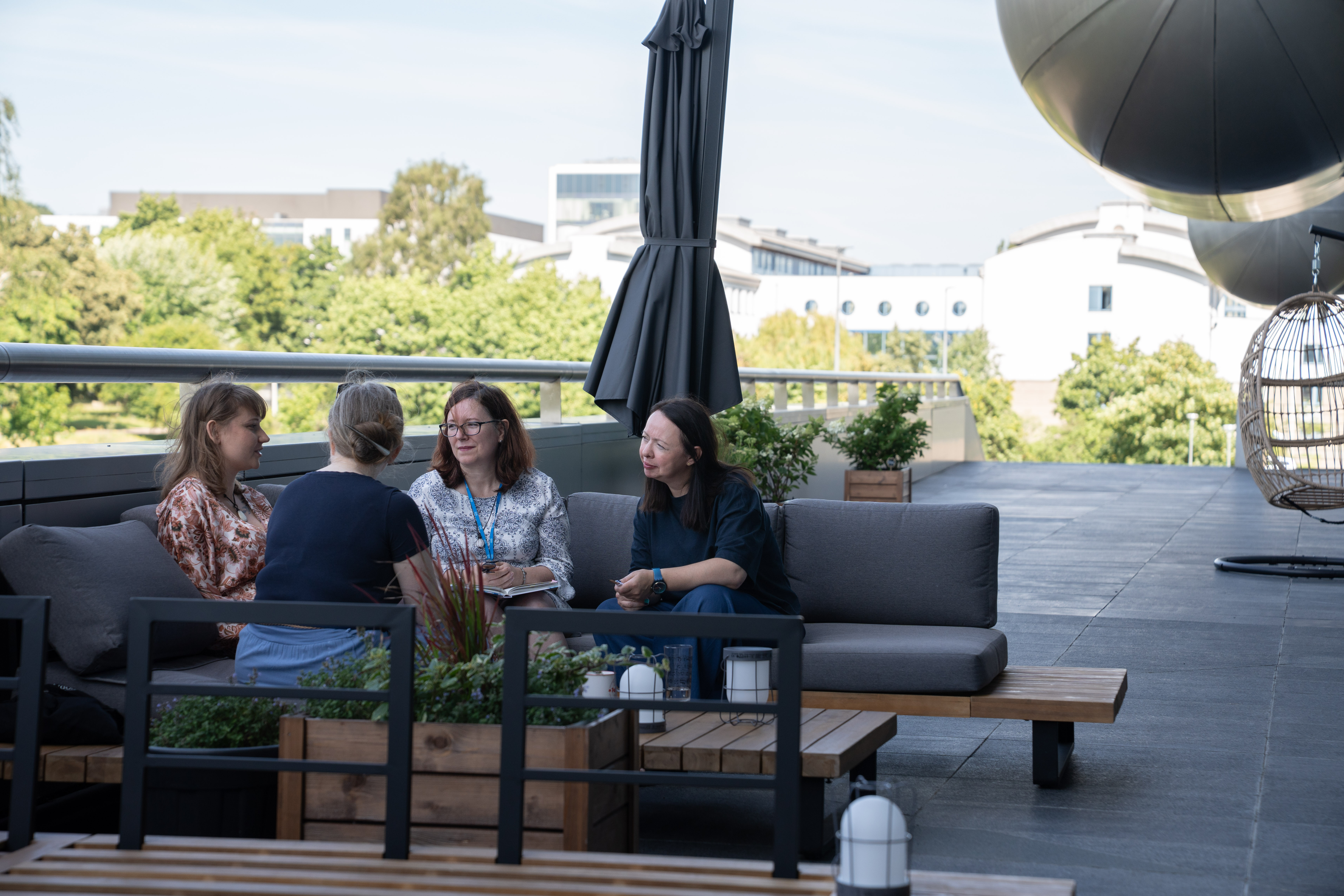
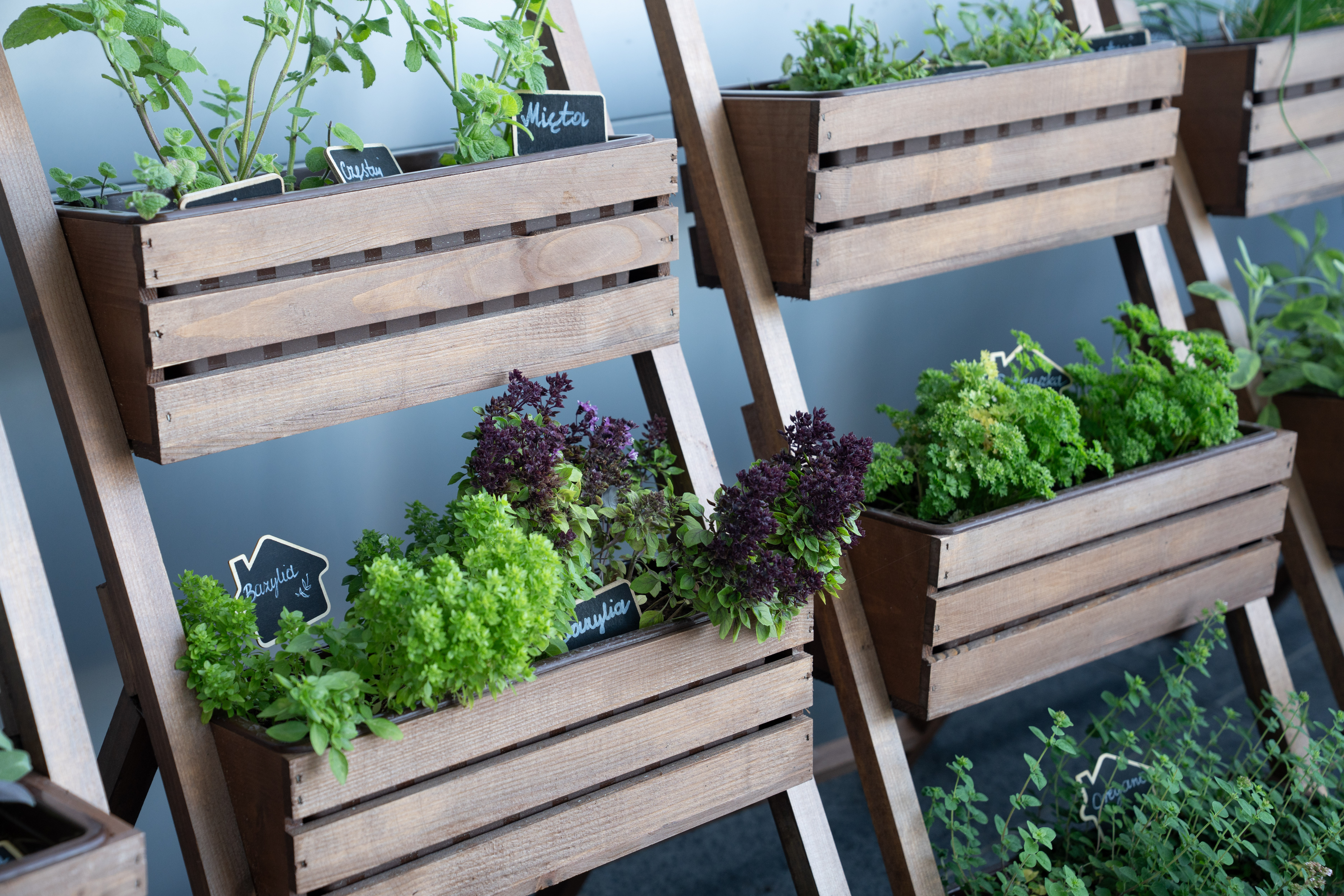
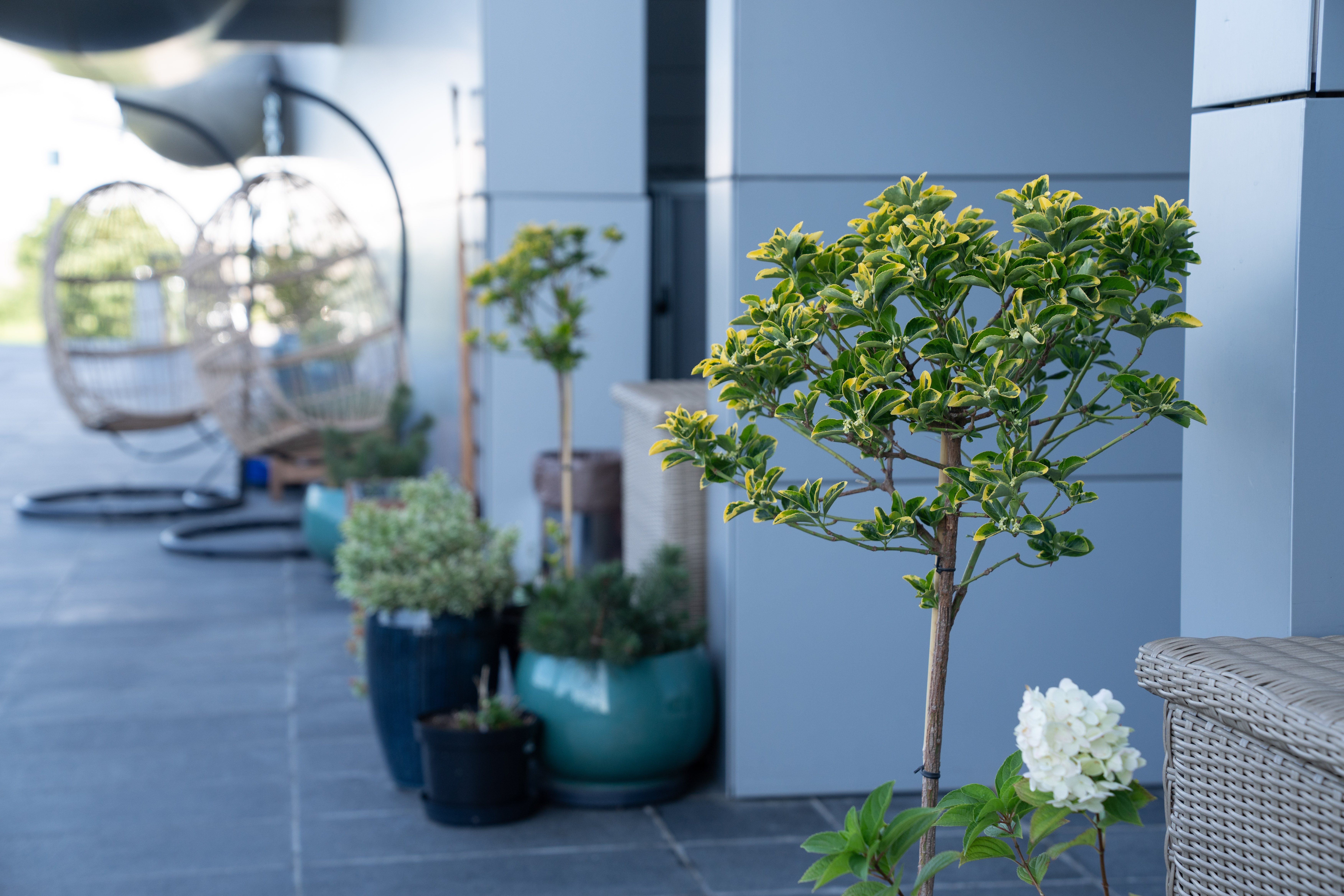
M.B.: - We have a lovely terrace with a herb garden, and inside there are cosy corners with armchairs or sofas. We want to develop this space thanks to the ACB project I mentioned.
K.Ż.W.: - What else does the UG Library offer students?
M.B.: - For example, in the three weeks or so leading up to the exam period, the UG Library stays open until midnight, a service which many people are already making use of. There are also plenty of initiatives and events that aren’t directly related to studying or the university (poetry slams, author talks, games nights, Library Night). It’s a good opportunity to make new friends and socialise.
P.L.: - In the run-up to the exam period, we try not to organise events (or we organise them in enclosed spaces) to ensure a comfortable environment for studying. However, we want students to know that they, too, can organise events at the UG Library. For example, poetry slams are organised by one of our students and are hugely popular. We’ve noticed that what students do for other students makes the most sense - and is the most popular.
K.Ż.W.: - What do people particularly like?
P.L.: - Plant Crossing, organised by Marietta, is very popular. It’s an initiative designed for people who come to Gdańsk from far away and often don’t bring with them little touches that brighten up their lives, such as potted plants.
M.T.: - We’ve already organised two Plant Crossing events. It’s also a way of promoting our community garden. We’d like more people to get involved in looking after it (for example, by signing up for watering shifts). We have herbs here that you can use, and a very pleasant space on the terrace where you can take a break from studying. In October (during the Student Opening of the Academic Year), the third edition of the event will take place.
K.Ż.W.: - What else might be useful for a student?
M.T.: - UG Library training, which we strongly encourage. The training makes it much easier to find your way around the UG Library, and participants receive all the most important information in one place. For example, they learn that they don’t need to register with the UG Library, as they’re already registered simply by being students.
M.B.: - The UG Library also runs the Book Club, which I’ve been running for three years. We meet once a month to discuss a chosen book. Interestingly, the students in the Club have bonded so well that they even meet during the summer holidays, when the Club’s official meetings aren’t held. I hope this format of monthly meetings will attract new readers.
M.T.: We will also be continuing our series of lectures on healthy eating. The first one took place in June and focused on how to plan a diet that best supports learning. The next lecture (on dietary myths and the most common nutritional mistakes) will take place during the Student Opening of the Academic Year. It will be led by Joanna Jętczak.
K.Ż.W.: - Based on your experience: what do students most often find difficult, or what surprises them in the UG Library?
P.L.: - It’s hard to find some of the rooms…
M.T.: - That’s why we’re working on signposting them more clearly. I think, however, that visitors are most surprised by how much the UG Library has changed. They have new furniture at their disposal - comfortable and colourful…
M.B.: - I’d add that I think they’re surprised by the wealth of our book collection. The UG Library offers not only academic literature, but also fiction, comics and manga. Audiobooks and e-readers are also available - and you can borrow those e-readers.
P.L.: - Finding the right section of the collection can be a bit tricky. At the University of Gdańsk UG Library, the first floor serves as the lending desk, but the second and third floors are reading rooms; however, some of the books in the reading rooms are also available for borrowing - and not everyone finds this entirely clear. Despite this, the students are coping very well.
K.Ż.W.: - Which of the UG Library’s services do they make the most use of?
M.T.: - A great many people have taken advantage of the late-night study sessions at the UG Library. They’d push tables together, curl up on the sofas…
P.L.: - I think the fact that they rearrange the furniture themselves or sometimes fall asleep under a blanket shows that they feel at ease and safe here. And we don’t mind that at all. We’re delighted that students spend so much time in the UG Library and we understand that sometimes they need a rest and a break from studying.
K.Ż.W.: - The Student Opening of the Academic Year is just around the corner. Where did the idea come from, and why is it worth coming along?
M.B.: - We wanted to organise these open days with first-year students in mind, first and foremost. Of course, everyone is welcome, including those who have never been to our UG Library before. It will be a two-day event, on 15 and 16 October, combined with Library Night, which falls on 16 October (on that day, the UG Library will be open until 23:00).
Visitors can look forward to a host of attractions: both educational and entertaining. You’ll be able to find out about the research societies active at the University of Gdańsk, make new friends during ‘speed dating’
(Speed Friending), spend time playing board games, swap plants as part of the Plant Crossing initiative, as well as explore the UG Library building and discover our range of e-resources. There will also be a dose of specialist knowledge: for example, a session on setting up start-ups or the aforementioned lecture on the facts and myths surrounding a healthy diet. The programme also includes cultural events, such as the opening of Alicja Okrój’s painting exhibition and a meet-the-author session with Adam Majchrzak (centred on his book 'The Limits of Common Sense: Conspiracy Theories and the Messages of Conspiracy Websites'), co-organised with the University of Gdańsk UG Publishing House. And to round off the event (on Friday at 8.00 pm), we’ve planned a Silent Disco on the carpet and (in the lecture theatre) a screening of the 1968 film 'Lalka' ('The Doll').
P.L.: - We hope that what we’ve prepared will prove appealing to students. We also want to gain a better understanding of their expectations. Above all, we’d like as many people as possible to visit us, from all faculties of the University of Gdańsk, from Gdańsk to Hel. Everyone is welcome!
Find out more:
Student Opening of the 2026 Academic Year