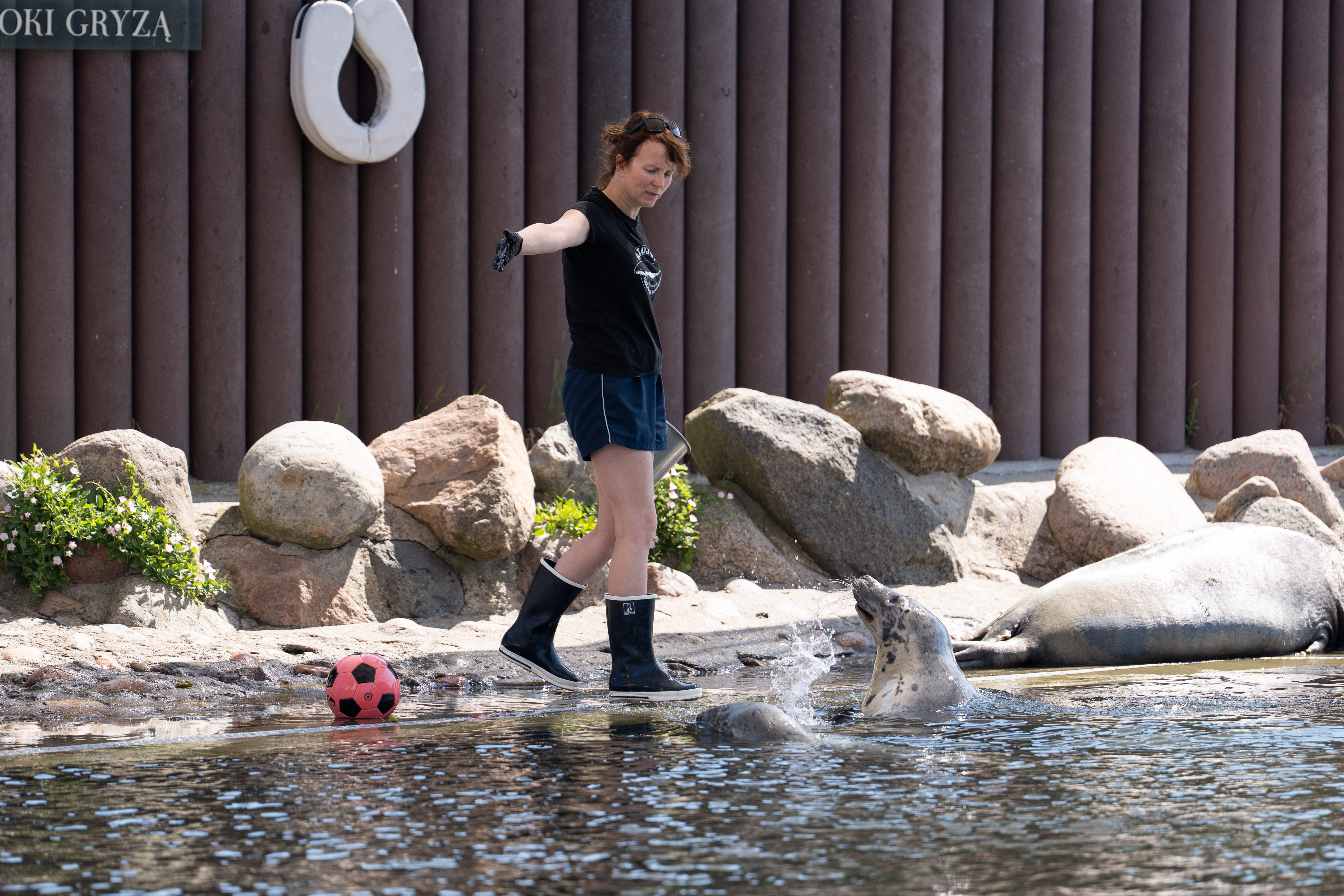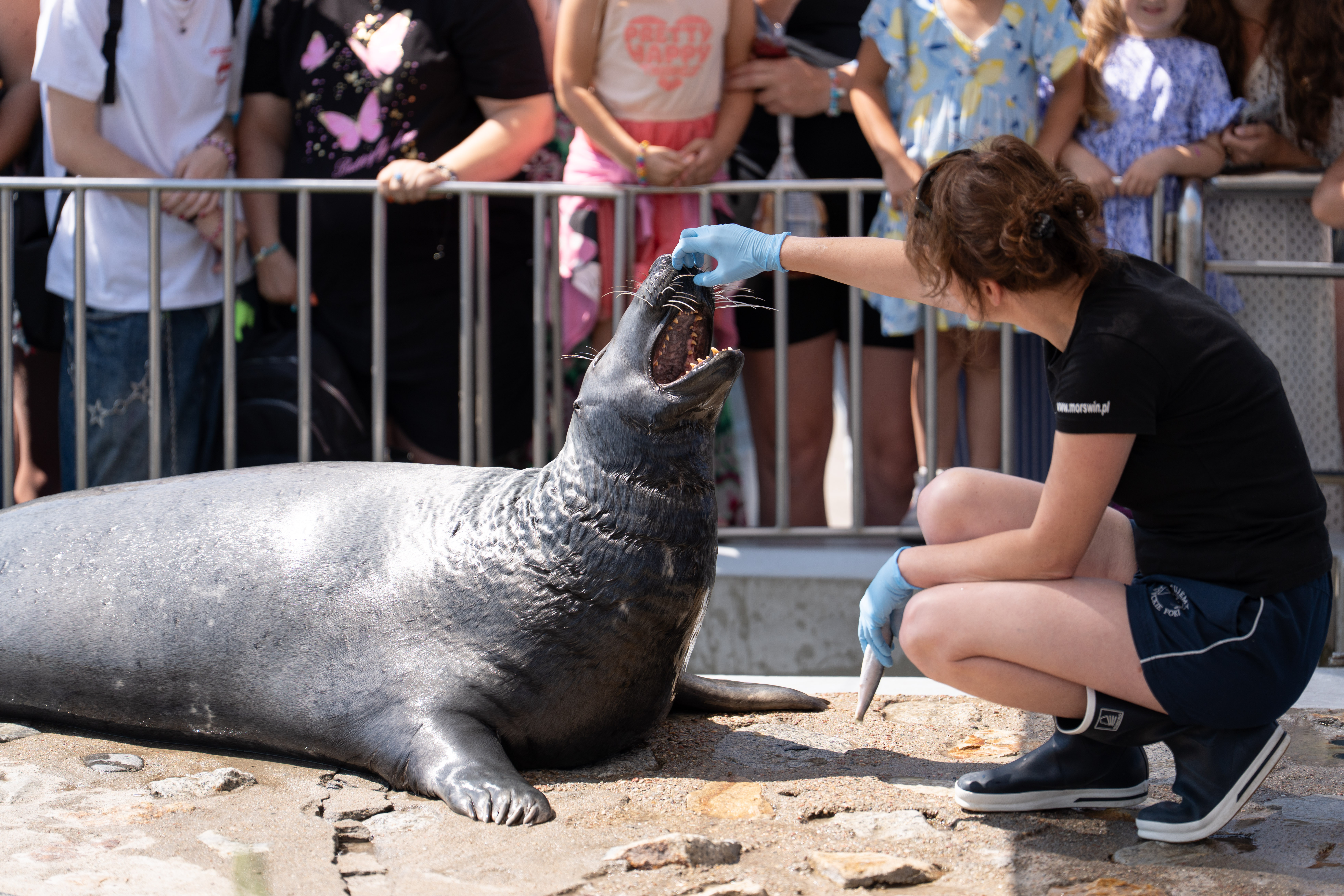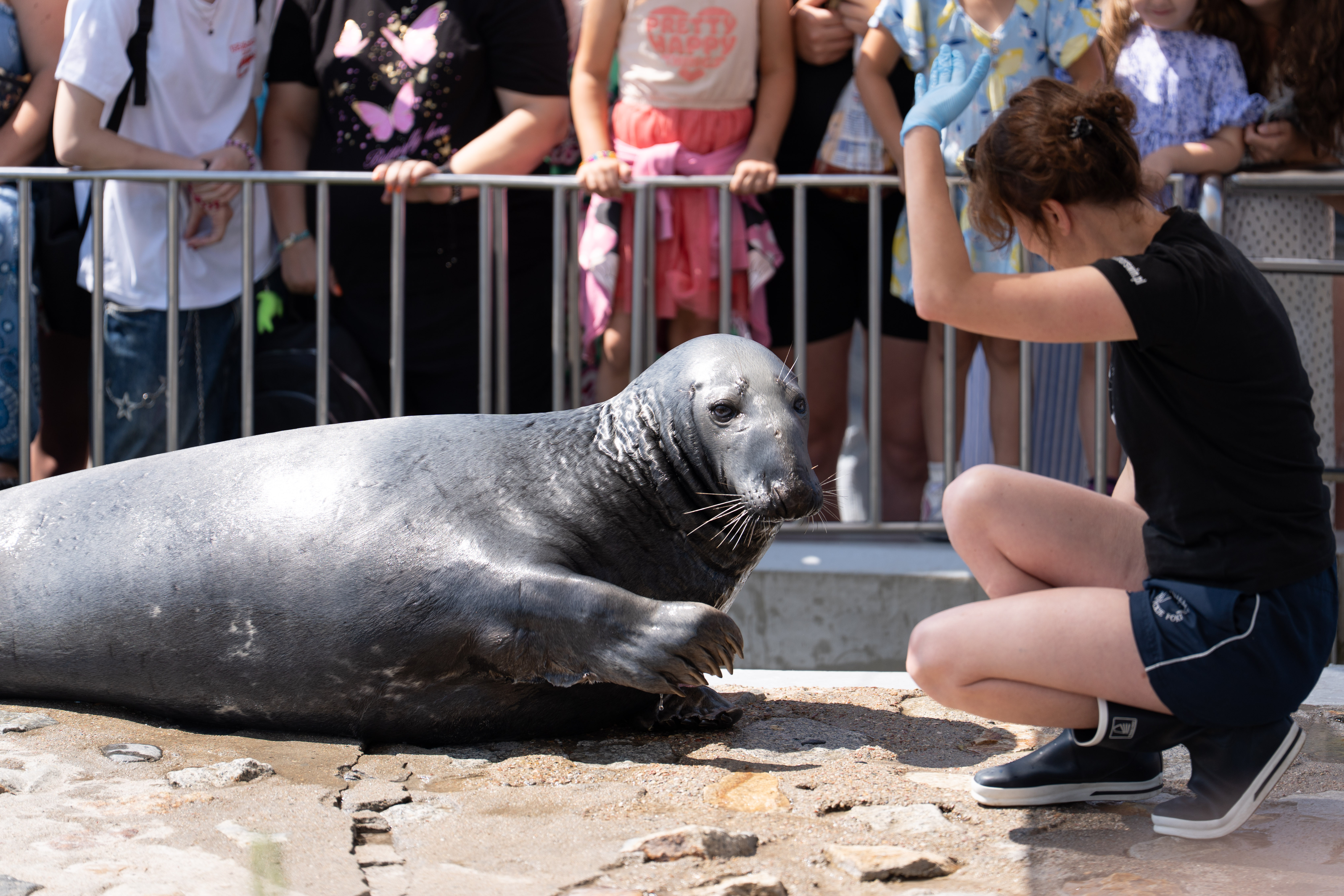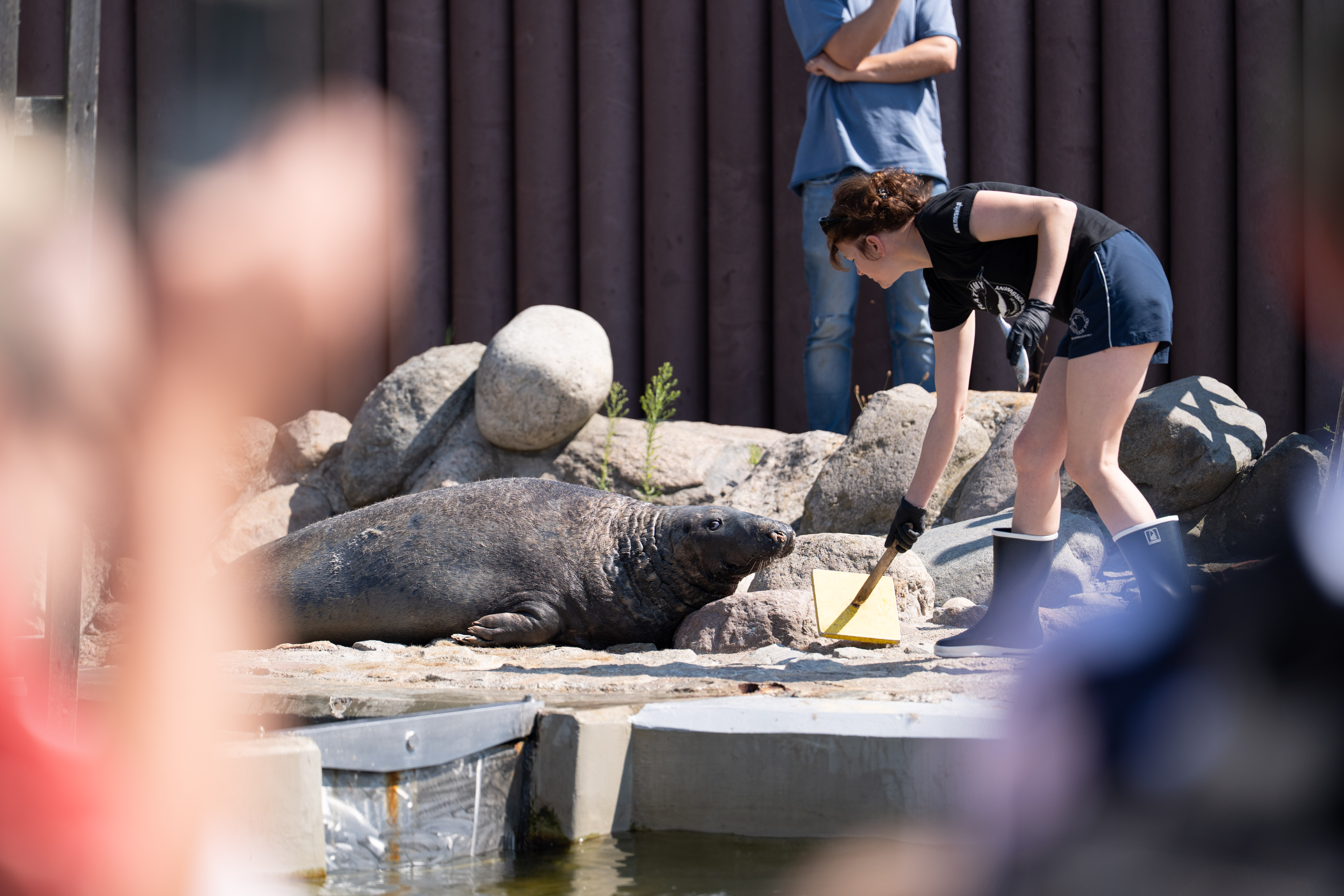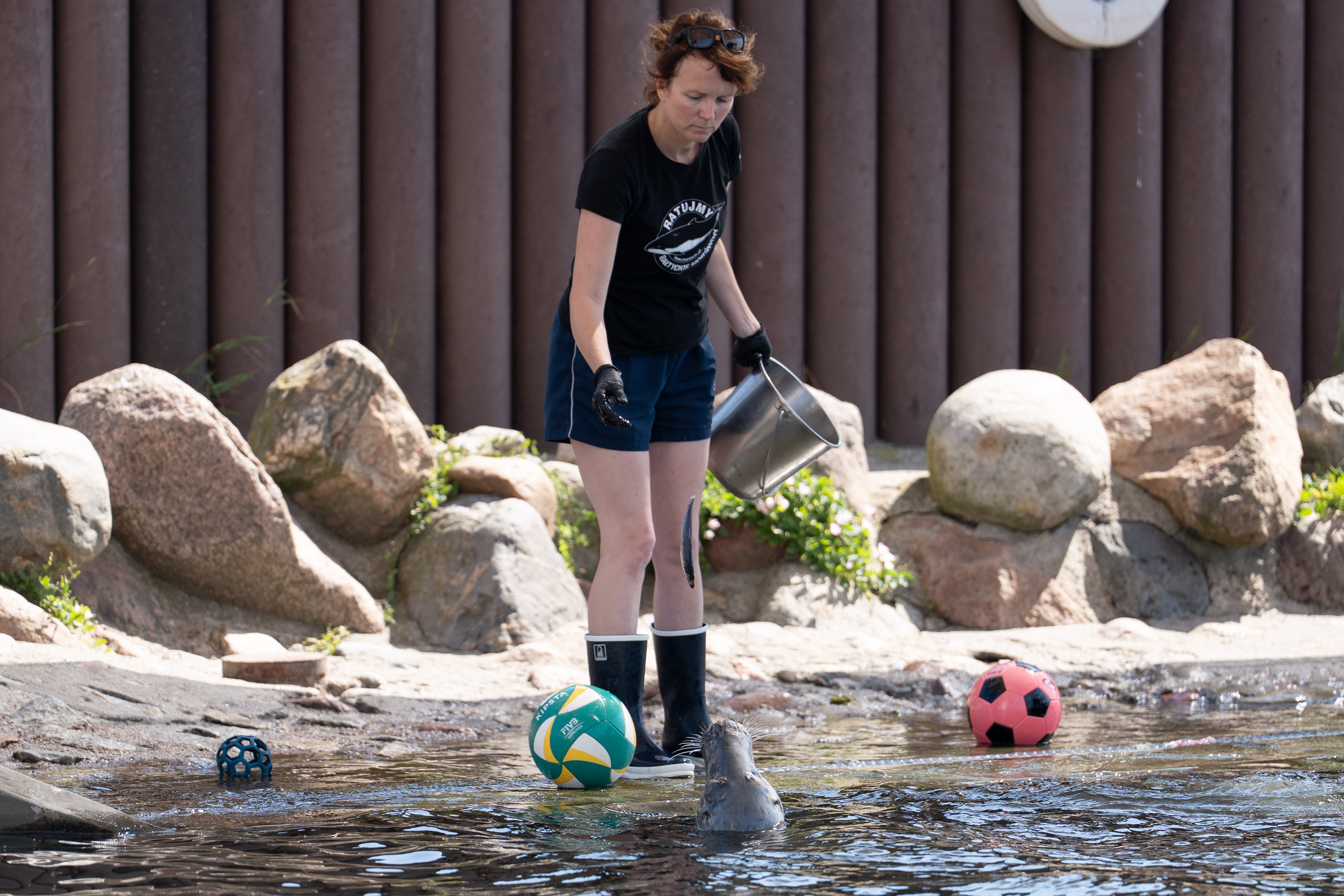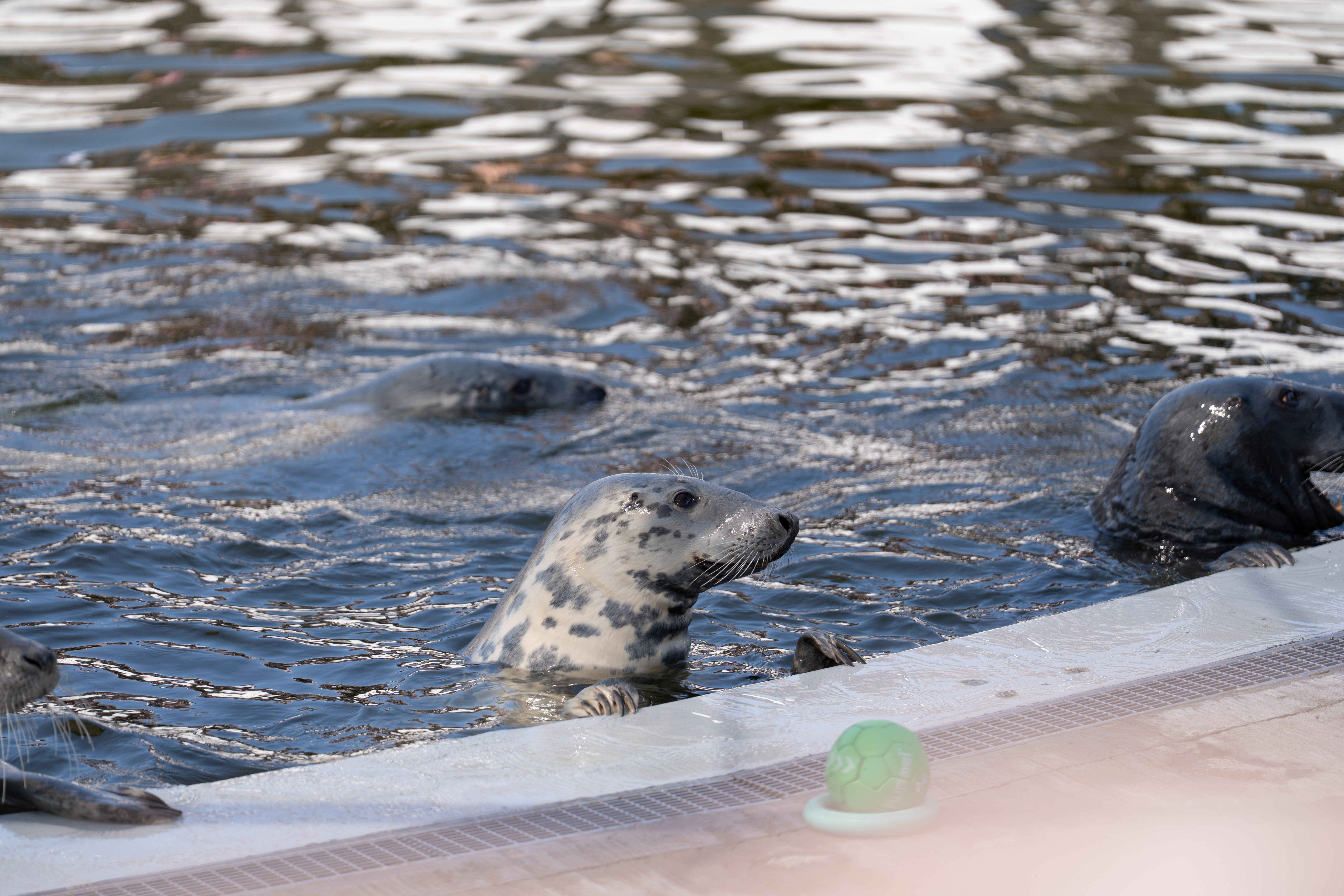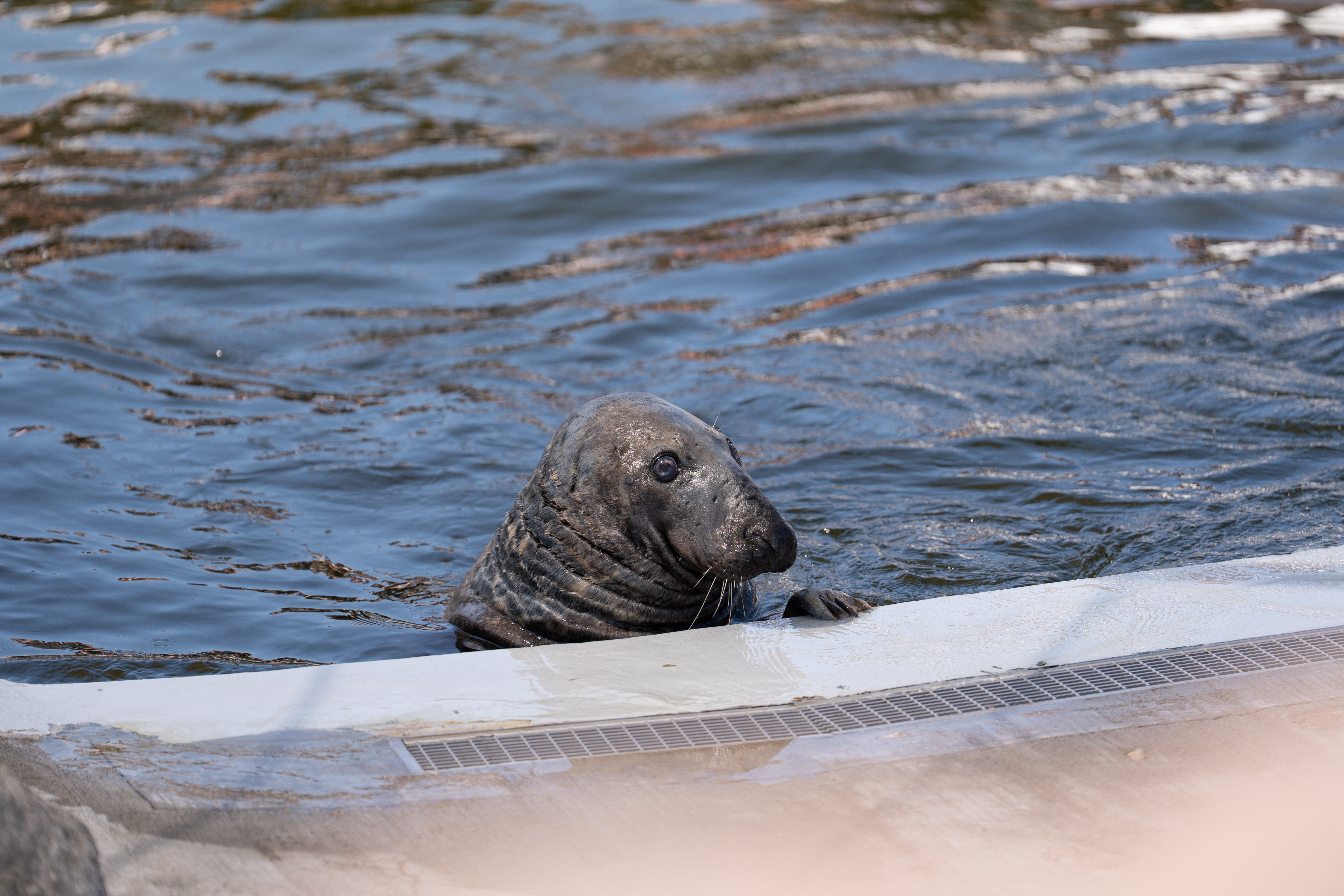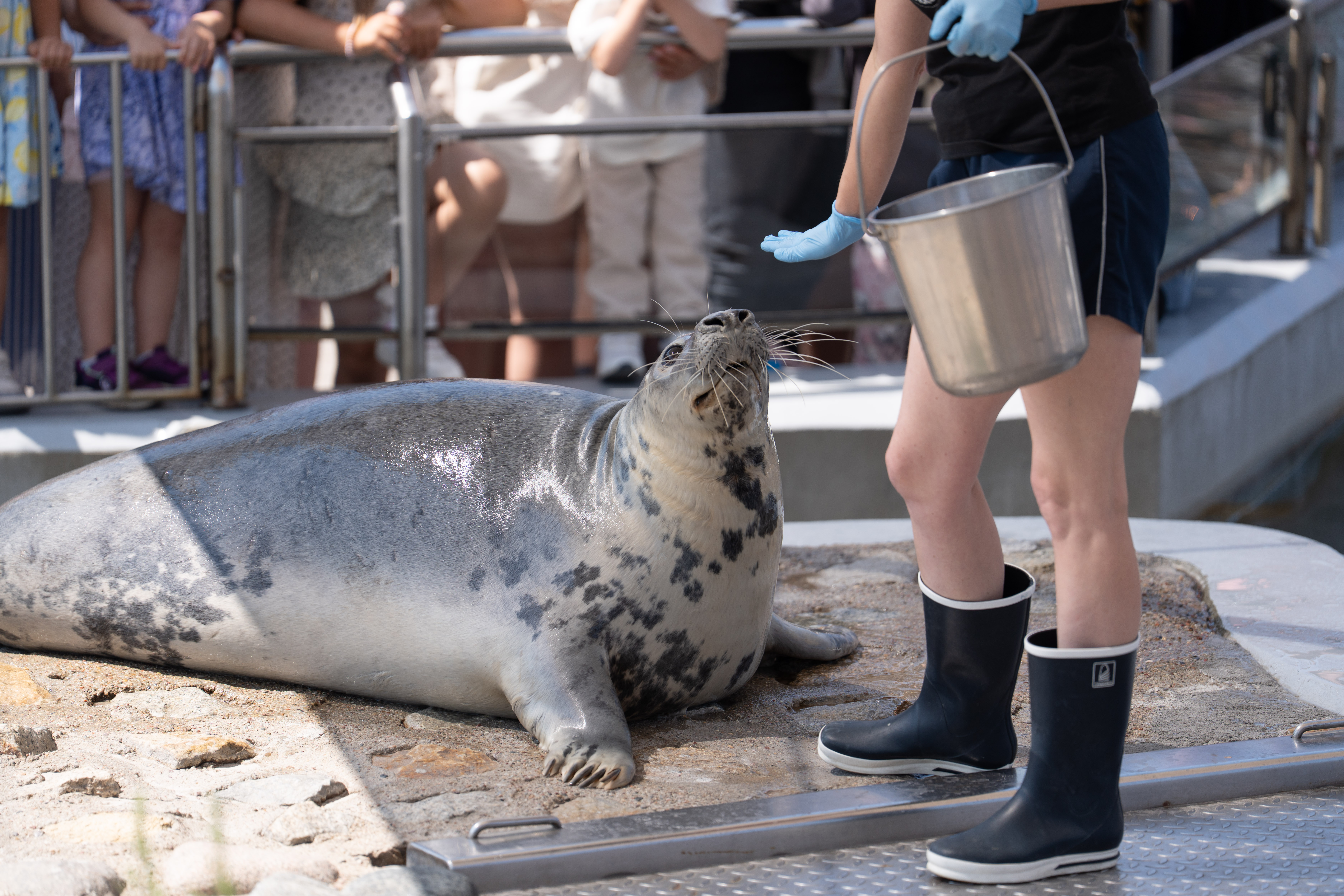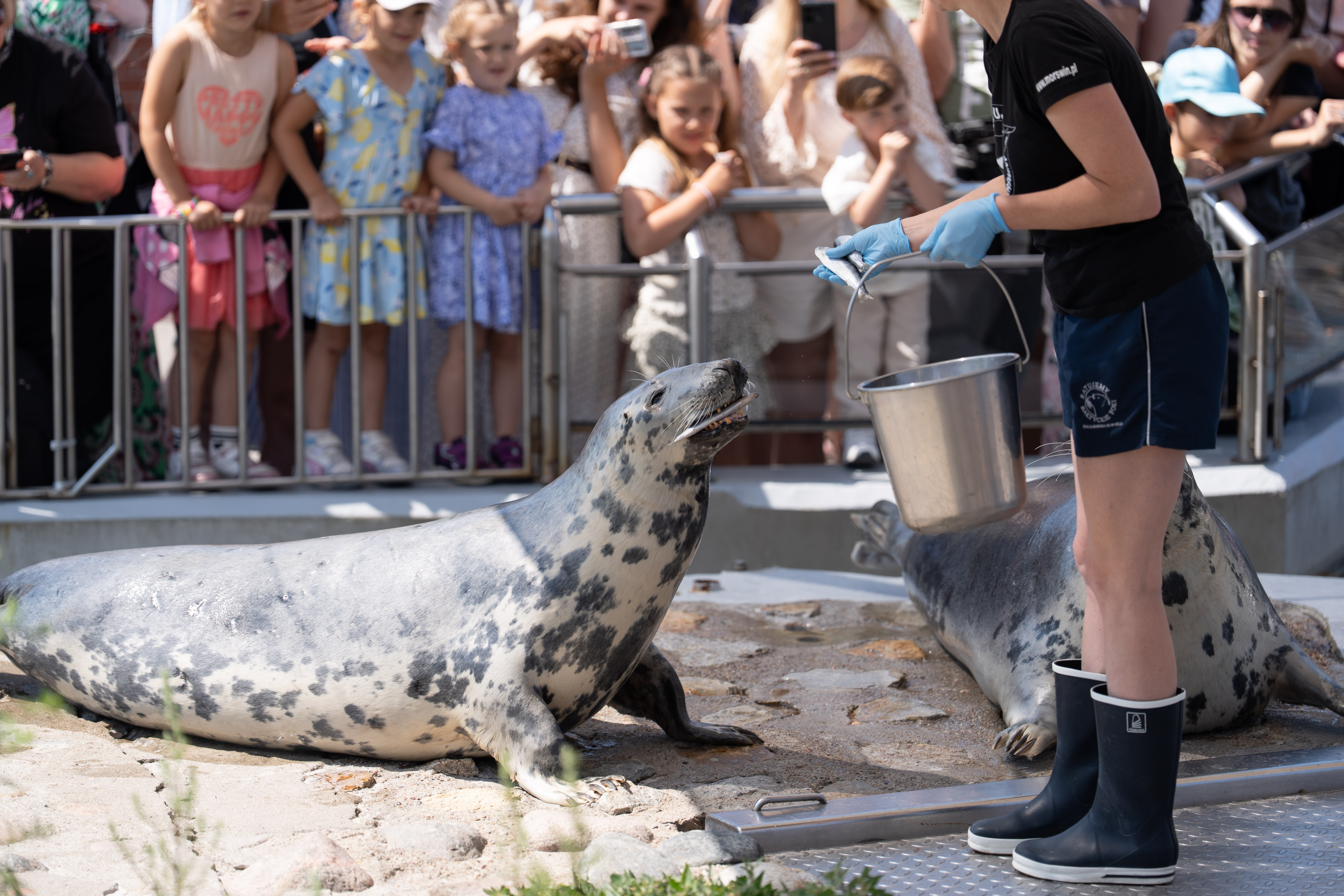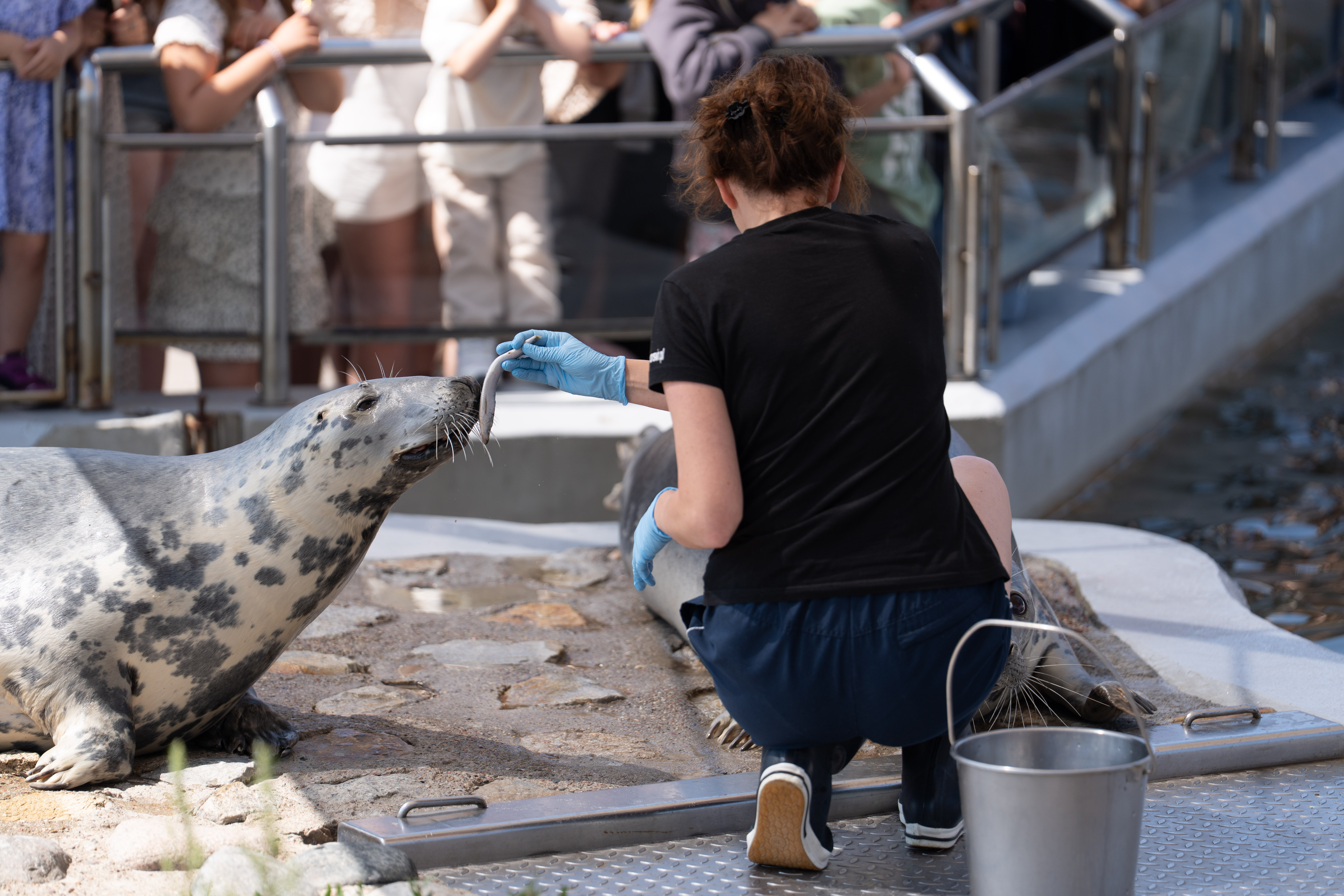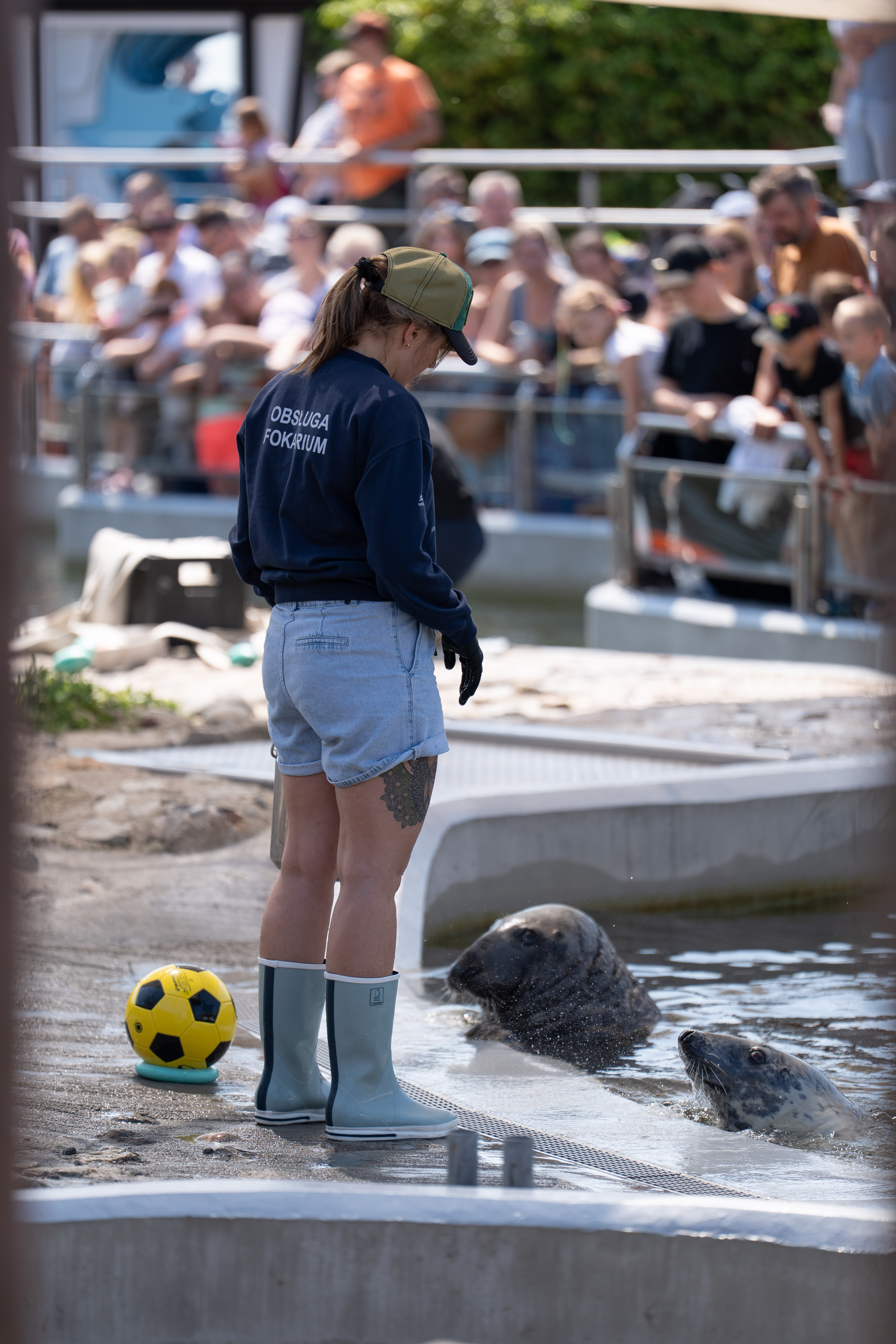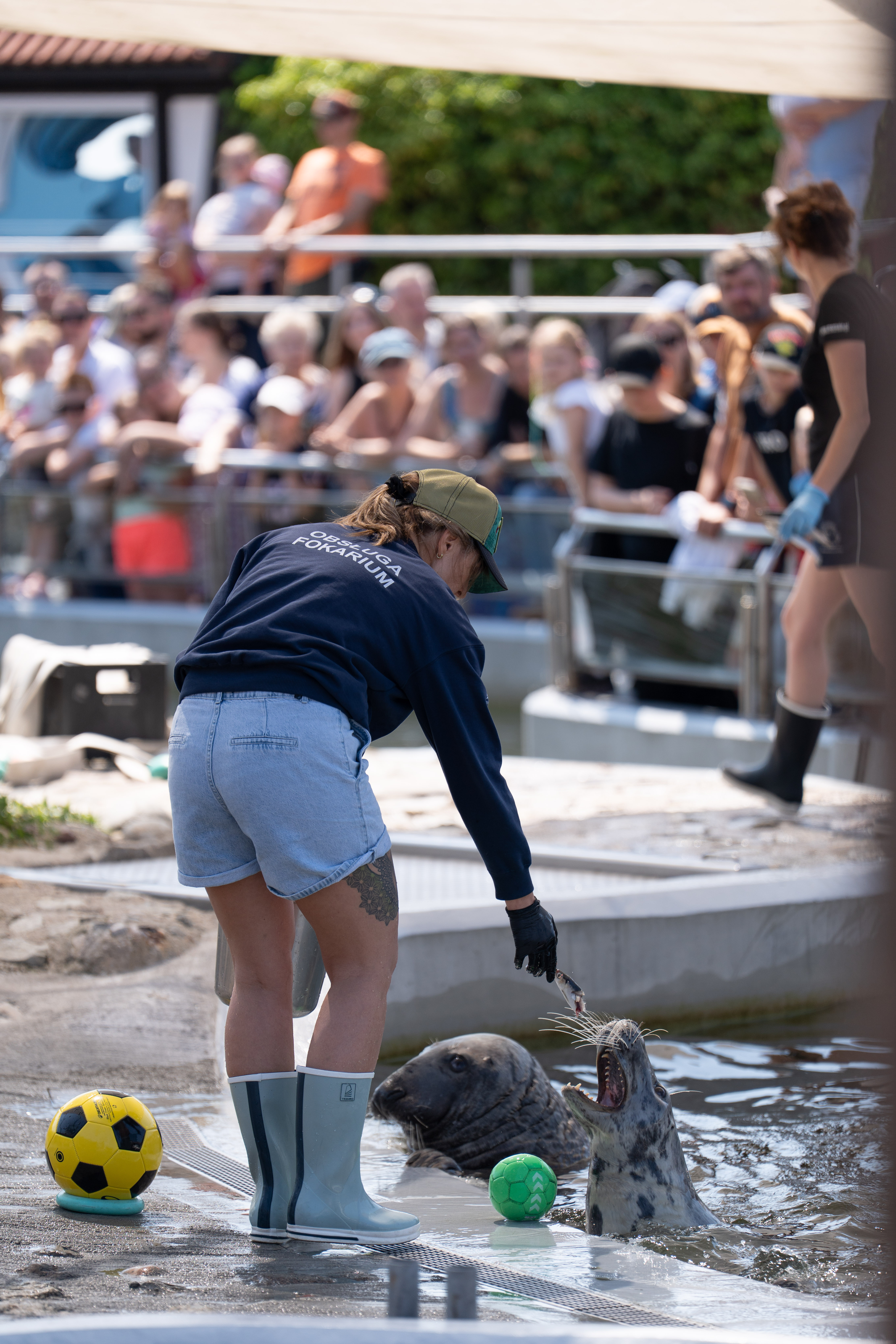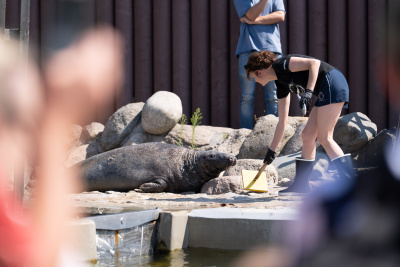
Bubas, the 39-year-old leader of the pod, has no intention of moving. The trainer patiently encourages him to enter the pool. Once more. And once more. He responds with a loud grunt, turns his head away and pointedly stays put. The tourists burst out laughing. ‘He’s got character. He knows what he wants,’ says Natalia Makałowska-Kur, a seal keeper and trainer who has been working at the Professor Krzysztof Skóra Marine Station in Hel for over 15 years. When Bubas teases his trainer and refuses to budge, the seal sanctuary’s permanent residents watch their spat from the front row.
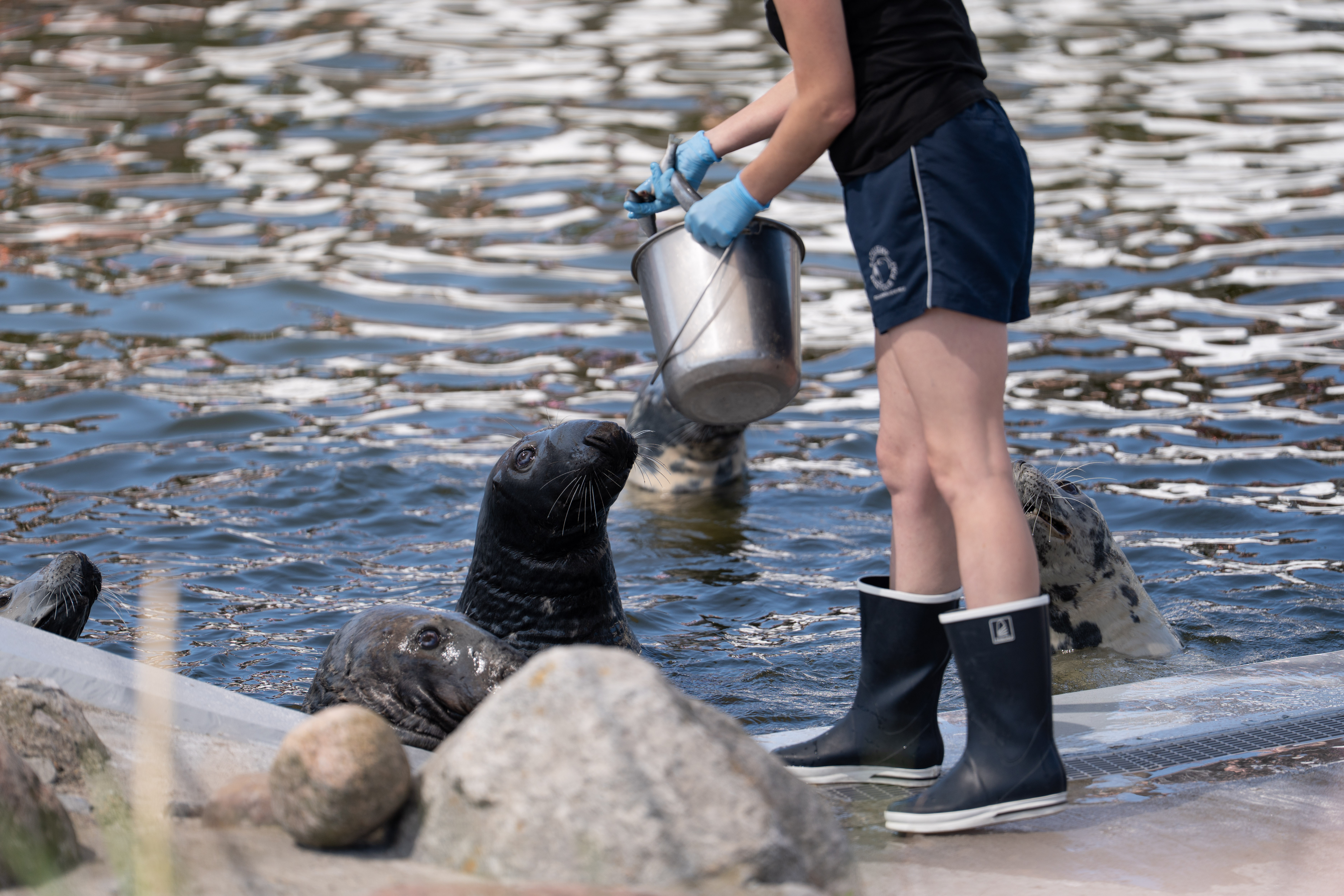
The 39-year-old is the alpha male and leader of the resident colony at the Marine Station’s seal sanctuary. The youngest, 20-year-old Fok, was born in Hel and is a descendant of the legendary Balbin, whose successful recovery inspired prof. Krzysztof Skóra to launch the seal reintroduction project in the southern Baltic Sea. His mother is the distinguished Unda Marina, who demands special treatment whilst feeding, imitating the sound of a ship’s siren and slapping her sides with her front flippers. The biggest foodie in the pod is Ania, whilst Ewa is a maverick. She’s famous for her stubbornness and independence. It is Ewa who is Natalia’s favourite. Why? ‘Because she’s the biggest challenge and sometimes it’s really hard to persuade her to cooperate,’ laughs the trainer.
Apart from the fact that Ewa has a strong personality, she’s easy to spot. She differs from the others in that the fur on her head is a lighter shade.
“These are wild, massive animals”
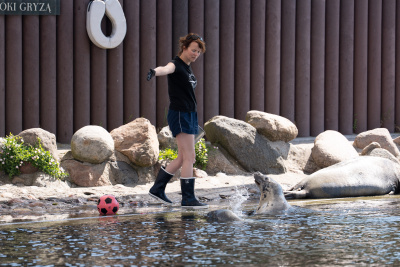
For years, the trainer has been constantly surprised by the brilliance and cleverness of her seal charges. ‘I knew seals were intelligent. But when I saw it with my own eyes, I was taken aback. To this day, they still amaze me with how quickly they learn difficult commands and how keenly they observe people,’ she admits.
This is most evident when a new person joins the team. ‘The seals instantly realise who’s still gaining experience. They test the boundaries, they try to negotiate. They have a perfect sense of when they can get away with a bit more and they take immediate advantage of it,’ she adds.
Will Natalia, with her many years’ experience at the Marine Station, manage to persuade the senior seal to cooperate? ‘I can be stubborn too,’ she jokes.
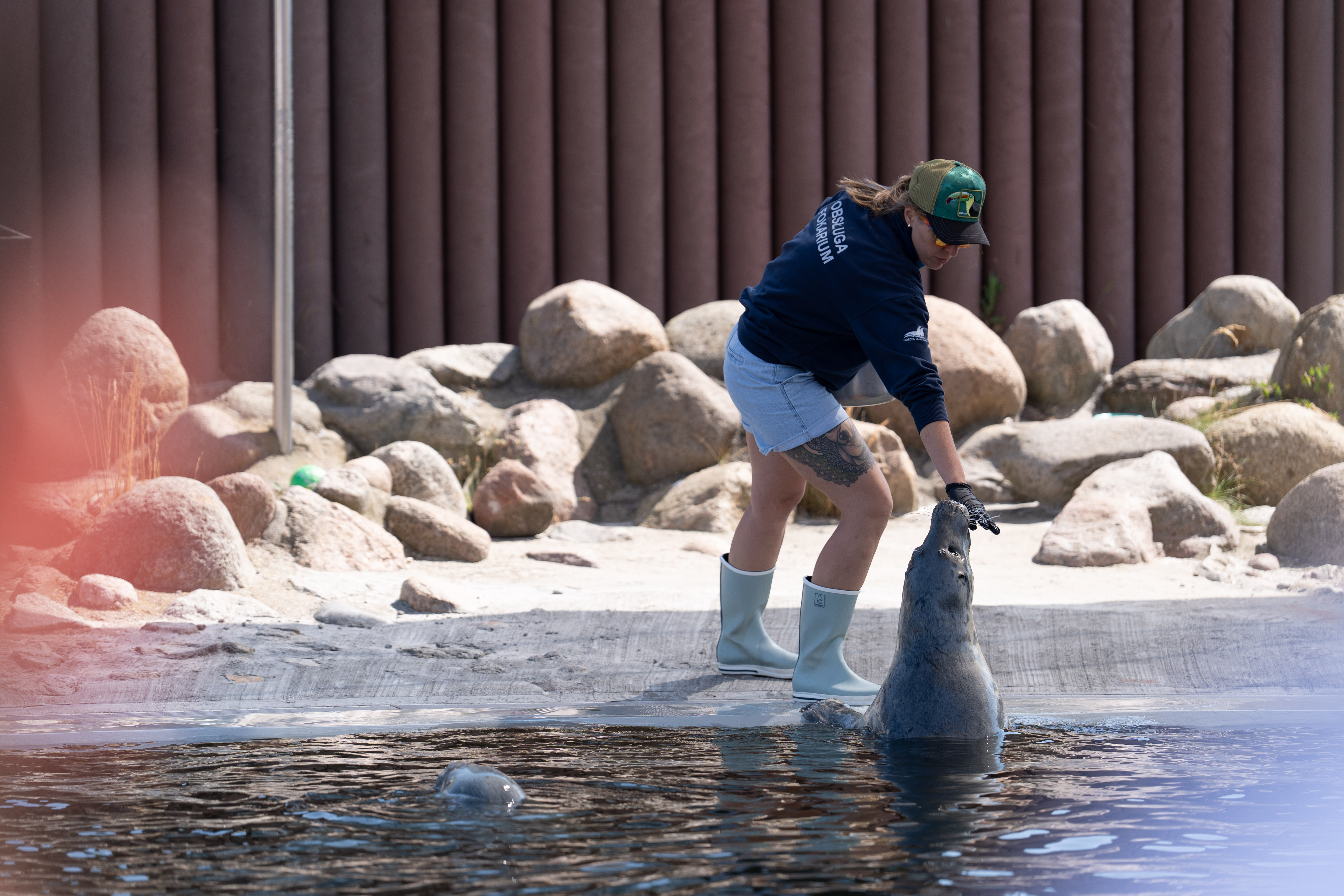
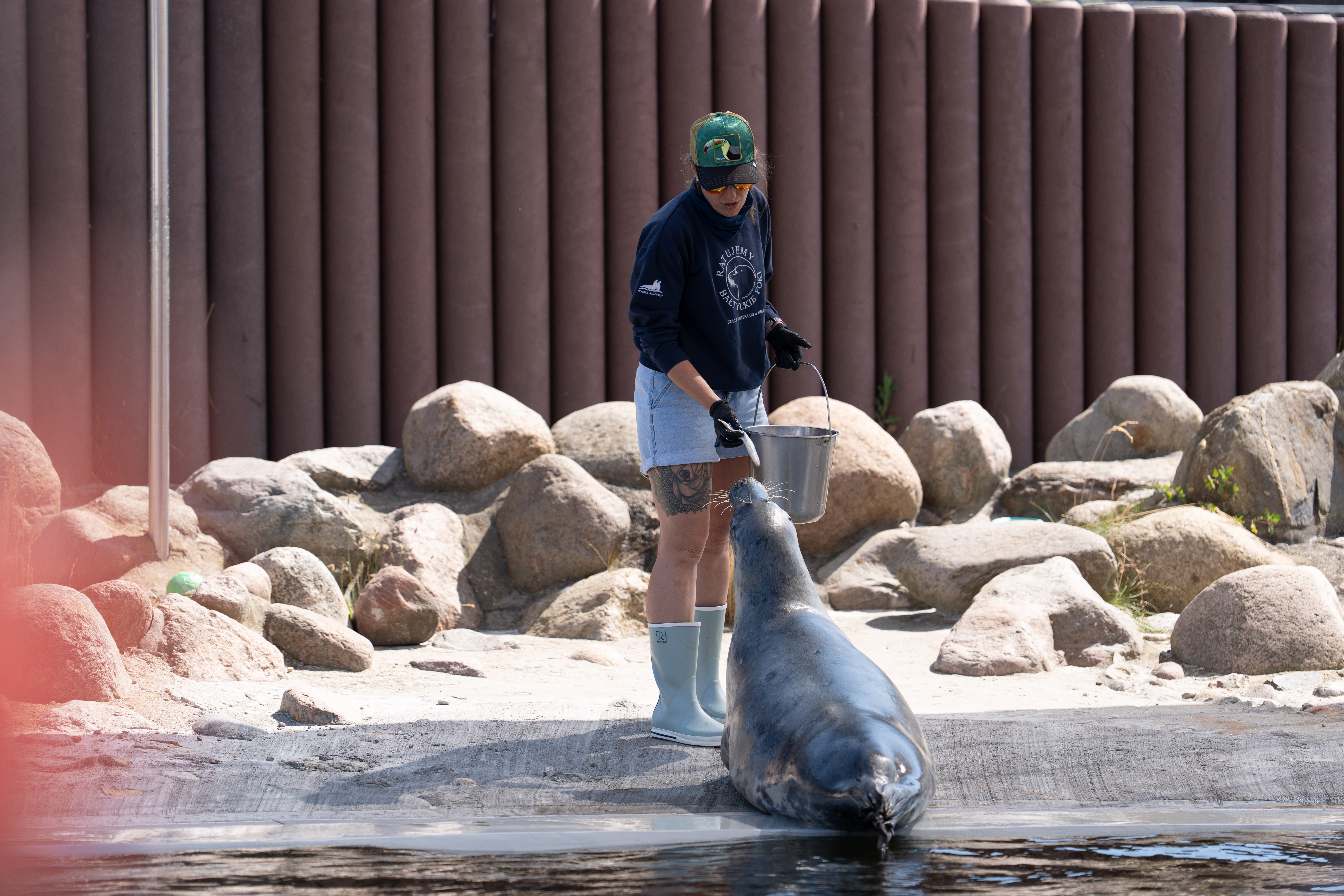
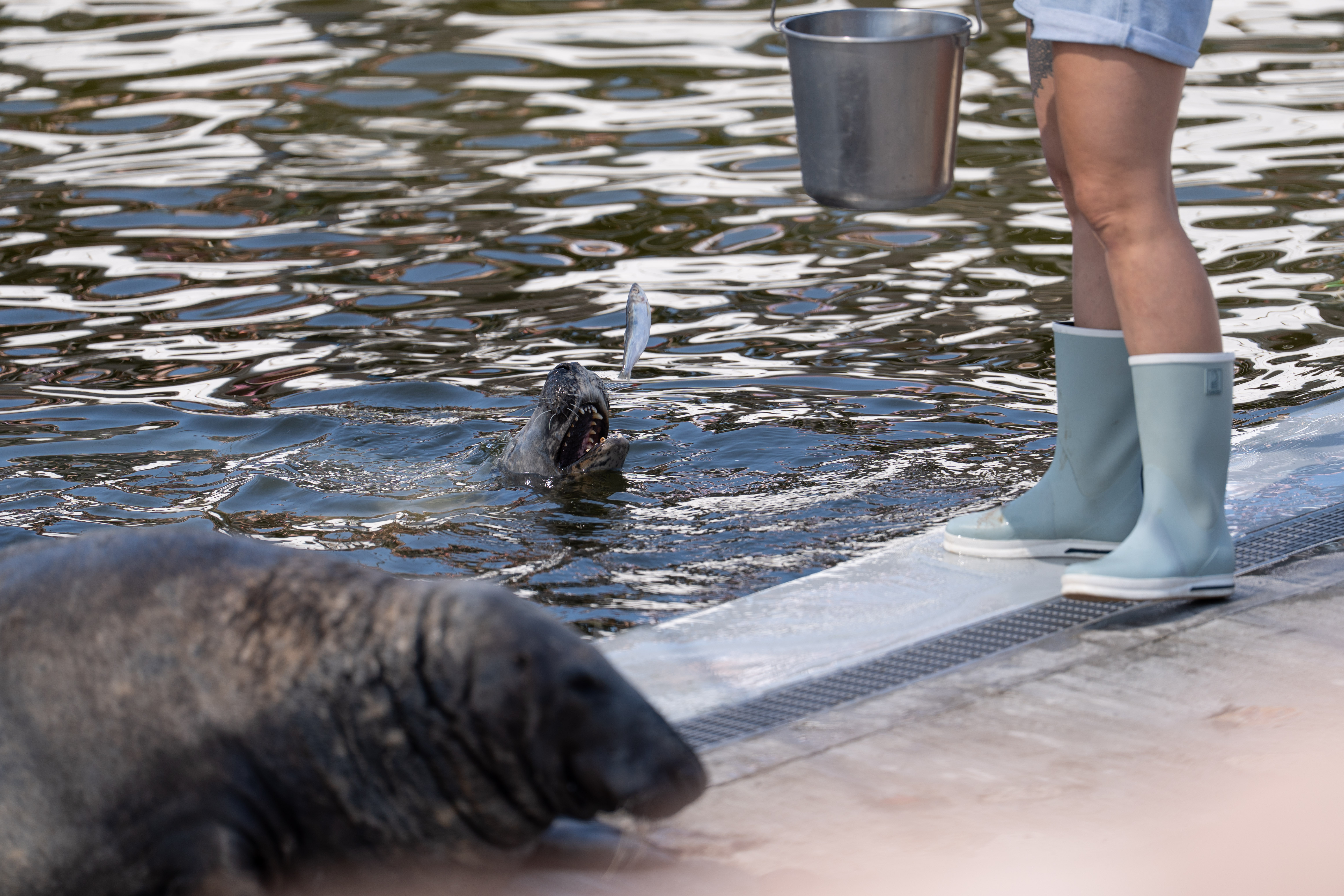
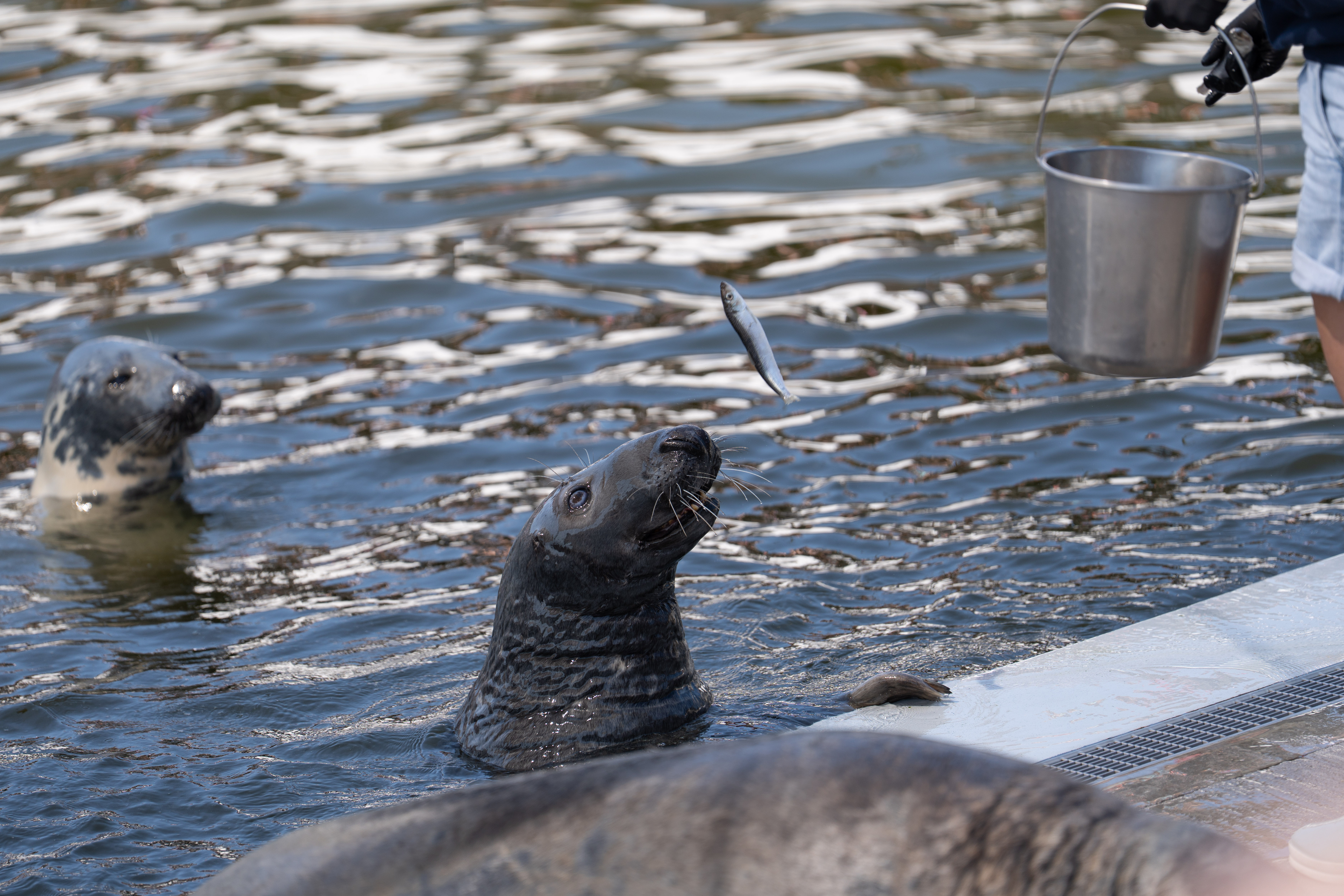
A few moments earlier, whilst Bubas is lazily basking on the shore, other seals are the centre of attention. Ewa fetches a ball, Ania eagerly catches fish, making grunting sounds as she does so, Fok shows off his teeth, and Unda casually reminds everyone of her presence.
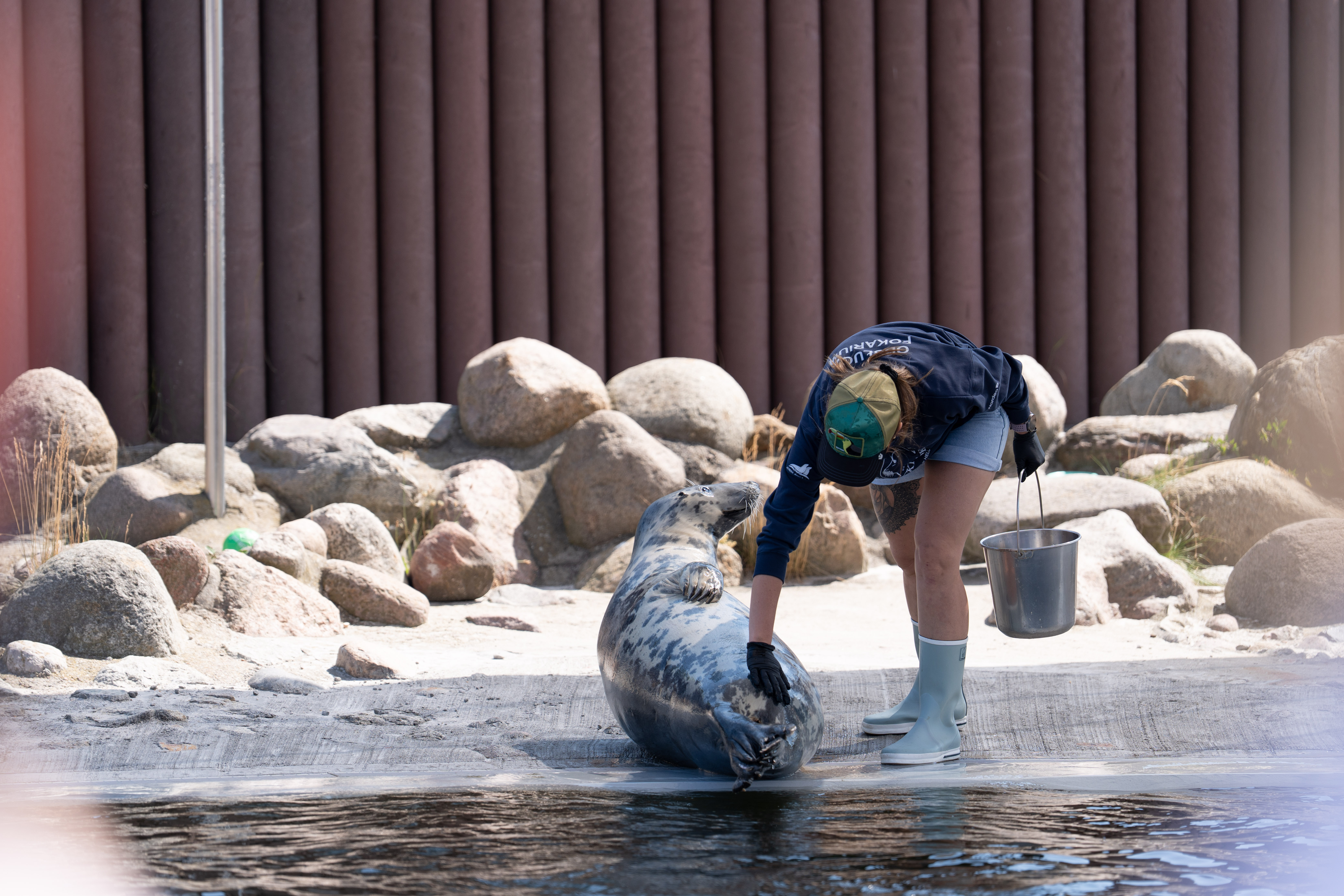
When watching the seals swim up to the shore, offer their flippers, open their mouths or fetch a ball, many visitors see a show put on especially for the public; in fact, it’s part of the daily care routine for the animals at the Professor Krzysztof Skóra Marine Station of the University of Gdańsk.
‘This isn’t a show, this is medical training,’ explains the trainer. ‘It’s important to remember that these are wild, massive animals. All our procedures and exercises have a specific purpose and help us monitor the health of the animals in our care. Having them hold out a fin allows us to examine their claws and skin; opening their mouths facilitates an oral examination; and stepping onto the scales or moving to another pool ensures that subsequent examinations and procedures can be carried out without causing the animal unnecessary stress.’
There are also exercises that, at first glance, look like play. ‘Fetching a ball, leaping out of the water or following a series of commands may look like fun, but they’re a way of combating boredom in seals. In their natural habitat, seals solve new problems every day whilst hunting. At the seal sanctuary, it’s up to us to ensure they still have the opportunity to use their brains and apply their intelligence.’
Irek, Orlinka and Rewianka at the seal hospital
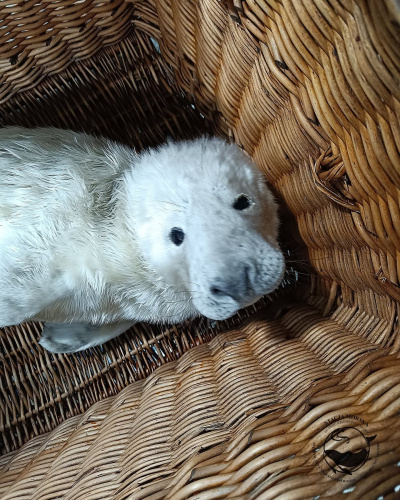
In the summer, the trainers focus on looking after the adult seals that live permanently at the seal sanctuary. In the spring, they look after seal pups that are brought to the Seal Rehabilitation Centre operating at the Marine Station in Hel. The first seal patient this year was Irek, who arrived at the ‘seal hospital’ from Ustka at the beginning of March. Later, it was time to look after Orlinka, Rewianka and the remaining thirty seal pups.
‘The seal pups are rehabilitated in a separate part of the Station. They have no contact with the colony that resides here permanently, and we never train them,’ emphasises Natalia.
Different rules apply at the Seal Rehabilitation Centre than at the seal sanctuary. Contact with humans is kept to an absolute minimum. ‘We want the young seals to remain as wild as possible and not become attached to us, as they are due to return to their natural habitat,’ explains Natalia Makałowska-Kur.
At the end of July, Dziwnuś arrived at the Seal Rehabilitation Centre with a large wound on his right flipper. He was named after the place where he was found, namely Dziwnówka. This unusual patient is a male harbour seal, the rarest species of seal in the Baltic Sea. Their pups are born a few months later than grey seals. He is the 33rd seal patient at the Hel centre this year.
First, he was examined by a vet; then his wounds were dressed, his blood was tested, and he was placed in an isolation unit with a pool, a beach, a heat lamp and a camera, allowing his health to be constantly monitored - discreetly and without causing the weakened little one any unnecessary distress.
At present, Dziwnuś is the only patient in the seal hospital; the remaining thirty have already been released into the wild. However, there have been years when as many as 60 or 80 patients were admitted to the Seal Rehabilitation Centre, which is why every isolation unit housing the Centre’s patients is worth its weight in gold. However, the cost of a single seal enclosure, complete with a small pool and a resting area, amounts to 90,000 zł. If you’d like to support the recovery of the seal pups, please join the fundraising campaign organised for this purpose by the University of Gdańsk Development Foundation: www.ratujemyzwierzaki.pl/dlafok.
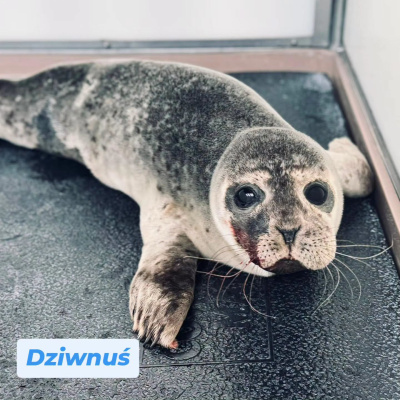
Dziwnuś’s wounds have been dressed, and he is under the constant care of experts from the Marine Station, but he will have to wait a little longer for his herring, as a seal pup that has been separated from its mother too early is not yet able to feed itself. ‘So first we feed him pureed food (in the form of fish soup with added electrolytes and fish oil) via a gastric tube. Once he has recovered, only then will we start getting him used to herring,’ explains the carer.
She adds: ‘Once the wounds have been dressed, our role boils down to feeding them so that all our ‘nursery pupils’ reach a suitable body weight. A weight that will give them a good start in the wild and provide the energy they need for the initial stage of foraging in the wild.’
And then, once they’ve been fed, have grown to full size and are healthy, they’re released into the wild.
‘Some win our hearts more than others; we become more attached to some than to others, but we’re always filled with immense joy when a seal released five years earlier is spotted at Mewia Łacha,’ Natalia makes no secret of her emotions.
How do we know what becomes of the seals in the care of the Seal Rehabilitation Centre? ‘All the seals we release into the wild are ‘equipped’ with microchips and special numbered tags on their flippers. It was thanks to such a tag that we were able to identify one individual. A camera positioned on Mewia Łacha allows us to monitor the wild colony. Imagine our delight when we managed to identify our former patient!,’ laughs the carer.
Unfortunately, not all seal pups can be saved. ‘It took me many years to gain some perspective. Sometimes I still can’t. Their deaths are the hardest for us,’ admits Natalia.
The carer shows photos of the pups she’s looking after this year. Irek, the first patient of the year, with his white lanugo fur, looks into the camera with his big, trusting eyes. Orlinka, emaciated, dehydrated and running a high fever, looks a bit frightened; Łazik from Łazy, with wounds on his flippers, seems a little lost.
The carers, as well as the volunteers, have looked after them with great care.
‘The rehabilitation season for wild grey seal pups runs from March to May, and it is precisely for this period that we are looking for volunteers. Rehabilitation volunteering attracts animal lovers from a variety of professions. Among those who have looked after the seals are architects, lawyers, employees of various corporations, hairdressers and artists. Usually, a placement lasts two weeks, but we encourage longer stays. This year, as many as three people spent three months at the centre,’ says the trainer, adding that volunteers can count on free accommodation, clothing and insurance.
Bubas, the crowd’s favourite
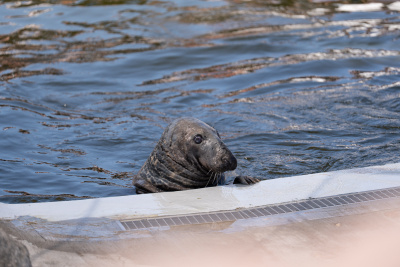
Natalia finally manages to persuade Bubas to get moving. He jumps into the pool, and the tourists applaud. - I knew he’d give in eventually - smiles the trainer. ‘Bubas can be endearing, sweet and good-natured, but if he wanted to, he could really show his impatience in a different way - and he’s got some really big teeth,’ she explains. ‘The 39-year-old hasn’t shed his winter coat yet. To change their coat colour, seals bask in the sun, and their appetite is reduced whilst doing so. The other members of the colony finished moulting at the end of May, but for him the process is dragging on.’
Was what we witnessed a trial of strength between the trainer and the 39-year-old? ‘Yesterday, Bubas spent the whole day on the shore, and we’ll need to change the water in our pools at some point, which is why I was so keen for him to swim to another spot,’ explains a member of staff at the Marine Station.
Every trainer has a favourite in the seal colony, but it’s impossible not to like them all. ‘Every seal is different. Each one reacts differently. After years of work, we know what to expect from them. That doesn’t mean our work is predictable and boring. Nothing could be further from the truth. Every day is different. And although we do similar things, the animals can still surprise us,’ concludes Natalia Makałowska-Kur.
___________________
We encourage you to support the Seal Rehabilitation Centre: https://www.ratujemyzwierzaki.pl/fokarium
and to visit the seal sanctuary shop run by the University of Gdańsk Development Foundation, where you can buy seal-themed merchandise: https://sklepikfokarium.pl.
You can also support the seals by buying seal-themed merchandise at the UG Shop: https://sklepik.ug.edu.pl/product-category/wspieramy-foki/
***
If you’d like to actively support the conservation of Baltic seals and spend the summer right by the sea, consider joining (but next year!, as this year’s recruitment has already closed) the summer volunteer programme at the seal sanctuary. If you’re over 18, aren’t afraid of working as part of a team and want to get to know the habits of our residents up close, the seal sanctuary is just waiting for you.
***
The Seal Rehabilitation Centre is not open to the public. Tourists can watch the seals being fed at the Hel seal sanctuary, which takes place daily during the summer holidays (July-August) at 11.00, 12.30, 14.00 and 15.30.