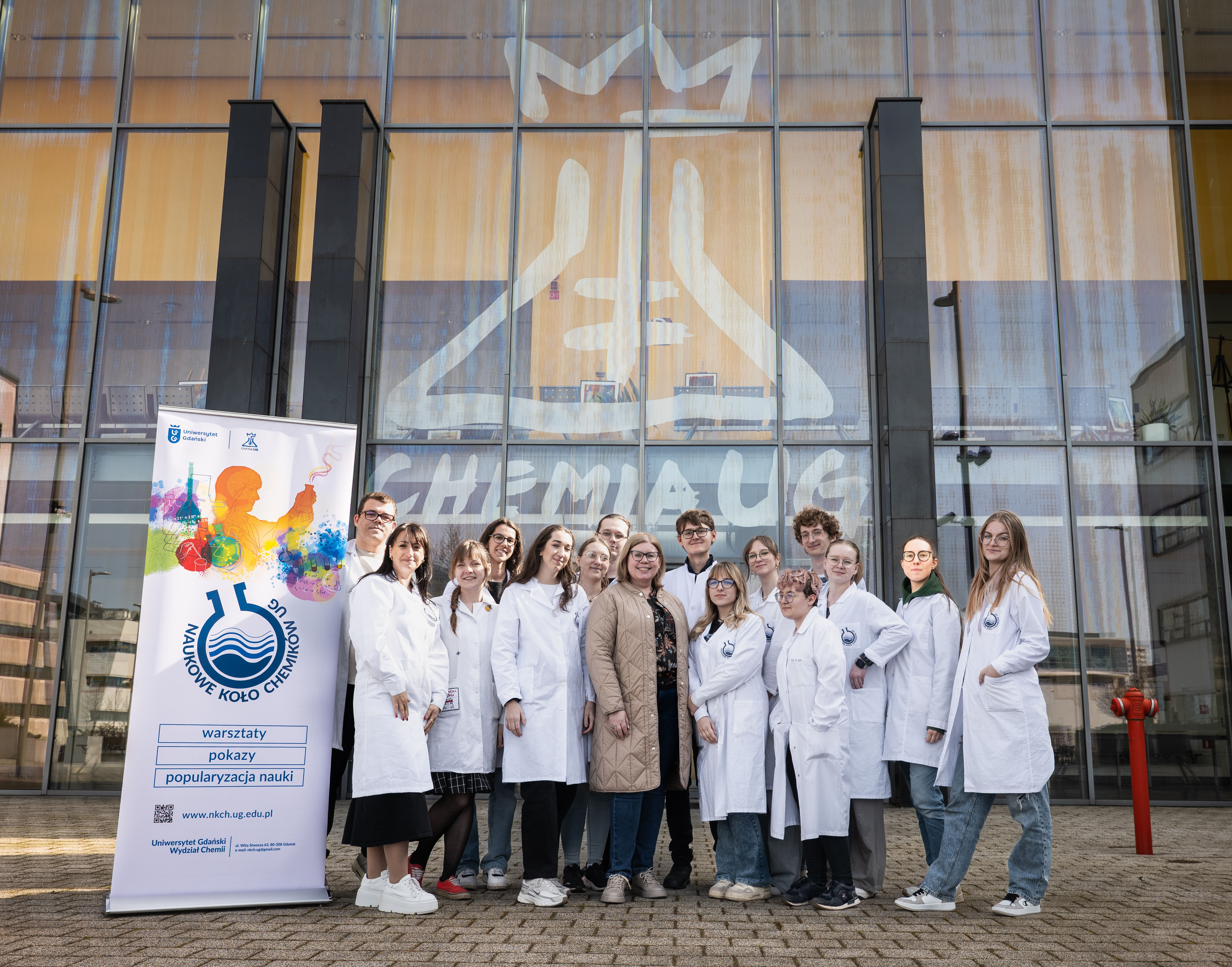
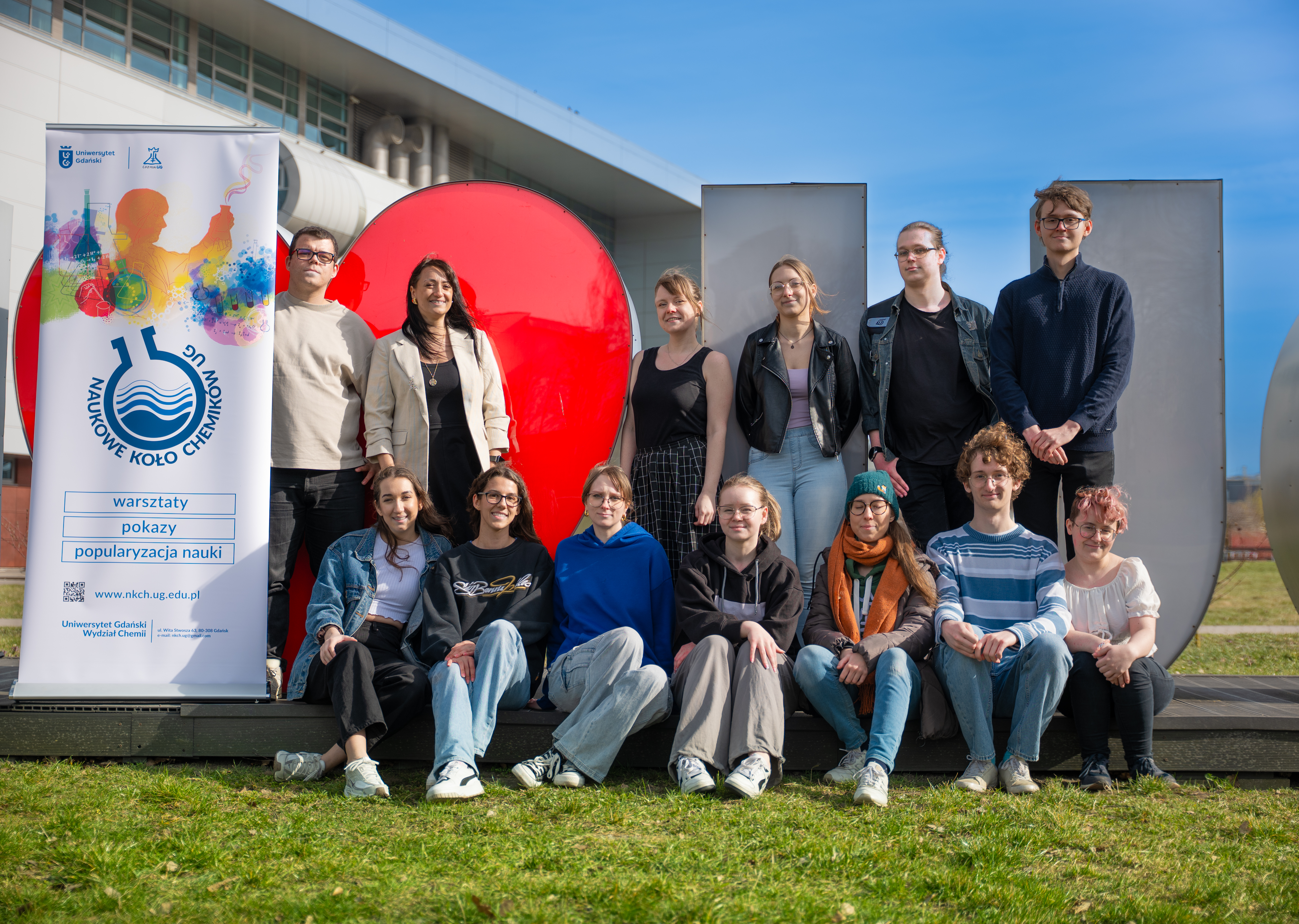
The Orlen Foundation has awarded grants to student research clubs carrying out projects in the fields of chemistry, physics, and STEM-related sciences. In the pilot edition of the ‘From Molecule to Galaxy’ programme, 32 research clubs received financial support, three of which operate at the University of Gdańsk! The Scientific Circle of Chemists and the Scientific Circle of Environmental Protection will carry out projects related to education and the popularisation of science aimed at primary and secondary school students. The Scientific Circle of Physicists will design and build an interactive ferrofluid clock.
Molecules for the planet - the road to Zero Waste
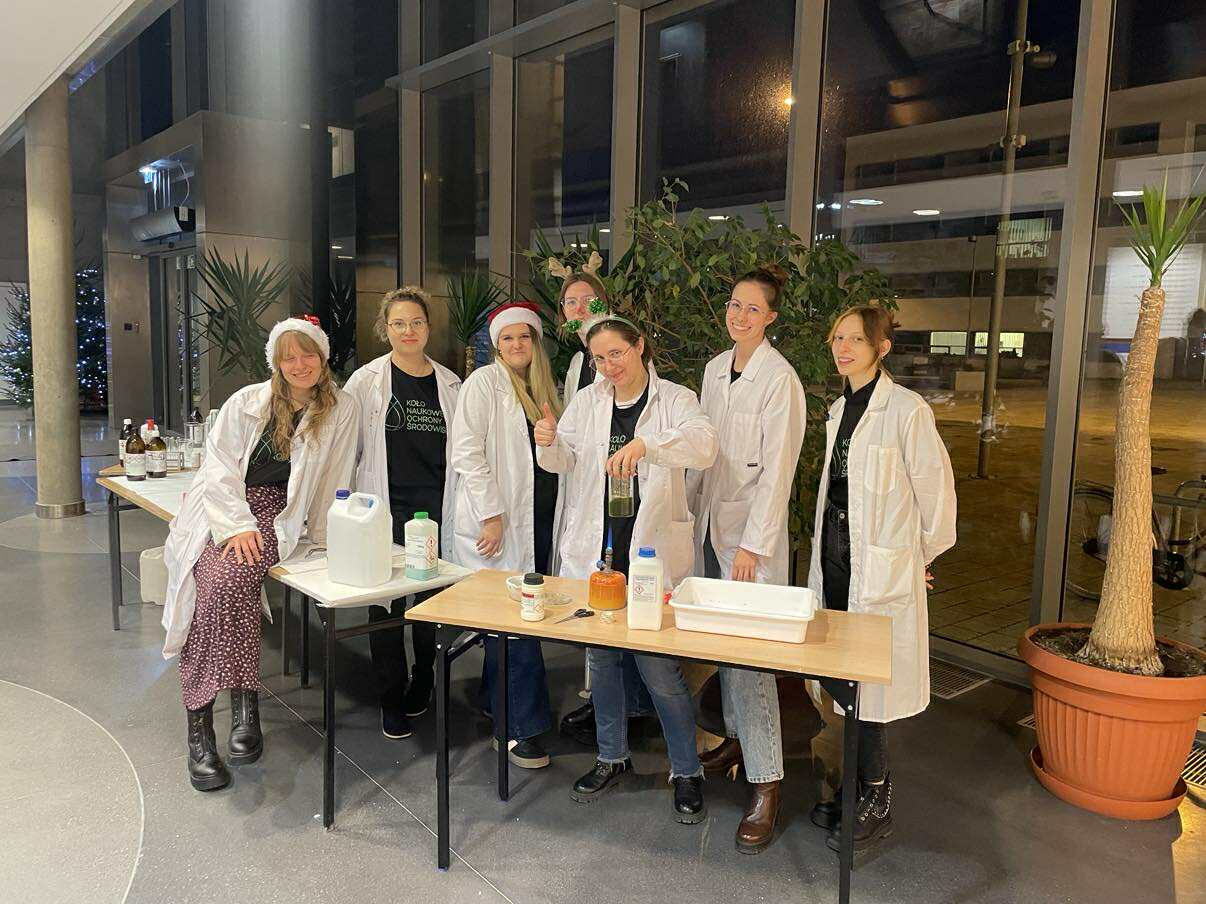
The Scientific Circle of Environmental Protection (KNOŚ) will allocate the PLN 25,000 it received to organise a series of interdisciplinary educational and promotional workshops allowing for independent experimentation, aimed primarily at primary school pupils. The aim of the project entitled ‘Molecules for the planet - the road to Zero Waste’ is to develop chemical and ecological awareness through interdisciplinary activities combining science with ecological education, a healthy lifestyle and a creative approach to solving the problems of the modern world. The project encourages learning about phenomena at the molecular level, promoting a sustainable lifestyle.
‘The proposed project stems from the interests of the club members and is also a response to numerous enquiries from teachers from various schools who contact the club with requests to organise workshops,’ says the club's scientific supervisor, dr Aleksandra Bielicka-Giełdoń. ‘The implementation of the project will enable students to have direct contact with science through participation in, among other things, laboratory workshops, computer classes and chemical experiment demonstrations, which will help to break the stereotype of science as difficult and inaccessible. Through practical activities, participants will learn to understand the relationships between the natural world, human health and environmental protection, as well as to recognise the impact of everyday decisions on the state of the planet.
The KNOŚ project also stands out for its use of an educational model of a city made of LEGO bricks, which interactively presents the principles of sustainable development and the circular economy. The combination of science, educational games and laboratory practice will allow students to acquire knowledge more effectively, while inspiring them to continue exploring science and natural sciences.
‘Preparing the grant application was quite a challenge for us, especially since some of us were facing such a task for the first time,’ say the authors of the project. ‘Special recognition should be given to Weronika Jankowska, Daria Komkowska and Kamil Antoszewski, who were responsible for the conceptualisation and overall planning of the workshops. Our efforts were supervised by dr Aleksandra Bielicka-Giełdoń, the supervisor of our research club, who advised us on difficult issues. Her experience and insightful comments were a great support to us. The entire project required us to devote additional time (and emotion), but it was certainly a valuable and interesting experience for all activists, during which we were able to combine our strengths and ideas.
The Scientific Circle of Environmental Protection, which has been operating at the Faculty of Chemistry of the University of Gdańsk for over 20 years, is actively involved in promoting science and natural sciences, participates in various forms of training and scientific events, and independently carries out research and educational projects. It also organises conferences for students and young scientists (Man-Science-Environment in 2013-2017, and Chemistry-Business-Environment since 2018).
‘Being in the Scientific Club is very valuable because we make new friends and collaborate with other clubs,’ emphasise the members of KNOŚ. ‘We meet people with similar interests here, and as we know, nothing connects people as well as a shared passion. You can feel part of a team that has an important idea: raising awareness about the importance of the individual in relation to environmental and ecosystem protection. Another important aspect is developing teamwork and event organisation skills.
We invite you to follow the website and the Club's profile on Facebook.
#CHEMOBIL, or a laboratory in a backpack
fot. CASiD
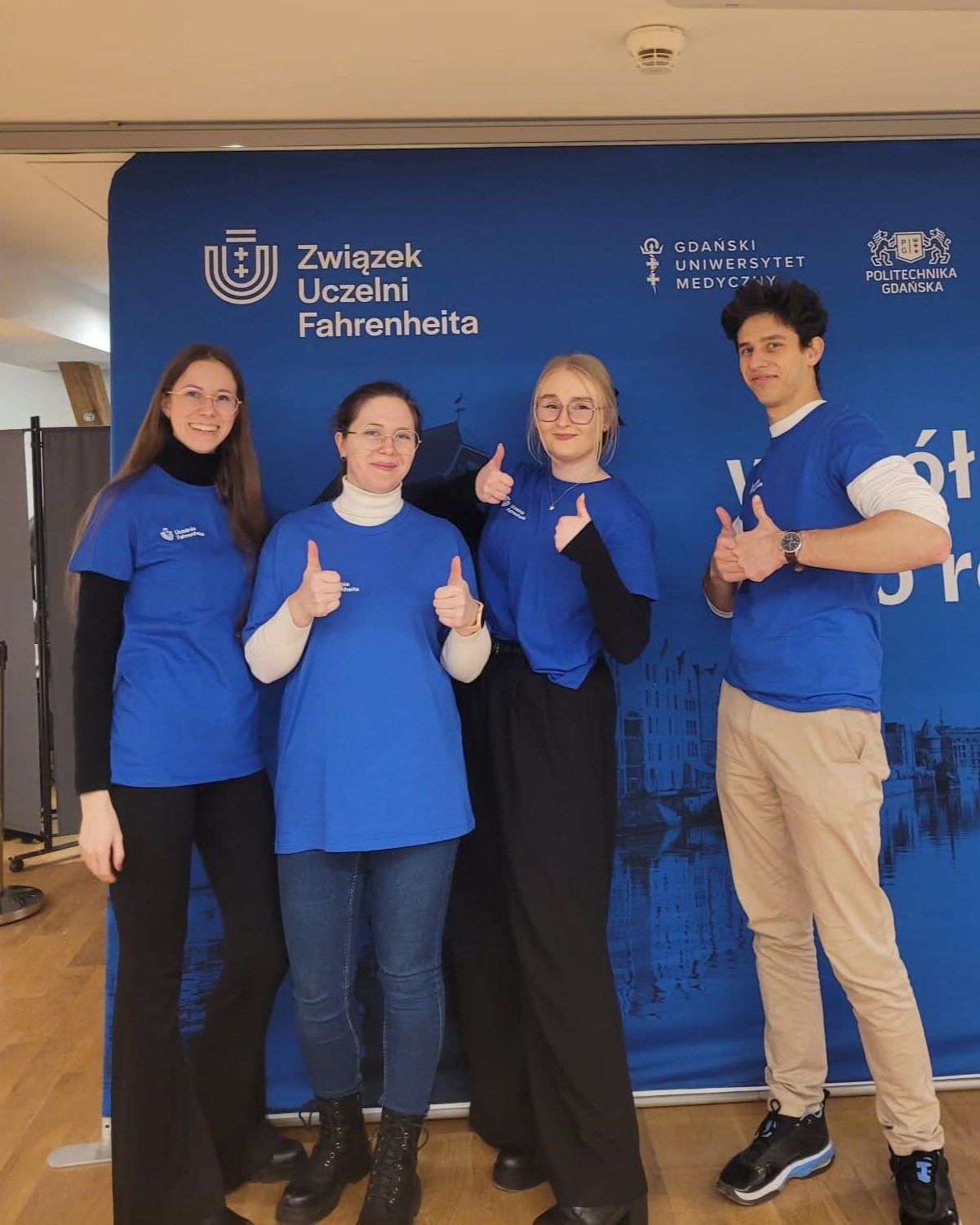
The Scientific Circle of Chemists (KNCh), which will also receive PLN 25,000, will implement the project ‘Student Mobile Green Chemistry Laboratory’ - acronym #CHEMOBIL. This initiative will allow students to reach schools in smaller towns in the Pomeranian region with practical STEM workshops.
‘We are very happy about the grant,’ says Hanna Bublewicz, President of the University of Gdańsk Scientific Circle of Chemists (third year, Chemistry). ‘Thanks to this support, we will be able to reach places where access to science is limited. On-site, we will show students that chemistry is close to them, at their fingertips, every day. This is a huge motivation for us!’
The funds from the ORLEN Foundation will enable the construction of three complete sets of ‘GreenLab in a backpack’ - portable experimental stations for teaching green chemistry, renewable energy and environmental chemistry. The sets will allow demonstrations and workshops to be conducted in any school, regardless of its laboratory facilities. The project includes a series of 10 mobile workshops in primary and secondary schools, the development of an educational brochure and five promotional and instructional films, as well as the creation of a permanent database of educational materials available online. The project responds to the real needs of schools, which often give up on field trips due to organisational constraints. #CHEMOBIL aims to bring science directly into classrooms, ‘like a silent vehicle full of test tubes and ideas’.
‘The #CHEMOBIL project is a wonderful example of how students can combine academic knowledge with a social mission with the financial support of the ORLEN Foundation. I am really proud of them - they are definitely my favourite team, consistently and passionately spreading their wings,’ said the supervisor of the Scientific Circle of Chemists at the University of Gdańsk, dr hab. Agnieszka Chylewska, prof. UG, from the Department of Bioinorganic Chemistry.
‘Thanks to this initiative, members of the NKCh UG will not only be able to further develop their own skills related to organising events and popularising science, but above all, they will be able to spark curiosity and enthusiasm for discovering the world in others. I believe that the experiences brought about by #CHEMOBIL will stay with the students for a long time and perhaps inspire future scientists, engineers and explorers,’ adds the assistant supervisor of the Club, mgr Daria Łada.
The application was prepared by the project team of the Scientific Circle of Chemists of the University of Gdańsk in close cooperation with prof. Agnieszka Chylewska. The students emphasise that the work on the project was intense but very rewarding - it was practical training for writing scientific and grant applications later in their academic careers. According to the authors of the project, its creation ‘was like assembling a small research and field car from publicly available materials - a challenge that teaches precision and at the same time gives great satisfaction.’
KNCh runs a website and a Facebook profile.
Ferrofluid clock - a project of the Scientific Circle of Physicists
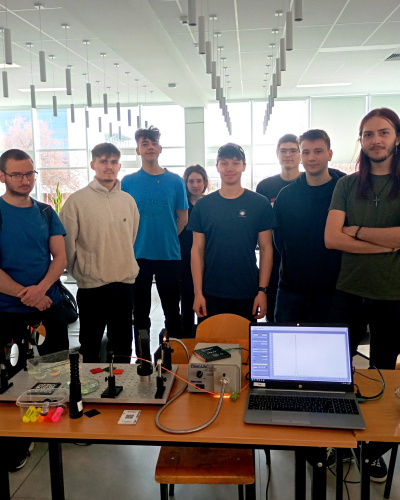
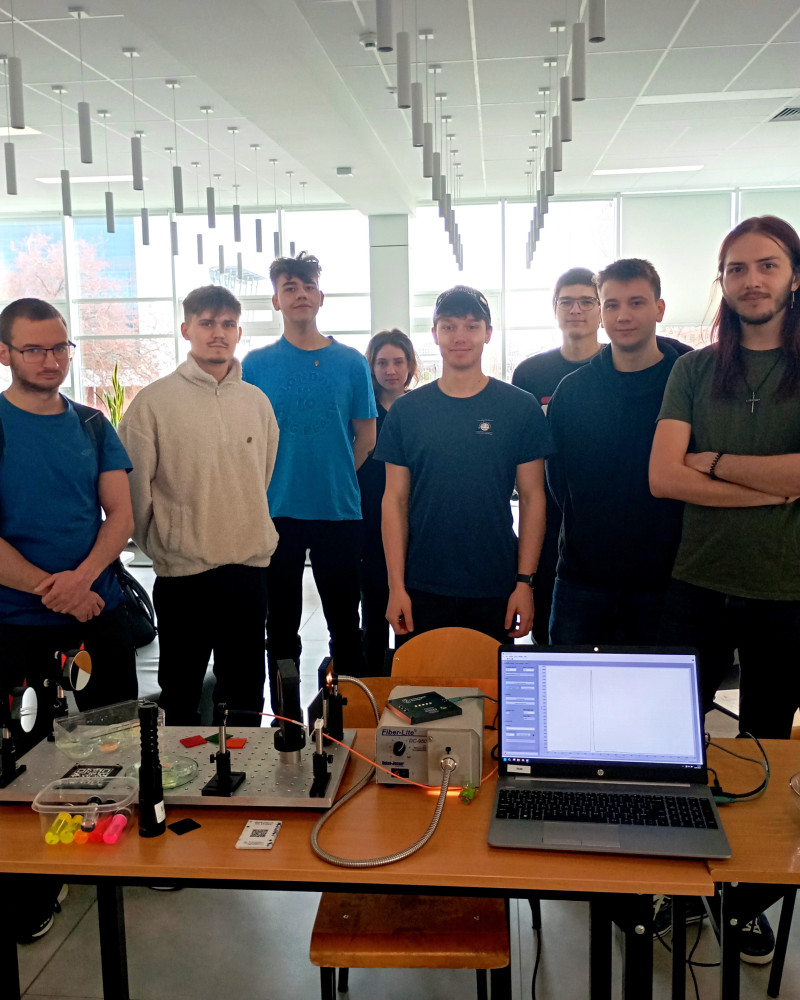
Członkowie KNF; wśród nich (piąty od lewej) Mateusz Kowalczyk, pomysłodawca projektu
The aim of the project submitted by the Scientific Circle of Physicists (KNF), worth PLN 21,200, is to design and build an interactive ferrofluid clock that effectively presents physical phenomena related to magnetism, electromagnetism and the movement of magnetic fluid (ferrofluid). The project is educational and research-oriented - it combines knowledge of physics, electronics and materials engineering, engaging students in interdisciplinary construction and programming work. The finished clock will become a permanent teaching station and an exhibit popularising science during events at the University of Gdańsk.
‘The project involves the creation of an impressive ferrofluid clock in which the digits are formed by a liquid that reacts to a magnetic field,’ says the supervisor of the Club, dr Adrian Kołodziejski. ‘It is a combination of science, art and technology - an interactive exhibit showing the beauty of physical phenomena and popularising science among students and visitors to the Faculty of Mathematics, Physics and Informatics at the University of Gdańsk.’
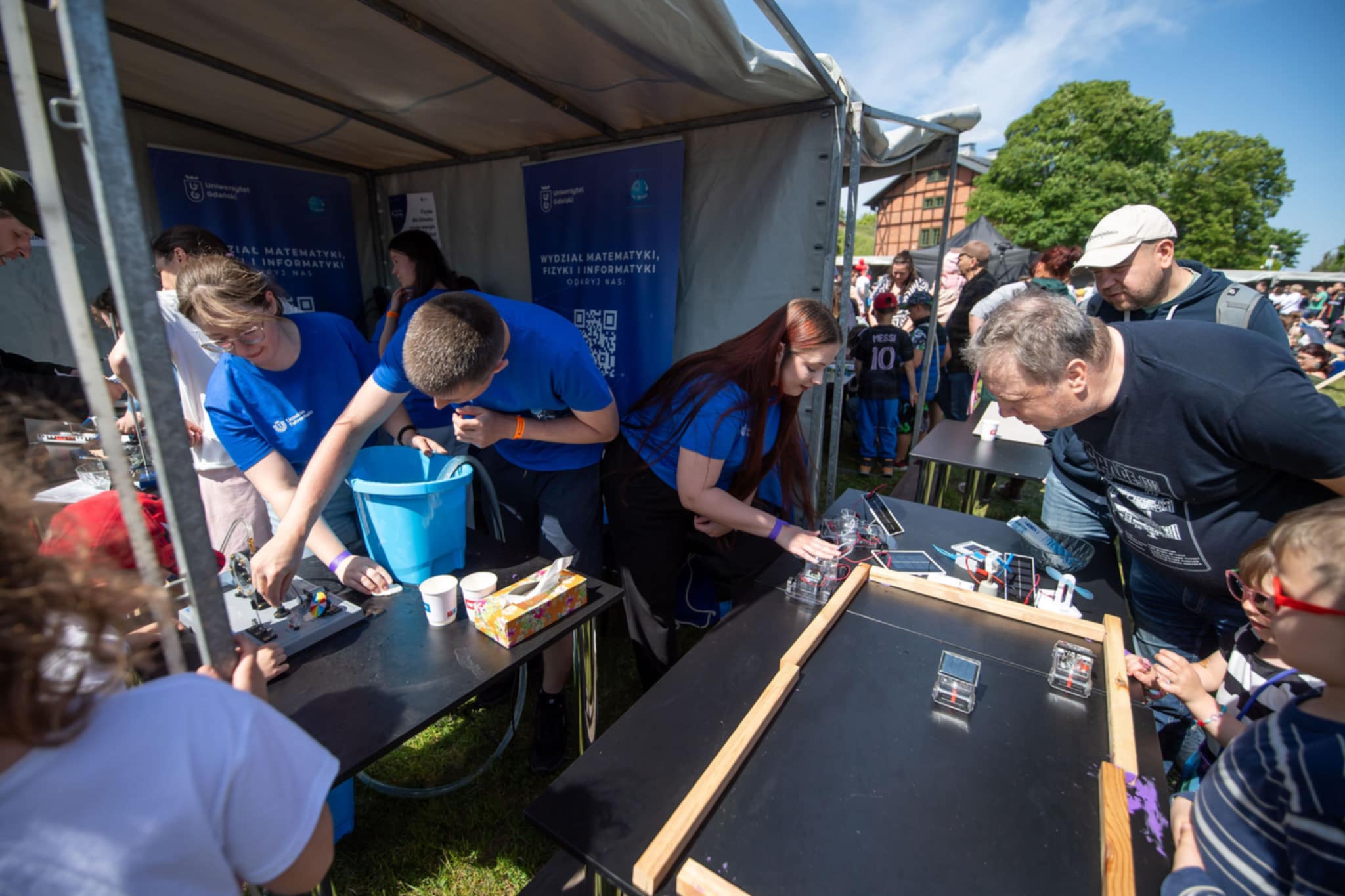
The Scientific Circle of Physicists operates at the Faculty of Physics, Mathematics and Computer Science at the University of Gdańsk and brings together students interested in theoretical and experimental physics as well as scientific and teaching activities in the field of science. In the 2024/2025 academic year, the members of the Club carried out a number of projects, including the construction of a functional prototype of a Wilson cloud chamber, enabling the observation of traces of particles created as a result of ionising radiation. The device, constructed from materials easily available at home, was presented during events promoting science, such as Polish Science Days at the Experiment Science Centre in Gdynia and Open Days at the University of Gdańsk. Work is currently underway to expand it into a full-scale research apparatus.
KNF members actively participate in research work carried out at the faculty, collaborating with teams conducting research in the fields of quantum physics, solid state physics and mesoscopic physics.
We warmly congratulate all the Science Clubs and wish them continued success!